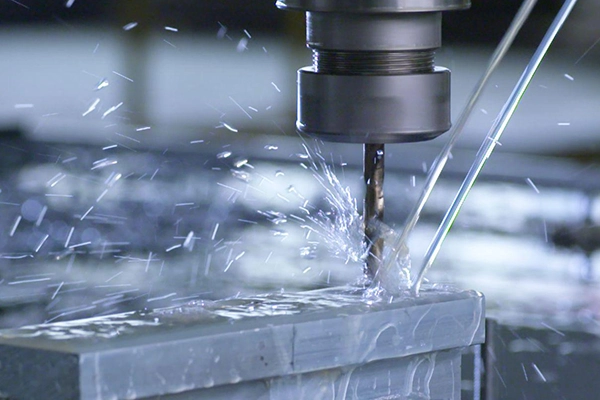
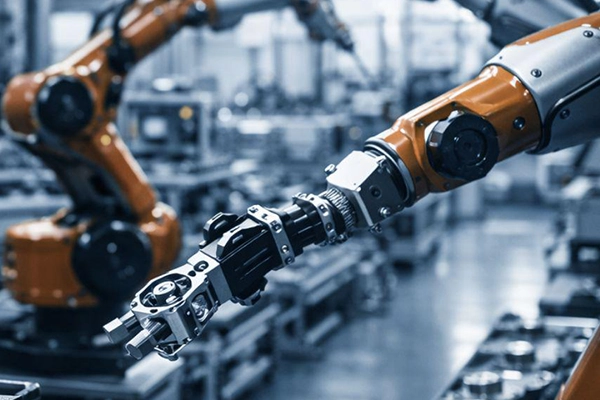
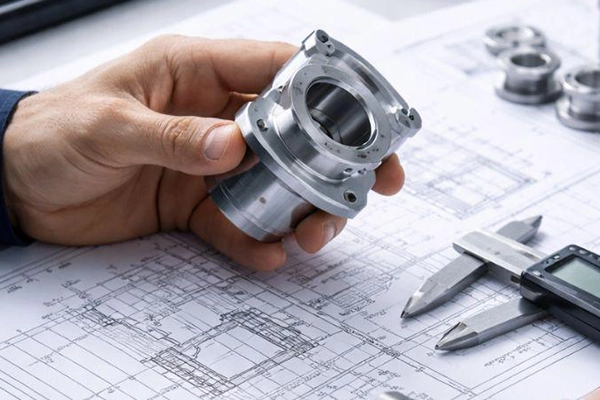
5 axis CNC milling services become essential when 3-axis machining hits its limits. I’ve programmed both and bought both. This guide gives you real-world comparisons between 3 and 5 axis, accuracy you can actually hold (down to 0.005mm), and what multi-axis machining really costs—no fluff.
3 Axis vs 5 Axis CNC Milling: What’s the Real Difference?
Most buyers first ask about 3 axis vs 5 axis cnc milling. In easy words, a 3-axis machine moves the tool along X, Y, and Z. Your part stays in one place. To cut the bottom or a difficult angle, you need a second set-up—sometimes three or four.
Five-axis adds two spinning axes (usually A and B or A and C). This means the cutting tool or the part table tilts and turns while cutting. You can reach deep grooves, angled parts, and complex shapes in one hold.
Here is the key point: with 3-axis, each new set-up brings wrong positions, worker mistakes, and extra tool costs. With 5-axis, you can cut five sides of a square without turning it over. This is not just easier—it greatly changes how we CNC mill complex parts like impellers, spinal implants, or optical housings.
Feature
3-Axis CNC Milling
5-Axis CNC Milling
Number of setups
3–6 typical
1–2 typical
Reach to undercuts
Impossible without repositioning
Direct from multiple angles
Operator skill needed
Moderate
Higher, but fewer operations
Risk of human error
High (each setup)
Low (one setup)
If you are sourcing 5 axis CNC milling services for the first time, pay attention to how a vendor handles setup reduction. For more on what to look for in a precision shop, check our guide to selecting a CNC machining partner.
There’s a common misunderstanding. Some shops call a 3+2 axis machine “5-axis.” That’s indexing: the head rotates to an angle, locks, then cuts like a 3-axis. True simultaneous 5 axis machining keeps all five axes moving during the cut. The tool stays in constant optimal contact with the part.
Why does that matter? For complex freeform surfaces—think turbine blades (non-aerospace, e.g., medical pump rotors) or semiconductor chamber components—simultaneous motion eliminates step marks from repositioning. Surface finishes improve from 32 Ra to 16 Ra without hand polishing. And cycle time? We’ve seen 40% reductions because the tool never backs off to reorient.
One example from my shop: a titanium orthopedic trial. With 3+2, cycle time was 22 minutes, with visible scallops on the radius. Switching to simultaneous 5-axis cut that to 14 minutes, and the scallops disappeared. That’s real multi axis machining benefits you can measure.
5 Axis CNC Milling Services Accuracy: What We Actually Hold
Engineers love numbers, so let’s do a CNC milling accuracy comparison based on real parts we’ve run. Keep in mind: accuracy depends on machine condition, tool holder runout, thermal stability, and your programmer. But all else equal, here’s what we consistently deliver with our 5 axis CNC milling services.
Accuracy Parameter
3-Axis (Multiple Setups)
5-Axis (Single Setup)
Positional tolerance
±0.025mm achievable
±0.010mm achievable
Feature-to-feature on same face
±0.012mm
±0.008mm
Feature-to-feature across setups
±0.050mm (common stack-up)
±0.012mm (no stack-up)
Minimum guaranteed accuracy
0.010mm
0.005mm
Our shop holds ±0.005mm on critical features for medical and semiconductor jobs. That requires a temperature-controlled environment (20°C ±1°), in-process probing, and regular machine calibration. Always ask your 5 axis CNC milling services provider for their capability study—not just a brochure claim.
The biggest hidden error in 3-axis is datum stacking. You machine the top face relative to fixture A, then flip to fixture B. Your true position from top holes to bottom holes can drift 0.050mm or more. With 5-axis, all features reference the same setup. That’s why medical and semiconductor prints often specify 5-axis—they need the consistency.
Multi Axis Machining Benefits Across Key Industries
We serve six main sectors: medical, semiconductor, consumer electronics, telecom, automotive, and automation. Here’s how multi axis machining benefits each one differently.
Medical (implants, surgical guides): Complex organic shapes, titanium, and PEEK. 5-axis allows single-clamp finishing of contoured surfaces without witness lines.
Semiconductor (chamber parts, end effectors): Tight tolerances (0.005mm) and exotic alloys. Simultaneous machining reduces burrs on thin walls.
Telecom (waveguide components, heat sinks): Deep pockets and angled ports. 5-axis reaches without custom angle heads.
Automotive (prototype housings, turbo components): Rapid iterations. 5-axis reduces programming time for complex castings.
Automation (robot links, gripper jaws): Symmetrical and asymmetrical parts. One setup ensures left and right parts match.
A procurement manager once told me: “I don’t care if it’s 3 or 5 axis—I care about delivered quality and lead time.” Fair point. But with 5 axis CNC milling services, you get fewer late-night emails about out-of-tolerance features because of setup variation.
How to CNC Milling Complex Parts Without Multiple Setups
Try to CNC milling complex parts like a multi-sided bracket with angled holes and a deep pocket. On a 3-axis VMC, you’d need:
Op 1 – machine top, drill holes.
Op 2 – fixture on soft jaws, machine back side.
Op 3 – angle plate for the 15-degree port.
Op 4 – second angle plate for the opposite port.
Each op adds fixture cost, programming time, and inspection steps. With 5-axis, you clamp the raw stock once. The part rotates under the tool. All four ops become one continuous program.
We recently ran a telecom housing with eight faces of features. The customer originally quoted it at $2,800 per part on a 3-axis with five setups. Our 5 axis CNC milling services did it in one setup for $1,950. The buyer saved 30% and cut lead time from 4 weeks to 10 days.
When evaluating vendors, ask how they approach complex geometries. Here’s a checklist for reviewing a 5-axis milling quote that our engineering team uses.
5 Axis Machining Cost: Breaking Down the Investment
Let’s talk money. 5 axis machining cost is higher per hour than 3-axis—typically $150–$250/hour versus $80–$120/hour. That scares some buyers. But total project cost is what matters.
Here’s a real comparison from a 500-part order (aluminum, medium complexity):
Cost Factor
3-Axis (3 setups)
5-Axis (1 setup)
Machine hourly rate
$100/hr
$200/hr
Cycle time per part
45 min
28 min
Labor (setup + ops)
4 hours total
1 hour total
Fixturing cost
$800 (three fixtures)
$250 (one vise + dovetail)
Total per part (including amortized fixtures)
$98.50
$87.20
Scrap rate (typical)
5%
1.5%
The 5-axis part costs less per good part because you eliminate fixtures, reduce cycle time, and scrap fewer pieces. For complex geometries, break-even is often 10–20 parts. Above that, 5 axis machining cost per good part is lower than 3-axis.
A common mistake: buyers only compare hourly rates. Always ask for total piece price including setups, fixturing, and first-article inspection. A good 5 axis CNC milling services provider will show you the math.
How to Evaluate a 5 Axis CNC Milling Vendor
After a decade of buying and selling machining work, here’s my decision framework for sourcing 5 axis CNC milling services.
Ask for a simultaneous test cut. Not a 3+2 demo. Request a part with a continuous 3D surface and an undercut. See if they can hold tolerance without witness marks.
Check their CAM software. True 5-axis needs advanced post-processors. Ask if they use NX, Mastercam Dynamic or 5-axis module, or Hypermill. Avoid shops using old 3-axis posts with manual tilts.
Verify in-process probing. On-machine probing (Renishaw, Blum) is standard for good 5-axis work. It compensates for thermal drift and fixture variation.
Request a DFM review. A competent engineer will flag impossible features before you quote. They’ll suggest tool access changes or split-part strategies.
Look at their CMM reports. Not just pass/fail. Look for trends. Are they consistently hitting the middle of the tolerance band?
Ask about spindle and thermal management. 5-axis jobs run longer. Machines with spindle chillers and scales on all axes hold better accuracy.
PAA: Frequently Asked Questions About 5 Axis CNC Milling
Q: How much does 5 axis machining cost compared to 3 axis? A: Per-hour rates are higher (often 1.5–2x), but total part cost can be 20–40% lower for complex parts due to fewer setups, less fixturing, and reduced scrap. Always compare delivered piece price, not hourly rate.
Q: Can a 5 axis machine do everything a 3 axis can? A: Yes, but it’s not always economical. Simple prismatic parts with features on one face are cheaper on a 3-axis. Use 5-axis when you have compound angles, deep undercuts, or multiple faces requiring tight relative tolerances.
Q: What is the real-world accuracy of 5 axis CNC milling? A: With a well-maintained machine and proper workholding, we hold ±0.010mm reliably. On critical features with in-process probing and thermal control, we guarantee 0.005mm. Always ask for a capability study.
Q: How do I know if my part needs simultaneous 5 axis or just 3+2? A: If your part has a freeform surface where the tool contact point must change continuously (impeller, mold core), you need simultaneous. If you just need to drill angled holes or machine flat faces at different rotations, 3+2 indexing is fine and cheaper.
Q: What materials benefit most from 5 axis milling? A: Hard materials like titanium, Inconel, and hardened steel benefit because 5-axis can keep the tool engaged at an optimal angle, reducing tool wear and heat. Also, soft materials like copper and PEEK benefit from reduced burrs on thin features.
Ready to Compare Real 5 Axis CNC Milling Quotes?
You’ve seen the data: fewer setups, tighter accuracy (down to 0.005mm), and often lower total cost for complex parts. The key is finding a shop that runs true simultaneous 5-axis, not just 3+2 indexing, and one that provides transparent DFM feedback.
We’ve been delivering 5 axis CNC milling services for medical, semiconductor, and automation customers for over a decade. Every job gets an in-process inspection plan, a full CMM report, and a call to review any drawing concerns before cutting chips.
Ready to start
Your next project?
Contact our technical experts today for a customized solution and a tailored quotation.
Our expert team will contact you within 24 hours
to provide a free technical evaluation and solution design, helping you upgrade your production process.
ADDRESS
NO.22,You Yi Road ,Wulian Community, LongCheng Street ,Long gang District ,Shen Zhen