6061 Aluminum Extrusion: The Engineer‘s Blueprint for CNC Machining Excellence
For structural and mechanical engineers selecting machined parts, 6061 aluminum extrusion balances strength, machinability and corrosion resistance. This heat-treatable alloy with steady mechanical properties suits aerospace, automotive and industrial hydraulic parts. Post-extrusion CNC cutting performance of the material determines part quality, processing speed and tool service life, and this guide offers practical fabrication data. 6061 aluminum extrusion features multiple tempers with T6 as the mainstream machining grade; its 50% machinability rating supports high-speed CNC work and stable dimensions. 6061 aluminum extrusion delivers reliable performance for precision CNC manufacturing demands.
Metallurgical Foundation – Choosing the Right 6061 Aluminum Bar Stock
The performance of 6061 aluminum extrusion in CNC machining originates from its composition and heat treatment. For many structural applications, engineers start with 6061 aluminum bar stock—either extruded or drawn—which shares the same chemistry and temper options. The alloy contains magnesium and silicon as primary alloying elements, with copper and chromium additions that enhance strength and corrosion resistance.
Chemical Composition
Element
Percentage
Aluminum (Al)
97.9%
Magnesium (Mg)
1.0%
Silicon (Si)
0.6%
Copper (Cu)
0.28%
Chromium (Cr)
0.2%
Others (Zn, Fe, etc.)
Balance
This composition enables 6061 aluminum extrusion to respond well to heat treatment, achieving T6 temper through solution heat treatment followed by artificial aging. The resulting microstructure delivers tensile strength of 310–350 MPa and yield strength of 276–310 MPa in T6 condition.
Temper Conditions and Machinability Impact
Temper
Treatment
Machinability
Best Use Case
T4
Solution heat-treated + naturally aged
Good
Forming operations before final machining
T6
Solution heat-treated + artificially aged
Excellent
Precision CNC machining, structural components
T651
T6 + stress-relieved by stretching
Excellent
Parts requiring superior flatness and stability
The 6061 aluminum extrusion in T6 temper offers the best machinability among heat-treated conditions. T651 provides even better dimensional stability—critical for thin-wall sections or parts requiring tight flatness tolerances after CNC machining. When you order 6061 aluminum bar stock, always specify the temper that matches your post-machining requirements.
Related reading: Review ouraluminum CNC machining material guidelines for detailed alloy comparisons.
CNC Machining Parameters for 6061 Aluminum Rod and Round Stock
Proper cutting parameters are essential when machining 6061 aluminum extrusion, especially when the starting form is 6061 aluminum rod or round bar for turned components. The alloy‘s moderate hardness (Brinell 95–100 HB) allows for aggressive material removal rates while maintaining surface quality.
Recommended Cutting Parameters for CNC Milling
Operation
Cutting Speed (m/min)
Feed Rate (mm/rev)
Depth of Cut (mm)
Roughing
180–240
0.15–0.25
1.0–3.0
Finishing
240–300
0.08–0.15
0.2–0.5
High-speed finishing
300–450
0.05–0.10
0.1–0.2
These parameters are derived from industry studies on AA-6061 machining, where cutting speeds of 60–240 m/min and feed rates of 0.10–0.25 mm/rev were evaluated for surface finish optimization. For high-speed CNC milling of 6061 aluminum extrusion, speeds up to 450 m/min are achievable with appropriate tooling.
CNC Turning Parameters
Operation
Cutting Speed (m/min)
Feed Rate (mm/rev)
Depth of Cut (mm)
Rough turning
150–200
0.20–0.35
1.5–4.0
Finish turning
200–280
0.10–0.20
0.3–0.8
Threading
100–150
0.05–0.15
Per thread spec
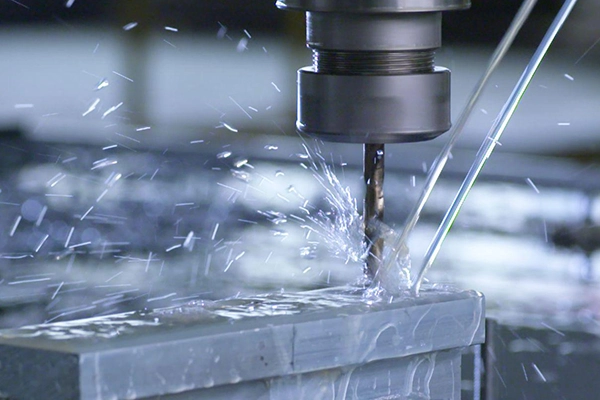
CNC turning of 6061 aluminum rod requires attention to chip formation. The alloy produces long, stringy chips that can wrap around the tool or workpiece if not properly managed. Using chip breakers and adequate coolant flow prevents this issue.
Tool Selection Recommendations
For machining 6061 aluminum extrusion and 6061 aluminum rod, carbide tools with polished rake faces and sharp cutting edges deliver optimal results. Key tool specifications:
Sub-micrograin carbide with mirror-polished cutting edges reduces chip welding
Single-flute or O-flute geometry facilitates chip evacuation in slotting operations
Diamond-like coating (DLC) or uncoated carbide with high positive rake angles
Tool diameter: 6–20 mm for general milling; smaller for intricate features
Coolant application is recommended for CNC machining of 6061 aluminum extrusion to manage thermal expansion and extend tool life, though dry machining is feasible at moderate speeds.
Related reading: Learn about ourCNC milling servicescapabilities for complex geometries.
Dimensional Tolerances – From Extrusion to 6061 Aluminum Flat Bar
When specifying 6061 aluminum extrusion for CNC machining, engineers must consider both extrusion tolerances and post-machining tolerances. Many components are machined from 6061 aluminum flat bar—a common extruded profile—so understanding the tolerance stack-up is critical.
ASTM B221 Extrusion Tolerances
ASTM B221 is the primary specification for extruded 6061 aluminum products including bars, rods, profiles, and tubes. Key tolerance parameters apply equally to 6061 aluminum flat bar and other shapes:
Tolerance Type
Standard Value
Precision Option
Cross-section (wall thickness)
±10%
±5% (1/2 commercial)
Straightness
0.0125″ per foot
0.006″ per foot
Twist
0.5° per foot
0.25° per foot
Flatness
0.004″ per inch of width
0.002″ per inch of width
These values follow Aluminum Association standard tolerances. For critical applications, specifying 1/2 commercial tolerances improves dimensional control.
Post-CNC Machining Tolerances
Precision CNC machining of 6061 aluminum extrusion achieves significantly tighter tolerances than extrusion alone. When starting from 6061 aluminum flat bar, the same precision applies:
Feature
Standard CNC Tolerance
High-Precision CNC
Linear dimensions
±0.025 mm
±0.005 mm
Hole positions
±0.05 mm
±0.01 mm
Surface finish (Ra)
1.6 μm
0.4–0.8 μm
Concentricity
0.05 mm
0.01 mm
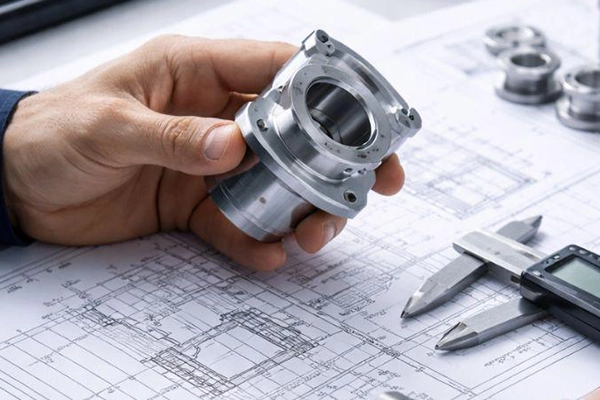
Our CNC machining center achieves dimensional accuracy within ±0.005mm—critical for seamless component integration and long-term reliability. This level of precision makes 6061 aluminum extrusion suitable for aerospace, medical device, and high-end industrial applications.
Design Considerations for Tolerance Stack-Up
When designing parts from 6061 aluminum extrusion or flat bar, account for:
Extrusion draft angles – Typically 1°–3° for profile features
Machining stock allowance – Leave 0.5–1.0 mm for finish machining
Thermal expansion – Aluminum‘s CTE of 23.6 µm/(m·K) affects tight-tolerance features
Related reading: Refer to our comprehensive tolerances guide for detailed capability specifications.
Surface Finishing Options – Matching 6061 T6 Aluminum Bar Stock to End Use
Post-CNC machining surface treatment enhances corrosion resistance, appearance, and wear properties of 6061 aluminum extrusion components. Many engineers specify 6061 T6 aluminum bar stock as the starting material, knowing that its heat-treated condition responds predictably to finishing processes.
6061 aluminum extrusion responds well to anodizing, though the alloy‘s copper content can produce slightly darker anodic films compared to 6063. For applications requiring bright, clear anodized finishes, specify 6061 T6 aluminum bar stock with tighter control on alloying elements.
Machining-Induced Surface Considerations
CNC machining of 6061 aluminum extrusion can achieve surface finishes as fine as Ra 0.4 μm with proper parameters. Factors affecting surface quality:
Tool sharpness – Dull tools produce built-up edge and rough surfaces
Feed rate – Lower feeds improve finish but increase cycle time
Coolant – Adequate cooling prevents aluminum adhesion to cutting edges
Machining strategy – Climb milling typically produces better finish than conventional milling
Common Applications – Where Aluminum 6061 Flat Bar and Profiles Excel
6061 aluminum extrusion serves diverse industries where strength-to-weight ratio and machinability are paramount. Whether you choose aluminum 6061 flat bar, rod, or custom profiles, the same material properties apply. Typical end uses include:
Automotive – Brake components, transmission parts, and AC system components
Industrial machinery – Frames, fixtures, and equipment housings
Hydraulics – Manifolds, cylinders, and valve blocks
Electronics – Heat sinks, enclosures, and connectors
Medical devices – Precision components requiring biocompatible finishes
Marine – Corrosion-resistant fittings and structural members
For each application, 6061 aluminum extrusion provides the mechanical performance needed while remaining economical to machine on CNC equipment.
Q1: What is the difference between 6061-T6 and 6061-T651 aluminum extrusion?
T6 temper involves solution heat treatment and artificial aging, achieving high strength. T651 adds a stress-relief stretching step after aging, which improves flatness and dimensional stability—especially beneficial for parts requiring tight tolerances after CNC machining.
Q2: Can 6061 aluminum extrusion be welded before CNC machining?
Yes, 6061 aluminum extrusion offers good weldability. However, welding introduces heat that can release residual stress and cause distortion. For weldments requiring post-weld CNC machining, specify T651 temper to minimize distortion, and allow 0.5–1.0 mm machining stock.
Q3: What surface finish can CNC machining achieve on 6061 aluminum extrusion?
With proper parameters and tooling, CNC machining of 6061 aluminum extrusion achieves surface roughness Ra 0.4–1.6 μm. Finish turning and fine milling with sharp carbide tools produce the best results.
Q4: Is 6061 or 6063 aluminum better for CNC machining?
6061 aluminum extrusion offers higher strength (310–350 MPa vs. 190–240 MPa for 6063-T5) and better machinability for structural applications. 6063 provides superior surface finish for anodizing and is easier to extrude into complex shapes, but lower strength makes it less suitable for load-bearing components.
Q5: What tolerances can precision CNC machining hold on 6061 extrusion?
Precision CNC machining of 6061 aluminum extrusion routinely achieves ±0.025 mm, with high-precision capability down to ±0.005 mm. Extrusion tolerances per ASTM B221 are broader—typical wall thickness tolerance is ±10%.
Q6: Why does 6061 aluminum extrusion sometimes warp after CNC machining?
Residual stress from the extrusion process can cause warpage when material is removed asymmetrically during CNC machining. Using T651 temper (stress-relieved) reduces this effect. Rough machining both sides of a part before finish machining also helps balance stress distribution.
Ready to start
Your next project?
Contact our technical experts today for a customized solution and a tailored quotation.
Our expert team will contact you within 24 hours
to provide a free technical evaluation and solution design, helping you upgrade your production process.
ADDRESS
NO.22,You Yi Road ,Wulian Community, LongCheng Street ,Long gang District ,Shen Zhen