7 Critical CNC Aluminum Machining Services Mistakes That Increase Production Costs
CNC aluminum machining services require more than advanced equipment to achieve stable production results. Many aluminum parts fail because of incorrect process planning, unsuitable machining strategies, poor fixture design, or weak quality control. This guide explains the most common manufacturing mistakes, their causes, and practical solutions that help engineers and buyers reduce scrap, improve part consistency, and select reliable machining partners.
Why Aluminum Machining Services Fail Without Proper Process Planning
Many companies assume aluminum parts are easy to manufacture because aluminum is softer than steel and offers excellent machinability. While this is generally true, aluminum also creates unique challenges during production.
The most common mistake is starting machining before fully understanding the part design and manufacturing requirements.
A professional process review should evaluate:
Part geometry complexity
Wall thickness
Required tolerance
Surface finish requirements
Material grade
Production quantity
Inspection requirements
Without proper planning, even a simple aluminum component can experience problems such as:
Common Issue
Main Cause
Production Impact
Dimensional deviation
Poor setup planning
Assembly failure
Surface marks
Incorrect cutting parameters
Cosmetic rejection
Burr formation
Improper tooling strategy
Extra finishing work
Part deformation
Weak fixture support
Scrap and rework
Inconsistent batches
Poor process control
Quality variation
A common production mistake is treating every aluminum part with the same machining strategy. Different alloys and geometries require different approaches.
For example, thin-wall aluminum housings used in electronic equipment may require lower cutting forces and improved fixture support, while structural components may require stronger clamping methods.
Before production begins, experienced manufacturers normally review the design and identify possible risks. This early evaluation helps avoid expensive corrections after machining starts.
For projects involving complex components and multiple manufacturing requirements, professional CNC machining services provide engineering support from design evaluation through production inspection.
Common Defects in Aluminum Machining CNC Production
Although aluminum is suitable for precision machining, improper process control can create several common defects.
One frequent mistake is selecting machining parameters based only on speed. Higher cutting speed does not always improve productivity. Excessive cutting forces can create vibration, poor surface quality, and dimensional instability.
Common aluminum machining defects include:
1. Burr Formation
Burrs often appear around drilled holes, milled edges, and thin sections.
Typical causes include:
Worn cutting tools
Incorrect feed rate
Improper tool geometry
Excessive cutting pressure
A well-controlled process uses suitable tooling and cutting strategies to minimize secondary deburring operations.
2. Surface Finish Problems
Aluminum can achieve excellent surface quality, but the result depends on:
Tool sharpness
Cutting speed
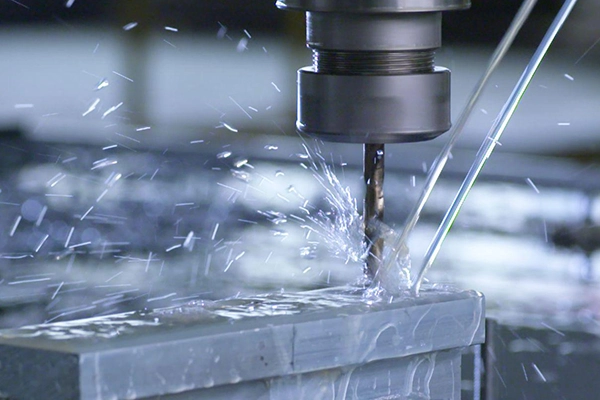
Coolant application
Machine rigidity
For precision components, surface requirements may reach approximately Ra 0.4 μm under optimized conditions.
3. Dimensional Instability
Aluminum expands more quickly than many other metals when exposed to heat.
During machining, excessive heat can affect:
Hole diameter
Flatness
Position accuracy
Final inspection results
Experienced manufacturers control heat generation through proper cutting conditions and stable production processes.
Typical Aluminum Machining Accuracy Requirements
Requirement
Standard Capability
Precision Capability
General dimensional tolerance
±0.01 mm
—
Critical feature tolerance
±0.005 mm
Available with optimized process
Surface finish
Ra 0.8–1.6 μm
Ra 0.4 μm possible
Batch consistency
Process controlled
SPC monitoring
How Aluminum Machining Quality Depends on Material Selection
Material selection is one of the most overlooked factors affecting machining performance.
Different aluminum alloys provide different combinations of strength, machinability, corrosion resistance, and finishing characteristics.
Commonly used aluminum grades include:
Aluminum 6061
Aluminum 6063
Aluminum 7075
Aluminum 5052
Aluminum 6082
Each alloy behaves differently during machining.
For example:
6061 provides a balanced combination of strength and machinability.
6063 offers excellent surface appearance for extrusion-based parts.
7075 provides high strength but requires careful machining control.
5052 provides good corrosion resistance but behaves differently during cutting.
Aluminum Alloy Machining Comparison
Alloy
Main Advantage
Machining Consideration
6061
Balanced performance
Excellent general machining choice
6063
Good surface quality
Better for extrusion applications
7075
High strength
Requires controlled cutting strategy
5052
Good corrosion resistance
More flexible material behavior
When selecting aluminium machining processes, engineers should consider the entire production route rather than only raw material cost.
A suitable alloy can reduce machining problems, improve tool life, and create more stable production results.
Understanding Material Requirements Before Production
Another common mistake is assuming all aluminum parts require identical machining methods.
Before production, manufacturers should confirm:
Alloy specification
Temper condition
Heat treatment status
Surface requirements
Final application environment
For buyers comparing suppliers, understanding material capability is important. A qualified aluminium CNC manufacturer should be able to recommend suitable materials based on part requirements instead of simply processing customer drawings without technical feedback.
Optimizing Machining Aluminium Processes to Reduce Scrap and Rework
Many production issues in aluminum components are not caused by machining limitations. They are often the result of inefficient process planning, incorrect cutting strategies, or insufficient communication between engineers and manufacturers.
A reliable machining aluminium process should focus on stability rather than simply achieving the fastest cycle time.
Experienced manufacturers usually optimize several key areas:
Tool selection
Cutting parameters
Fixture design
Machining sequence
Inspection frequency
Operator feedback
For example, machining a thin-wall aluminum component requires a different approach compared with a solid structural bracket. Excessive clamping pressure may deform the part, while insufficient support can create vibration and poor surface quality.
The goal is to create a repeatable process that produces consistent parts across different production batches.
How CNC Aluminum Machining Services Improve Production Reliability
Choosing suitable manufacturing support is one of the most important decisions for OEM buyers. A capable supplier does more than operate CNC machines. They analyze drawings, identify potential risks, and recommend practical solutions before production begins.
Professional CNC aluminum machining services usually include:
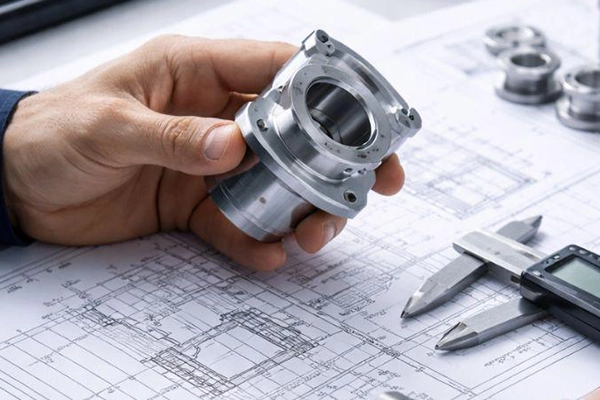
Engineering drawing review
Material verification
Prototype validation
Process optimization
Dimensional inspection
Production quality control
A reliable supplier should also understand the relationship between design requirements and manufacturing limitations.
For example, a feature requiring ±0.005 mm accuracy may require:
Stable machine conditions
Proper fixture support
Controlled machining sequence
Accurate inspection equipment
Without these factors, the tolerance requirement may be difficult to maintain consistently.
For projects involving different aluminum grades and precision requirements, aluminum CNC machining capabilities help ensure the selected process matches the material characteristics and final application needs.
Selecting a Reliable Aluminum Machining Service Supplier
Many buyers evaluate suppliers mainly by price, but the lowest quotation does not always represent the lowest manufacturing cost.
A supplier with limited process experience may create hidden expenses through:
High scrap rates
Additional inspection requirements
Delayed deliveries
Repeated engineering changes
Unstable production quality
When selecting an aluminum machining service supplier, engineers and purchasing teams should evaluate several factors.
Supplier Evaluation Checklist
Evaluation Factor
Why It Matters
Engineering support
Reduces design and process risks
Material experience
Ensures correct machining strategy
Quality inspection
Confirms dimensional accuracy
Production capability
Supports prototype to volume production
Process communication
Prevents misunderstandings
A professional supplier should be able to explain:
Why a certain machining method is recommended
Which dimensions are critical
Where potential defects may occur
How production consistency will be maintained
This engineering communication is often more valuable than a small difference in unit price.
Avoiding Production Risks with Better Manufacturing Planning
For industrial buyers, preventing defects is more effective than correcting them after production.
A strong manufacturing workflow normally follows these steps:
Stage
Main Activity
Purpose
Design review
Analyze drawings and requirements
Identify risks early
Prototype machining
Verify process feasibility
Confirm design practicality
First article inspection
Check critical dimensions
Validate production setup
Mass production
Monitor consistency
Maintain stable quality
Final inspection
Confirm specifications
Ensure shipment quality
One common issue in aluminum manufacturing is excessive setup time caused by inefficient process planning.
Reducing unnecessary setups can improve both quality and cost performance.
Manufacturers that understand how to reduce setup time CNC machining can minimize repositioning errors while improving production efficiency.
What Makes a Professional Aluminum Machining Service Manufacturer
A qualified aluminum machining service manufacturer should provide more than machining capacity. The supplier should have practical engineering knowledge and quality systems that support long-term production.
Important capabilities include:
Manufacturing Capability
A professional supplier should support:
Prototype quantities
Low-volume production
Medium-volume manufacturing
High-volume repeat production
Quality Management
Reliable production requires:
Coordinate measuring machines (CMM)
Process inspection
Material traceability
Quality documentation
Engineering Collaboration
Experienced suppliers can assist with:
Design optimization
Tolerance review
Machining feasibility analysis
Production improvement suggestions
Commercial Supplier Comparison
Supplier Type
Advantages
Potential Risk
Trading company
Easy communication
Limited process control
Small workshop
Flexible pricing
Limited quality systems
Integrated manufacturer
Engineering + production control
Requires proper evaluation
For companies searching for an aluminum cnc machining service manufacturer, the key consideration should be manufacturing reliability rather than only initial cost.
A supplier with stronger engineering capability can often reduce total project expenses by preventing avoidable production problems.
[Internal Link ④: China CNC machining aluminum factory]
For overseas companies looking for stable production support, evaluating a China CNC machining aluminum factory with engineering experience can help improve communication, quality control, and delivery reliability.
Improving Supplier Selection for Long-Term Production Success
When companies move from prototype to production, supplier capability becomes increasingly important.
A dependable manufacturing partner should provide:
Stable process control
Consistent material sourcing
Clear quality standards
Production feedback
Continuous improvement
The right supplier relationship helps reduce unexpected issues during product development and production expansion.
Companies working with overseas manufacturing partners should also evaluate supplier experience, communication efficiency, and production management capability. A professionalCNC machining service China OEM supplier can provide better coordination between engineering requirements, production execution, and quality verification.
PAA – Frequently Asked Questions
What are the most common problems in aluminum machining?
The most common issues include burrs, surface defects, dimensional variation, deformation, and inconsistent production quality. Most problems can be reduced through better process planning and inspection control.
Is aluminum difficult to machine?
Aluminum is generally easy to machine, but achieving tight tolerances requires proper tooling, fixture design, cutting strategy, and quality control.
What tolerance can CNC aluminum machining achieve?
With optimized processes, precision aluminum machining can achieve critical tolerances around ±0.005 mm depending on part geometry, material condition, and inspection capability.
How do I choose an aluminum machining supplier?
Evaluate engineering experience, machining capability, inspection systems, communication quality, and the supplier’s ability to support prototype and production requirements.
What is the difference between aluminum machining and CNC aluminum machining?
Aluminum machining describes the general process of manufacturing aluminum parts, while CNC aluminum machining specifically refers to computer-controlled machining operations used for higher precision and repeatability.
Ready to start
Your next project?
Contact our technical experts today for a customized solution and a tailored quotation.
Our expert team will contact you within 24 hours
to provide a free technical evaluation and solution design, helping you upgrade your production process.
ADDRESS
NO.22,You Yi Road ,Wulian Community, LongCheng Street ,Long gang District ,Shen Zhen