7 Proven Strategies for Sourcing Custom CNC Machined Parts for Mass Production
When you need custom CNC machined parts for mass production, the situation is totally different from sample making or small-batch orders. I’ve seen buyers follow the same purchasing method for 100,000 parts as they do for 100 parts, and this error will lead to high extra costs. This guide includes how to choose suppliers, control part tolerances, avoid hidden fees and set up complete quality control rules. If you’re sourcing custom CNC machined parts for mass production, all the shared experience comes from our ten years of high-volume production work. We have long served clients from medical, semiconductor, automotive and electronics industries.
Custom CNC Parts Manufacturer for High Volume: What to Look For
Finding the right custom CNC parts manufacturer for high volume isn’t about the lowest per-unit price. The cheapest quote often costs more in rework. Here’s what separates a true high-volume partner from a job shop:
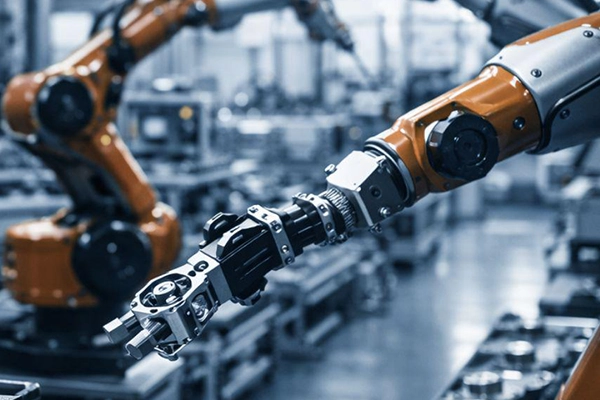
Automation level: Multi-pallet machines and robotic loading, not manual tool changes.
Material traceability: Mill certs for each heat number. A 0.1% defect scraps hundreds of parts.
SPC, not just first-article: Statistical process control with hourly sampling catches drift early.
Tool life management: Predictive schedules, not reactive changes.
A capable custom CNC parts manufacturer for high volume will share Cpk data and tool change logs. If they can’t, walk away. For a real-world example, check out our guide to CNC machining quality control.
Pro tip: Ask about their lights-out machining capability. Shops running unattended overnight have the discipline you need for custom CNC machined parts for mass production.
CNC Machined Parts Supplier for Large Orders: Beyond the Quote
Choosing a CNC machined parts supplier for large orders requires looking past the piece price. I once saw a buyer switch to a cheaper supplier for 50,000 parts – savings vanished when burrs on sealing surfaces required rework costing twice the original quote.
Use this decision framework:
Process capability: Ask for control charts from a recent run of similar geometry.
Capacity cushion: A good CNC machined parts supplier for large orders never runs at 100% utilization. Keep 20-30% open for spikes.
Raw material inventory: Suppliers stocking 6061, 303, and 7075 reduce lead times.
Non-conformance process: Every shop makes bad parts. The good ones have a formal corrective action and absorb rework costs.
When you’re buying custom CNC machined parts for mass production, the cheapest quote is rarely the best total cost. Also verify packaging – bulk boxes without dividers ruin finished surfaces.
Precision CNC Machined Components Production: Holding Tolerances at Scale
Precision CNC machined components production at high volumes is a different beast than making one perfect part. Thermal growth, tool wear, and coolant drift accumulate over thousands of cycles. Holding ±0.025mm across 100,000 parts requires engineering discipline.
Here’s what works:
In-process gauging: Probe every 5th or 10th part, feed data back to the CNC for offset adjustments.
Temperature control: 20°C ±1°C on the shop floor. A 5°C swing changes aluminum by 0.01mm per 100mm.
Offline tool presetting: Measure runout and length to microns before tools hit the spindle.
Regular capability audits: Cpk >1.33 every 10,000 parts or when material lots change.
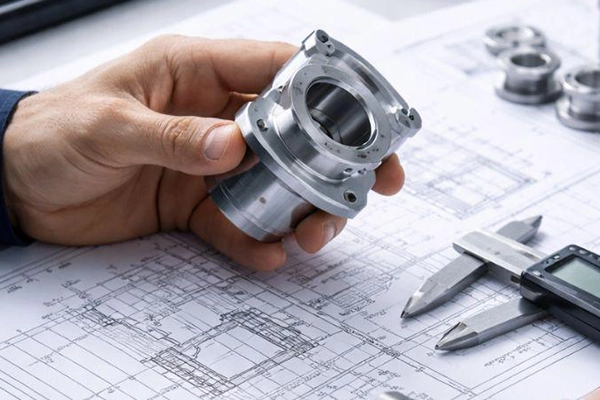
Key takeaway: Don’t specify ±0.01mm on non-critical holes. That slows machining and drives cost. Work with your supplier on strategic GD&T. For more, see our OEM CNC machined parts manufacturing guide on applying GD&T to production runs
Below is a reference table for typical high-volume tolerances:
Feature Type
Typical Tolerance (High-Volume)
Inspection Method
Bearing bore
±0.005mm
Air gauge or CMM
Flange thickness
±0.025mm
Micrometer (sampled)
Bolt hole location
±0.1mm
Optical comparator
Uncritical slot
±0.2mm
Go/no-go gauge
OEM CNC Machined Parts Manufacturing: Why Documentation Matters
In OEM CNC machined parts manufacturing, the part is only half the deliverable. The other half is documentation. I’ve seen automotive OEMs reject perfect parts because material certs were missing or the revision didn’t match the drawing.
Essential documents for custom CNC machined parts for mass production:
Mill test reports for each heat number
First-article inspection report (FAIR) per AS9102 or your internal standard
Control plan listing every operation, machine, gauge, and sample frequency
Capability studies for critical dimensions
Packing slips with batch traceability – barcodes linking to CNC program, operator, timestamp, and material lot
A reliable OEM CNC machined parts manufacturing partner will also sign a quality agreement before production. This clarifies gauge ownership, sample rates, acceptable PPM targets, and rework protocols. Don’t leave these details to email.
Metal CNC Parts for Mass Production: Material Selection & Cost Drivers
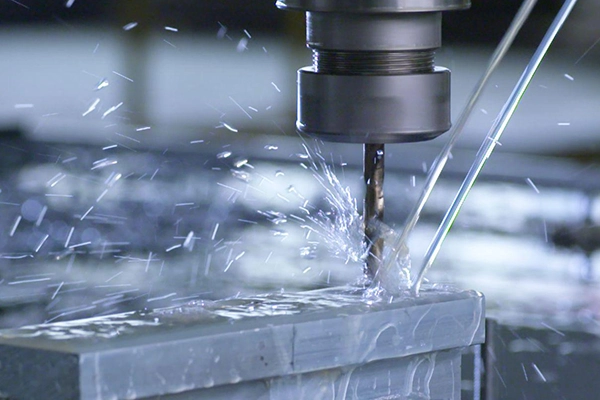
Metal CNC parts for mass production involves trade-offs low-volume buyers rarely consider. 6061 aluminum machines beautifully but can gall without proper coolant. 303 stainless cuts well but costs more than 304. Free-cutting brass is fast but may lack strength.
Here’s how I advise clients on material decisions:
Machinability rating – A material that cuts 30% faster can save more than a cheaper but slower alloy.
Tool wear cost per part – Abrasive materials like 17-4 PH eat carbide inserts.
Surface treatment compatibility – 2024 aluminum doesn’t anodize as consistently as 6061 or 7075.
Batch consistency – Buy a single mill heat number to avoid hardness variations.
Real-world example: For a 100,000-part run of sensor housings, switching from 304 stainless to 303 stainless cut cycle time by 22% and tooling cost by 35%, even though 303 cost $0.12 more per pound. The total savings exceeded $8,000.
Custom CNC Parts for Industrial Applications: Medical, Semiconductor, Automotive
Custom CNC parts for industrial applications require different mindsets by market. Across all, the need is reliable custom CNC machined parts for mass production that meet industry standards.
Semiconductor – Contamination is the enemy. HEPA-filtered machining, CO2 snow cleaning, class-100 cleanroom packaging. Materials: 6061, PTFE, PEEK.
Automotive – Volume and cost per part drive decisions. Cycle time reduction is key. Recent 100,000-part throttle body adapters: cut cycle time from 4.5 to 2.8 minutes, saving $0.87 per part.
The Buyer’s Decision Logic: How to Source Custom CNC Machined Parts for Mass Production
After a decade of high-volume jobs, here’s my five-step checklist for sourcing custom CNC machined parts for mass production:
Define true requirements – Identify critical-to-function dimensions vs. “nice to have.” Eliminates 30% of unnecessary tight tolerances.
Shortlist by capacity – Ask: Largest run to date? Spindle count? Lights-out capability?
Run a capability batch – 50-100 parts on the same production line. Measure Cpk.
Audit the quality system – Don’t just take ISO cert. Review their non-conformance log from the last six months.
Negotiate terms, not just price – Payment milestones, PPM cap, rework responsibility, material surcharge formulas.
Following this process saves my clients an average of 18% in total landed cost – not by picking the cheapest piece price, but by avoiding expedited shipping, rework, and line stoppages.
PAA (People Also Ask)
Q1: What is the typical MOQ for custom CNC machined parts for mass production? Most high-volume shops set MOQs between 1,000 and 5,000 pieces. Below that, setup time dominates cost. For true custom CNC machined parts for mass production, expect 2,500+ parts to justify dedicated fixturing.
Q2: How do I ensure consistent quality across a 50,000-part run? Three things: in-process inspection (every Nth part), SPC (trend monitoring), and predictive tool changes (replace at 70-80% of tool life). Require Cpk ≥1.33 before full production.
Q3: Can you hold ±0.005mm tolerances in high-volume CNC? Yes, but with conditions: temperature-controlled shop (20°C ±1°C), rigid machines, in-process gauging, and frequent offsets. Expect 40-60% higher cost than ±0.025mm. Apply ultra-tight tolerances only to functional surfaces.
Q4: What lead time for 10,000 custom CNC machined parts? Typical 4-6 weeks: material (1-2 weeks), programming/fixturing (3-5 days), first-article (2-3 days), production (2-3 weeks). For 50,000+ parts, add 2-4 weeks.
Q5: Job shop vs. mass-production CNC manufacturer – what’s the difference? Job shops optimize for flexibility (small batches, frequent changeovers). Mass-production shops optimize for repeatability (automation, SPC, dedicated cells). A job shop’s per-part cost for 10,000 units can be double that of a high-volume specialist.
Q6: What 3D format should I provide? STEP (AP242) is universal. Native SolidWorks, Inventor, or Parasolid also work. Avoid STL – it loses precision. Always include a 2D PDF with tolerances and GD&T.
Ready to start
Your next project?
Contact our technical experts today for a customized solution and a tailored quotation.
Our expert team will contact you within 24 hours
to provide a free technical evaluation and solution design, helping you upgrade your production process.
ADDRESS
NO.22,You Yi Road ,Wulian Community, LongCheng Street ,Long gang District ,Shen Zhen