CNC Turning vs CNC Milling: Which One Should You Choose?
When a new part drawing lands on my desk, the first question I ask myself is: CNC turning vs CNC milling – which process will get the job done faster, cheaper, and more accurately? I’ve seen engineers specify milling for perfectly round shafts, and I’ve seen others try to turn a rectangular block. Both end up paying too much. Over the past decade machining components for medical devices, semiconductor tools, consumer electronics, and automotive systems, I’ve developed a simple rule: let the part’s geometry decide.
In this guide, I’ll break down the real differences in capability, cost, and precision between turning and milling. You’ll learn exactly when to use each, and how to avoid the most common – and expensive – mistakes.
What’s the Real Difference Between Turning and Milling?
Many people think it’s just about machine shape. But the difference between CNCturning and milling starts with how the cutting happens.
CNCturning: The workpiece spins. A stationary cutting tool moves along the rotating bar to remove material. Ideal for cylinders, cones, shafts, and anything round.
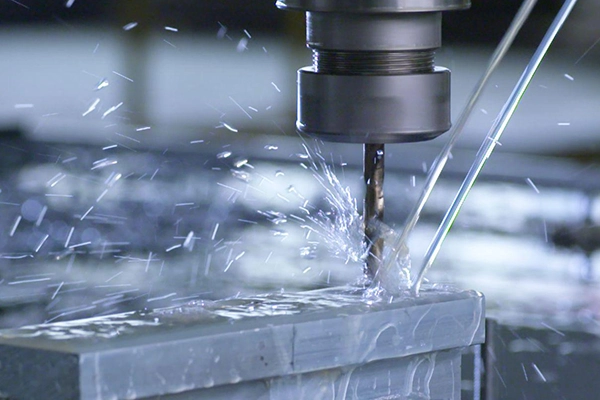
CNCmilling: The cutting tool spins. The workpiece stays clamped on a table that moves in X, Y, and Z axes. Ideal for pockets, slots, flat surfaces, and complex 3D contours.
Feature
CNC Turning
CNC Milling
Primary motion
Workpiece rotates
Tool rotates
Typical geometry
Cylindrical, axi-symmetric
Prismatic, boxy, complex
Common parts
Shafts, bushings, threaded studs, pulleys
Housings, brackets, manifolds, plates
Setup time
1–2 hours (bar feeder)
2–4 hours (vise/fixture)
Per-part cost for round parts
Low
High (2–3x)
If your part looks like it could be a handle, a roller, or a valve stem, turning is probably your answer. If it looks like a box with holes and pockets, milling wins.
Key Factors to Compare: Accuracy, Surface Finish, and Complexity
Engineers often ask about turning vs milling accuracy. The truth: both can hold tight tolerances. But the way you achieve precision differs.
Accuracy (Tolerance)
Modern CNC lathes can hold ±0.0002″ (0.005mm) on diameter – that’s common for medical guidewires and semiconductor probe pins. Milling machines can also hit ±0.0005″ on position, but repeated accuracy across multiple faces depends on fixturing.
For shaft turning vs milling: If you need a long, slender shaft with concentric diameters, turning is inherently more accurate because you never unclamp the part. Milling the same shaft would require multiple setups and introduce alignment errors.
Surface Finish
Turning produces a natural spiral finish. With a good insert and proper speeds, 32 Ra µin is achievable without secondary polishing. Milling leaves scalloped marks from the stepover. To get a smooth surface on a milled flat, you need a light finishing pass or even manual sanding.
Complexity
CNCturning for cylindrical parts shines when the complexity is along the axis – stepped diameters, threads, grooves, tapers. Add live tooling (C-axis or Y-axis) and a lathe can also mill flats, drill cross holes, and slot. That’s called turn-milling, and it’s often cheaper than moving to a separate mill.
Milling is better for parts with:
Multiple pockets at different depths
Curved 3D surfaces (molds, impellers)
Features on five sides
Cost Comparison – CNC Turning vs Milling
The CNCturning vs milling cost debate isn’t about which machine is cheaper to run per hour. It’s about total cycle time and handling.
Cost Driver
CNC Turning
CNC Milling
Machine hourly rate
$75–120
$80–150
Material waste
Low (bar stock, minimal kerf)
Medium (plate waste)
Setup cost (small batch)
$150–400
$200–600
Secondary operations
Often none (one-and-done)
May require flipping, re-fixturing
Best for volume
100–100,000+
1–10,000
A simple example: a stainless steel shaft, 1″ diameter x 6″ long, with a 0.5″ through-hole and two wrench flats. On a lathe with live tooling, cycle time ~4 minutes. On a mill, you’d need a lathe first to make the blank, then mill the flats – double handling. Turning is clearly cheaper.
But take a aluminum enclosure, 4″ x 3″ x 2″, with a milled cavity and threaded holes. Milling is the only practical choice. Trying to turn this shape would require removing 90% of the material and leave you with a pile of chips.
Rule of thumb: If the part’s length is greater than its diameter (L/D > 1.5), turning tends to be more cost-effective. If it’s wider than it is tall, milling usually wins.
When to Use CNCTurning (With Real Industry Examples)
CNCturning for cylindrical parts is the go-to for these applications across our core industries.
Industry
Typical Turned Parts
Why Turning?
Medical
Bone screws, trocar tips, dental implant abutments
High precision on small diameters, biocompatible materials
Semiconductor
Gas nozzle tips, wafer handling pins, chamber retainers
Tight concentricity, mirror finish on IDs
Consumer electronics
Camera lens barrels, haptic motor shafts, charging pin housings
If your part is round, symmetric, and you need hundreds or thousands, turning is almost always the right answer.
When to Choose CNCMilling
Milling dominates for parts that aren’t round. Think of brackets, manifolds, enclosures, and any component with multiple faces requiring holes or pockets.
One nuance: if your round part has one or two small flats or cross holes, consider a turn-mill center instead of a separate milling operation. That’s the best of both worlds.
Decision Logic – A Simple Flowchart in Words
Here’s the decision process I use with customers every week. No jargon, just engineering logic.
Is your part cylindrical (or mostly round)? → Yes: Go to question 2. → No: Choose milling.
Does the part require features on the side (flats, cross holes, slots)? → Yes: Use a lathe with live tooling (turn-milling). → No: Standard CNC turning is perfect.
What’s your annual volume? → Under 50 pieces: Milling might be cheaper if you already have a mill program. → Over 200 pieces: Turning will always beat milling on cycle time.
Do you need sub-0.0005″ concentricity? → Yes: Turning in one chucking. No refixturing errors. → No: Either process could work.
Is your material difficult (titanium, Inconel, PEEK)? → Turning generally handles tough materials better because the cut is continuous and heat is managed by the rotating part.
This logic has saved my clients thousands of dollars in misquoted jobs. One automotive supplier once tried to mill a simple hydraulic piston – they were paying $28 each. We switched to turning: $6 each.
How to Reduce Costs Without Compromising Quality – Turning & Milling Tips
Even after you choose the right process, there are ways to lower your bill. And if you’re still comparingCNCmilling vs turning advantages, these tips apply to both.
For turning:
Use standard bar stock diameters – avoid special-order sizes.
Combine features – specify a lathe with live tooling to mill flats/drill holes in one setup.
Relax cosmetic surface finish – as-turned 125 Ra is fine for most non-sealing surfaces.
For milling:
Minimize deep, narrow pockets – they require tiny end mills and slow feeds.
Use standard tool sizes – 1/4″, 3/8″, 1/2″ end mills are cheaper than custom.
Design for 3-axis – avoid 5-axis if your part can be rotated manually.
Need a second opinion on your part? Check our CNC turning vs CNC milling guide for more details, or send your drawing for a free process review. We also offer precision turned components for high-volume cylindrical parts.
Frequently Asked Questions
Q1: What is the main difference between CNCturning and milling? Turning rotates the part, milling rotates the tool. Turning makes round parts; milling makes boxy or contoured parts.
Q2: Which is more accurate – turning or milling? For concentric diameters on a shaft, turning is more accurate (one setup). For positional accuracy between holes on a flat plate, milling is better.
Q3: Is CNCturning cheaper than CNCmilling? For round parts in volumes above 100 pieces, yes – typically 30–50% cheaper. For complex prismatic parts, milling is the only option.
Q4: Can CNCturning do milling operations? Yes – with live tooling (C-axis or Y-axis), a lathe can mill flats, drill cross holes, and even slot. That’s called turn-milling.
Q5: When should I use CNCturning instead of milling? Any time your part is cylindrical, has a length-to-diameter ratio greater than 1.5, or requires high concentricity. Examples: shafts, bushings, threaded rods.
Ready to start
Your next project?
Contact our technical experts today for a customized solution and a tailored quotation.
Our expert team will contact you within 24 hours
to provide a free technical evaluation and solution design, helping you upgrade your production process.
ADDRESS
NO.22,You Yi Road ,Wulian Community, LongCheng Street ,Long gang District ,Shen Zhen