A Guide to Materials for Custom Screw Machine Parts: Brass, Aluminum, and Steel
Selecting the right material for custom screw machine parts is often the most critical decision in the design and sourcing process. The material dictates not only the part’s mechanical performance—strength, conductivity, corrosion resistance—but also its machinability, surface finish, and ultimately, the cost per piece. A well-chosen material can reduce cycle times by 30% or more; a poor choice can lead to tool wear, scrap, and missed delivery dates.
Over the years, I have seen engineers specify exotic alloys when a standard free-machining grade would have performed perfectly. Conversely, I have watched procurement teams chase low material costs only to discover that the chosen grade is nearly unmachinable on high-speed CNC Swiss lathes. This guide is meant to bridge that gap—offering a practical, engineer-level look at the most common materials we run for custom screw machine parts across medical, semiconductor, consumer electronics, communication, automotive, and automation sectors.
Why Material Selection Matters More Than You Think
For automatic screw machine parts manufacturers, material is not just a line item on a bill of materials. It influences every stage of production:
Cycle time: Free-cutting materials like C360 brass or 12L14 steel allow aggressive feed rates and high spindle speeds, dramatically reducing cycle time.
Tool life: Abrasive materials (such as certain stainless grades or titanium) wear out carbide tools faster, increasing tooling costs and machine downtime.
Surface finish: Some materials naturally produce a smooth, burnished finish; others require additional polishing or coating steps.
Secondary operations: Heat treatment, plating, or anodizing may be required depending on the base material and application.
Understanding these tradeoffs helps you specify materials that balance performance with manufacturability.
The Four Workhorse Materials for Precision Machining
Below is a comparison of the most commonly specified material families for CNC screw machined parts. Each has distinct advantages and limitations.
Material Family
Common Grades
Machinability
Key Properties
Typical Cost
Brass
C360, C385
Excellent
High conductivity, corrosion resistant, good bearing properties
Low to Moderate
Aluminum
6061, 7075, 2024
Good to Excellent
Lightweight, good strength-to-weight ratio, naturally corrosion resistant
Low to Moderate
Stainless Steel
303, 304, 316L, 17-4 PH
Fair to Good
High strength, excellent corrosion resistance, biocompatible
Moderate to High
Alloy Steel
12L14, 1215, 4140, 8620
Good (leaded grades) to Fair
High strength, wear resistance, can be heat treated
Low to Moderate
Copper
C101, C110, C145 (tellurium)
Good (tellurium grades)
Highest electrical and thermal conductivity
High
Deep Dive: Brass Screw Machine Parts
Brass screw machine parts are the gold standard in the industry for a reason. C360 free-cutting brass is arguably the most machinable metal available. It produces short, manageable chips that do not tangle around tools, allows for extremely high cutting speeds (up to 3,000+ SFM), and yields a beautiful, burnished surface finish without secondary polishing.
Common Applications:
Semiconductor: Probe pins, test sockets, connector bodies
Communication Equipment: RF connectors (SMA, BNC), waveguide components
Machining Considerations: Brass is forgiving, but it requires sharp tools to avoid smearing. Because it is so free-cutting, parts with thin walls or delicate features are easily produced on Swiss-style machines. One caveat: leaded brass (C360) may face restrictions in certain medical or potable water applications, where lead-free alternatives like C693 or C27450 are specified.
Deep Dive: Aluminum Screw Machined Parts
Aluminum screw machined parts dominate applications where weight reduction is critical. 6061 is the workhorse—it machines well, accepts anodizing, and offers good corrosion resistance. For higher strength requirements, 7075 approaches the strength of mild steel while remaining lightweight. 2024 is often chosen for aerospace (though we do not serve that sector), but 7075 is preferred for high-performance automotive and automation components.
Common Applications:
Consumer Electronics: Smartphone housings, laptop hinges, camera bezels
Medical: Non-implantable instrument handles, housings for diagnostic equipment
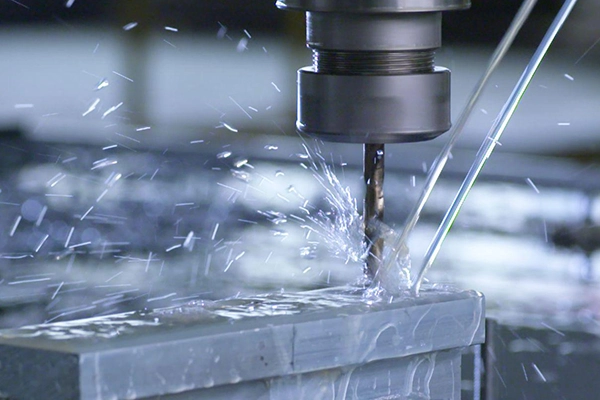
Machining Considerations: Aluminum is generally easy to machine, but it is sticky. Without proper coolant flow and sharp polished carbide tools, aluminum can form a built-up edge on the cutting tool, degrading surface finish. For high-volume custom screw machine parts in aluminum, through-tool coolant and chip-breaking tool geometries are essential.
Deep Dive: Stainless and Alloy Steel
When strength, durability, or corrosion resistance are paramount, stainless steel or alloy steel is the answer.
Stainless screw machine parts are specified across nearly every industry. 303 stainless is the free-machining variant, containing sulfur to improve chip breakage. It is ideal for medical devices, automotive fuel system components, and communication equipment where corrosion resistance is needed. For surgical implants or marine environments, 316L offers superior corrosion resistance and biocompatibility. 17-4 PH provides exceptional strength and can be precipitation-hardened after machining.
Alloy steel screw machined parts are chosen when the application demands high tensile strength, wear resistance, or the ability to be case-hardened. 12L14 is the classic leaded free-machining steel—extremely economical for high-volume, non-critical applications. 4140 and 8620 are chromium-molybdenum alloys that offer excellent strength and toughness after heat treatment.
Copper screw machined parts are essential in electrical and thermal applications. Pure copper (C101, C110) is highly conductive but notoriously difficult to machine—it is gummy and tends to produce long, stringy chips. For precision machining, tellurium copper (C145) is the preferred choice. The addition of tellurium improves machinability dramatically while maintaining 90% or more of pure copper’s electrical conductivity.
How Material Choice Affects Tolerances and Surface Finish
One of the most frequent questions I receive from engineers is whether a given material can hold tight tolerances. The answer is almost always yes—but with caveats.
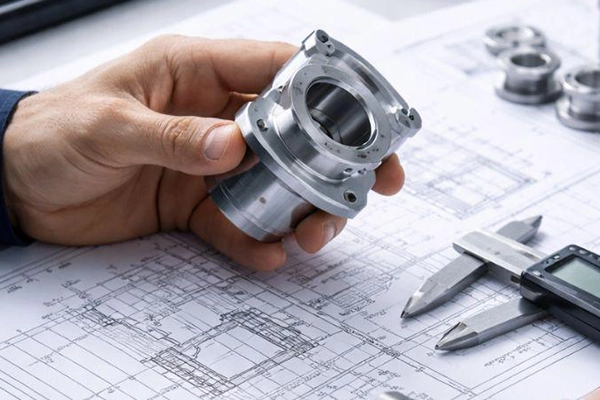
For CNC Swiss screw machined parts, we routinely hold ±0.005mm on critical diameters in brass, aluminum, and free-machining stainless. However, materials with high thermal expansion coefficients (like aluminum) require careful attention to coolant temperature control during long runs. Gummy materials (like pure copper or 304 stainless) may require slower cutting speeds to achieve the same tolerance stability.
Surface finish is also material-dependent. Brass naturally achieves a smooth, shiny finish. Aluminum can be machined to a mirror finish with the right tools and speeds. Stainless steel typically requires slightly higher surface finishes (lower Ra values) to achieve a bright appearance, which adds cycle time.
Material
Typical Tolerances (Production)
Typical Surface Finish (Ra)
C360 Brass
±0.005mm
0.4–0.8µm
6061 Aluminum
±0.005–0.01mm
0.8–1.6µm
303 Stainless
±0.005–0.01mm
0.8–1.6µm
316L Stainless
±0.01mm
1.6µm
4140 Alloy Steel
±0.01mm
0.8–1.6µm
C145 Tellurium Copper
±0.005–0.01mm
1.6µm
The Swiss Advantage for Complex Materials
Not all screw machine parts manufacturers are equipped to handle the full range of materials effectively. CNC Swiss screw machined parts benefit from the inherent rigidity of the guide bushing system, which supports the material directly at the cutting point. This is particularly advantageous for:
Long, slender parts in stainless steel: The guide bushing prevents deflection that would otherwise occur with standard turning.
Hard materials like 17-4 PH or 4140: The rigid setup allows for heavier cuts without chatter.
Thin-wall components: The support minimizes distortion, allowing wall thicknesses as low as 0.3mm.
If your project involves challenging geometries or difficult materials, reviewing the capabilities of Swiss turned parts can help you understand how process selection impacts material feasibility.
Cost Considerations: Balancing Material and Machinability
When evaluating custom screw machine parts, the material cost per kilogram is only part of the equation. A less expensive material that is difficult to machine often results in a higher total part cost due to:
Longer cycle times
More frequent tool changes
Higher scrap rates
Additional secondary operations
For high-volume production, specifying a free-machining grade (such as 303 instead of 304 stainless, or 12L14 instead of 1018 steel) almost always reduces total cost, even if the raw material price is slightly higher.
Application Spotlight: Industry-Specific Material Choices
Medical: 303 stainless, 316L stainless, titanium (Grade 5). Requirements include biocompatibility, sterilizability, and full material traceability.
Semiconductor: C360 brass, tellurium copper, 303 stainless. Requirements include cleanliness, conductivity, and tight tolerances.
Consumer Electronics: 6061 aluminum, 7075 aluminum, 303 stainless. Requirements include cosmetic appearance, lightweight, and high volume.
Communication Equipment: C360 brass, aluminum, 303 stainless. Requirements include conductivity, plating compatibility, and RF performance.
Automotive: 12L14 steel, 303 stainless, 4140 alloy steel. Requirements include durability, vibration resistance, and cost-effectiveness.
Automation: 6061 aluminum, 4140 steel, 303 stainless. Requirements include wear resistance, precision, and reliability.
Conclusion
Selecting the right material for custom screw machine parts is a balancing act between mechanical requirements, manufacturability, and cost. The most successful projects start with a clear understanding of the operating environment, then choose a material that not only meets performance needs but also aligns with the capabilities of high-speed CNC Swiss machining.
When you have a material that falls outside the standard spectrum—or if you are uncertain whether your chosen alloy is optimized for high-volume production—our engineering team offers DFM reviews to identify opportunities for cost and lead-time reduction. We have extensive experience running everything from free-cutting brass to difficult stainless and alloy steels across medical, semiconductor, consumer electronics, communication, automotive, and automation applications.
If you are sourcing CNC swiss screw machined parts and would like a material recommendation or a design review, reach out to us. We are happy to share our experience and help you get the most value from your next project.
People Also Ask
What is the best material for custom screw machine parts? There is no single “best” material—it depends on the application. For conductivity and machinability, C360 brass is excellent. For lightweight strength, 6061 or 7075 aluminum are top choices. For corrosion resistance and strength, 303 or 316L stainless steel is preferred.
Why is brass so common in screw machine parts? Brass, especially C360 free-cutting brass, machines extremely well. It produces short chips, allows high cutting speeds, and yields a smooth finish. It is also highly conductive and corrosion-resistant, making it ideal for electronic and fluid handling components.
Can stainless steel be used for high-volume screw machine parts? Yes, 303 stainless is specifically designed for high-speed machining. With proper tooling and coolant, we routinely run stainless for high-volume custom screw machine parts in medical and automotive applications.
What is the difference between 303 and 316L stainless for machining? 303 contains sulfur to improve machinability, making it easier to cut and faster to run. 316L has superior corrosion resistance and is more biocompatible, but it is slightly more difficult to machine and requires slower speeds.
How do I choose between aluminum and steel for my part? Consider weight, strength, and environment. Aluminum is lighter and naturally corrosion-resistant, ideal for consumer electronics and automation. Steel offers higher strength and wear resistance, better for automotive and high-load applications.
Ready to start
Your next project?
Contact our technical experts today for a customized solution and a tailored quotation.
Our expert team will contact you within 24 hours
to provide a free technical evaluation and solution design, helping you upgrade your production process.
ADDRESS
NO.22,You Yi Road ,Wulian Community, LongCheng Street ,Long gang District ,Shen Zhen