Getting Material Right in Custom Swiss Turning Parts: A Practical Guide
Over the years, I’ve seen more RFQs fail because of material missteps than because of poor machine programming. Engineers often select an alloy based on a quick glance at a material database, without considering how that specific grade behaves under Swiss-type machining conditions. The choice of custom Swiss turning parts materials isn’t just about meeting a spec sheet—it directly affects cycle time, tool life, surface finish, and ultimately your landed cost. If you’re working with CNC swiss turned aluminum 6061 components for consumer electronics or medical grade titanium swiss turning for surgical instruments, the material strategy changes completely.
If you’re sourcing precision turned components for medical devices, automotive sensors, or consumer electronics, you need to understand the trade-offs. A material that machines beautifully in a conventional lathe can become a nightmare in a Swiss platform if its chip formation is unpredictable. Conversely, a properly matched alloy can cut cycle times in half.
The Real Cost of Material Selection: Beyond the Price Per Pound
Most purchasing agents focus on raw material cost. But in Swiss turning, material cost is often the smallest line item. The bigger cost drivers are cycle time and tool wear. Here’s what I tell my clients when they ask about material alternatives:
Material
Relative Material Cost
Machinability Index
Typical Cycle Time Impact
Tool Wear Rate
1215 Steel
Low
Excellent (150%)
Baseline
Low
303 Stainless
Medium
Good (78%)
+15–20%
Medium
316L Stainless
Medium-High
Fair (60%)
+30–40%
High
360 Brass
Medium
Excellent (200%)
-10–15%
Very Low
6061 Aluminum
Low
Excellent (150%)
Baseline
Low
Grade 5 Titanium
High
Poor (15%)
+80–100%
Very High
C17200 Beryllium Copper
High
Fair (50%)
+25–35%
High
The decision logic here is straightforward: if your part geometry is complex and volumes are high, spending a little more on a free-machining grade often saves more in cycle time and tooling than it adds in material cost. I’ve seen projects switch from 316L to 303 stainless and cut overall part cost by nearly 20%, simply because the machine could run faster and tools lasted three times longer.
Stainless Steel in Custom Swiss Turning Parts: 303 vs. 316L vs. 17-4
Stainless steel is probably the most common material I quote. But the grade selection makes or breaks the job. When customers ask about custom Swiss turning parts stainless steel, I always start by asking: does the part actually need the corrosion resistance of 316L, or will 303 do the job?
303 Stainless: This is the workhorse. It contains sulfur to improve chip breaking, which is critical in Swiss turning where long, stringy chips can wrap around the guide bushing and crash the machine. If your application doesn’t require superior corrosion resistance or welding, 303 is almost always the right choice. It machines predictably, and we consistently hold tolerances down to 0.005mm without fighting the material.
316L Stainless: The low-carbon version of 316. It’s the standard for applications requiring biocompatibility or exposure to aggressive chemicals—think semiconductor gas delivery components or medical implants. The challenge with 316L is work hardening. If your cutting tool rubs rather than cuts, the surface hardens instantly and destroys the insert. In Swiss turning, we combat this with aggressive chip loads and high-pressure coolant directed precisely at the cutting zone.
17-4 PH Stainless: This precipitation-hardening grade is common in automotive sensors and automation components that require high strength after heat treatment. In the annealed condition (Condition A), it machines reasonably well on Swiss equipment. The key is to perform all machining before final heat treatment, then grind critical diameters afterward if needed.
Brass and Copper Alloys: When Conductivity Drives the Decision
When electrical conductivity or thermal management is the priority, brass and copper alloys come into play. For swiss turned parts brass and copper alloy, the machinability range is enormous—from the almost-effortless 360 brass to the notoriously difficult pure copper.
360 Brass(Free-Cutting Brass): This material practically machines itself. I’ve run small swiss turning brass parts for electronics at spindle speeds exceeding 8,000 RPM with feed rates that would destroy carbide in stainless. The chips are small, the surface finish is naturally bright, and tool life is exceptional. For communication device connectors and consumer electronic terminals, brass is often the most cost-effective solution.
C110 (Electrolytic Tough Pitch Copper): Pure copper is the opposite of brass. It’s gummy, tends to produce long, stringy chips, and has a tendency to gall on tooling. In Swiss turning, we use specialized chip-breaking geometries and high-pressure coolant to manage the material. If conductivity requirements allow, C145 (tellurium copper) or C182 (chrome copper) are significantly easier to machine and still offer excellent conductivity.
C17200 Beryllium Copper: This is a high-performance alloy used in semiconductor test probes and automotive connectors that require both conductivity and spring properties. It machines similarly to hardened steel and requires rigid setups and sharp carbide tooling. The material cost is high, but for mission-critical components where failure is not an option, it’s the standard.
The decision logic: if your part needs electrical conductivity and aesthetic surface finish, choose brass. If it needs conductivity and spring properties, beryllium copper is the answer, but be prepared for longer cycle times.
Medical Grade Titanium Swiss Turning: Why It Costs More
Titanium is a material that separates experienced Swiss shops from beginners. Medical-grade titanium swiss turning is typically Grade 2 (commercially pure) or Grade 5 (Ti-6Al-4V). When a medical device engineer specifies titanium, they’re prioritizing biocompatibility and strength-to-weight ratio over cost.
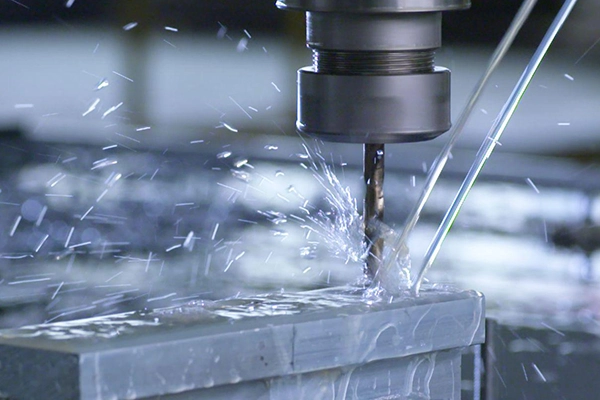
The machinability of titanium is poor—it has low thermal conductivity, meaning heat stays at the cutting edge rather than dissipating into the chip. It also has a strong tendency to work harden. In Swiss turning, we approach titanium with:
Sharp, polished carbide inserts to minimize cutting forces
High-pressure coolant (minimum 1,000 PSI) directed precisely at the cutting zone to evacuate heat and break chips
Conservative speeds and aggressive feeds—feeding too slowly causes rubbing and work hardening
For surgical instruments and implantable devices, the surface finish and burr-free condition are as critical as dimensional accuracy. A poorly machined titanium part can have microscopic burrs that compromise sterility or cause tissue irritation. Swiss turning’s ability to produce clean, finished parts in a single cycle is why it dominates this space.
Aluminum in Swiss Turning: The High-Volume Workhorse
If there’s one material that makes Swiss turning look easy, it’s aluminum. When I’m quoting CNC swiss turned aluminum 6061 components, I know the process will be stable, the cycle times will be short, and tool life will be excellent.
6061 aluminum machines with excellent chip control, produces a good surface finish without secondary operations, and allows for high spindle speeds that maximize throughput. In consumer electronics—think smartphone hinge components or camera barrel housings—aluminum is the go-to because it’s lightweight and can be anodized in a range of colors.
The only caution with aluminum in Swiss turning is chip evacuation at very high speeds. With proper high-pressure coolant and chip-breaking tool geometries, we can run 6061 continuously with minimal operator intervention.
Machinability of Different Alloys in Swiss Turning: A Practical Comparison
Understanding the machinability of different alloys in swiss turning is not just about material hardness. It’s about chip formation, thermal conductivity, and abrasiveness. Here’s how common alloys compare in real production conditions:
Alloy Family
Chip Formation
Coolant Requirement
Typical Feed Rate (IPR)
Surface Finish (Ra)
Free-Cutting Steel
Short, brittle
Standard flood
0.004–0.008
0.8–1.6 µm
Stainless (303)
Short, manageable
Standard flood
0.003–0.006
0.4–0.8 µm
Stainless (316L)
Stringy, can be difficult
High-pressure recommended
0.002–0.004
0.4–0.8 µm
Brass (360)
Powder-like, excellent
Optional
0.005–0.010
0.2–0.4 µm
Aluminum (6061)
Short, easy
Standard flood
0.004–0.008
0.4–0.8 µm
Titanium (Grade 5)
Stringy, heat-sensitive
High-pressure mandatory
0.002–0.004
0.8–1.6 µm
The key takeaway: materials with higher machinability ratings allow for faster feeds, longer tool life, and more predictable processes. When I review a new part print, I always check whether the specified material can be substituted with a more machinable grade without compromising function.
Surface Finish Options for Swiss Turned Parts: From As-Machined to Electropolished
Raw machined surface finish is rarely the final state. Surface finish options for swiss turned parts range from as-machined to high-polish, and the material choice heavily influences what’s achievable.
As-Machined: For most aluminum and brass parts, the as-machined surface is often acceptable for internal or non-visible components. Typical Ra values range from 0.4 to 0.8 µm.
Tumble Deburring: A cost-effective option for small swiss turning brass parts for electronics where sharp edges need to be removed but a precise edge break isn’t required.
Electropolishing: Standard for medical-grade stainless and titanium. It removes a thin surface layer, eliminates burrs, and improves corrosion resistance. For medical grade titanium swiss turning, electropolishing is often specified to achieve the required biocompatible surface.
Passivation: For 303 and 316L stainless parts, passivation removes free iron from the surface and restores the chromium oxide layer. It’s standard in semiconductor and medical applications.
Anodizing: Type II or Type III anodizing for CNC swiss turned aluminum 6061 components adds hardness, wear resistance, and color options for consumer-facing applications.
Common Material-Related Errors I See on RFQs
After a decade of troubleshooting production issues, I’ve seen the same mistakes repeated. Here’s what to avoid:
Specifying 316L When 303 Would Work: If your part doesn’t need the superior corrosion resistance or weldability of 316L, 303 will give you faster cycle times and longer tool life at a lower material cost.
Using Pure Copper Without Consulting the Machinist: Copper’s gummy nature makes it one of the most difficult materials for Swiss turning. If conductivity requirements allow, specify C145 or C182 instead.
Ignoring the Impact of Hardness Variations: Some materials, like 17-4 PH, change machinability dramatically depending on heat treatment state. Always specify the condition (e.g., Condition A for machining) on your print.
Assuming All Brass is the Same: 360 brass is the machinability standard. Lower-cost brass alloys often contain impurities that cause inconsistent chip formation and accelerated tool wear.
Decision Logic: Matching Material to Application
Use this decision matrix to guide your material selection for custom Swiss turned parts:
If Your Priority Is…
Choose…
Why
Lightweight + Cosmetic Finish
6061 Aluminum
Fast machining, excellent anodizing response, good strength-to-weight ratio
Corrosion Resistance + Moderate Cost
303 Stainless
Best machinability in the stainless family, good for most industrial and automotive applications
Maximum Corrosion Resistance + Biocompatibility
316L Stainless or Grade 5 Titanium
316L for lower-cost medical; titanium for highest strength-to-weight and biocompatibility
Electrical Conductivity + Machinability
360 Brass
Excellent conductivity, naturally bright finish, fastest cycle times
High Strength + Spring Properties
C17200 Beryllium Copper
Conductivity plus mechanical properties; used in semiconductor test contacts and connectors
High Strength After Heat Treat
17-4 PH Stainless
Machined in soft state, then hardened to achieve high tensile strength
Real-World Industry Applications
Different industries drive different material choices in Swiss turning.
Conductivity for RF connectors; durability for housing components
Automotive
303 Stainless, 17-4 PH, 1215 Steel
Cost-effective solutions with appropriate strength and corrosion resistance
Automation Equipment
6061 Aluminum, 303 Stainless, 1215 Steel
Mix of lightweight for moving components and durability for structural parts
Why Partnering with a Swiss Turning Specialist Matters
Selecting the right custom Swiss turning parts materials is not a one-size-fits-all decision. It requires balancing functional requirements against machinability, cycle time, and cost. A partner who understands these trade-offs can help you optimize your design before a single chip is cut.
If your project involves complex geometries in challenging alloys, we’re happy to review your print and suggest material alternatives that maintain function while reducing cost. We’ve worked with engineers across medical, semiconductor, automotive, and automation industries to refine material selection for manufacturability. For a deeper look at how we approach high-value medical materials, see our dedicated page on medical grade titanium swiss turning .
Frequently Asked Questions (PAA)
1. What are the best materials for custom Swiss turning parts stainless steel applications? 303 stainless is the best choice for most applications due to its excellent machinability. For medical or semiconductor environments requiring superior corrosion resistance, 316L is the standard.
2. Why is brass so commonly used in small Swiss turning brass parts for electronics? 360 brass machines exceptionally well with short, powdery chips and allows for high spindle speeds. Its natural conductivity and bright surface finish make it ideal for connectors and terminals.
3. How does the machinability of different alloys in Swiss turning affect cycle time? Poor machinability materials like titanium or 316L require slower speeds and more frequent tool changes. Cycle times can easily double compared to free-machining materials like 303 or 360 brass.
4. What surface finish options are available for Swiss turned parts? As-machined finishes typically range from 0.4–0.8 µm Ra. For medical and semiconductor parts, electropolishing is common to achieve ultra-clean, burr-free surfaces.
5. Is medical grade titanium Swiss turning more expensive than stainless? Yes, typically 2–3 times higher. Titanium’s poor machinability drives longer cycle times and specialized tooling requirements, but its strength-to-weight ratio and biocompatibility justify the cost for medical implants.
Ready to start
Your next project?
Contact our technical experts today for a customized solution and a tailored quotation.
Our expert team will contact you within 24 hours
to provide a free technical evaluation and solution design, helping you upgrade your production process.
ADDRESS
NO.22,You Yi Road ,Wulian Community, LongCheng Street ,Long gang District ,Shen Zhen