Micro CNC Machining Services: Deep Optimization of Stainless Steel in Swiss Turning
Micro CNC machining services become significantly more complex when stainless steel enters the process—especially in micro Swiss turning where diameters are small, tolerances are tight, and process margins are extremely narrow.
In real production, stainless steel is not “just harder to machine.” The real issue is instability: unpredictable tool wear, work hardening, and heat accumulation that amplify at the micro scale. Many suppliers underestimate this, treating stainless steel like a slower version of aluminum. That assumption is exactly where problems begin.
This article focuses on one critical topic: how to truly stabilize stainless steel micro Swiss machining in production, not just in theory.
Where Cost Is Actually Lost in Stainless Steel Micro Machining
Most buyers evaluate micro CNC machining services based on unit price. On the shop floor, however, cost is rarely determined by machining time alone.
For stainless steel micro parts, cost loss typically comes from three hidden areas:
Factor
What Happens in Reality
Impact
Tool wear inconsistency
Edge breaks unpredictably
Scrap + downtime
Work hardening
Material becomes harder mid-process
Dimensional drift
Heat concentration
Localized thermal expansion
Tolerance instability
In one production case involving φ1.2 mm pins for a medical device, switching from brass to 304 stainless increased cycle time by only 18%, but total cost increased by over 40%. The reason was not speed—it was instability.
Decision logic:
If your part requires corrosion resistance and long-term durability → stainless steel is justified
If not, forcing stainless into micro parts is often a cost mistake
The Core Problem: Work Hardening at Micro Scale
At standard machining scale, work hardening is manageable. At micro scale, it becomes the dominant failure mode.
When cutting stainless steel (especially 304/316), the material surface hardens instantly under improper cutting conditions. In micro Swiss turning, where depth of cut can be less than 0.02 mm, the tool may start cutting hardened material instead of the base metal.
This creates a chain reaction:
Cutting force increases
Tool edge micro-chips
Heat rises locally
Dimensional accuracy shifts beyond ±0.005 mm
Once this cycle starts, it does not recover—it accelerates.
Why This Is Worse in Micro CNC Turning Services
In CNC micro turning services, the tool edge radius itself can be comparable to the chip thickness. This is why many engineers rely on experienced providers who understand cutting mechanics at this scale rather than applying standard CNC parameters.
The tool is not cutting cleanly—it is partially rubbing
Rubbing increases heat instead of removing material
Heat directly drives work hardening
This is why parameter control alone is not enough. The entire cutting mechanics must be reconsidered.
Stabilizing Stainless Steel: What Actually Works
1. Feed Rate Must Stay Above Minimum Chip Thickness
One of the most common mistakes is reducing feed rate to “protect the tool.”
In reality, going too low causes rubbing instead of cutting.
For stainless steel micro parts:
Minimum chip thickness ≈ 20–30% of tool edge radius
If feed < threshold → work hardening increases rapidly
This is counterintuitive but critical.
Decision logic:
If surface finish is poor → do NOT reduce feed blindly
Instead → optimize tool geometry and coolant
2. Tool Geometry Is More Important Than Coating
Many buyers focus on coatings like TiAlN or AlCrN. In micro machining, geometry matters more.
Key factors:
Sharp cutting edge (not overly honed)
Positive rake angle to reduce cutting force
Micro-polished flute for chip evacuation
A slightly sharper tool with moderate wear resistance often outperforms a heavily coated but blunt edge.
In custom micro CNC machining parts, this is where experienced suppliers differentiate themselves—not by machine brand, but by tooling strategy.
3. Heat Control Is a Process Design Problem
Heat is not just a byproduct—it is a variable you must actively manage.
In stainless steel micro machining:
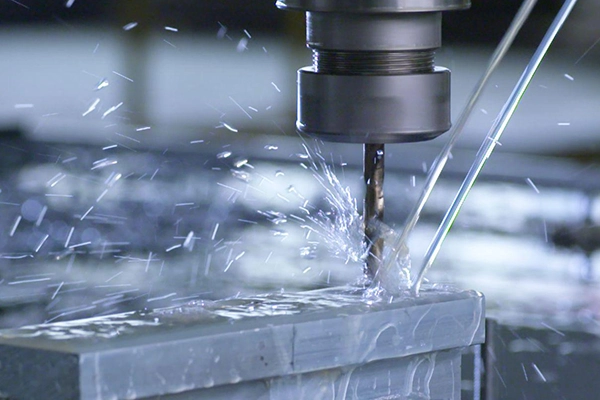
Heat does not dissipate through the chip efficiently
Small part geometry limits heat conduction
Guide bushing traps heat near the cutting zone
Effective strategies include:
High-pressure coolant (not just volume, but direction)
Shorter tool engagement time
Optimized toolpath to avoid dwell
Parameter
Typical Stable Range
Cutting Speed
70–110 m/min
Feed Rate
0.003–0.008 mm/rev
Coolant Pressure
80–120 bar
Achievable Tolerance
±0.005 mm
Why Many Micro CNC Machining Services Fail with Stainless Steel
From a buyer’s perspective, many suppliers claim they can machine stainless steel micro parts. In practice, few can do it consistently.
The difference lies in process understanding.
Common failure pattern:
Supplier uses aluminum-based parameters
Tool life drops quickly
Operator reduces feed rate
Work hardening increases
Scrap rate rises
At this point, the issue is misdiagnosed as “material difficulty,” when it is actually a process control failure.
Application Insight: Medical vs Electronics Components
Stainless steel micro parts are widely used across industries, but the optimization focus changes depending on application.
Industry
Key Requirement
Process Priority
Medical Devices
Surface integrity + corrosion resistance
Tool sharpness + stability
Consumer Electronics
Appearance + micro features
Burr control + consistency
Communication Equipment
Reliability
Dimensional stability
For example, in medical guide pins, even micro burrs can cause functional issues. In such cases, stability is more important than speed.
Decision logic:
If part function depends on surface → prioritize tool condition
If volume is high → prioritize process repeatability
When Stainless Steel Should Be Reconsidered
In some projects, stainless steel is specified by default rather than necessity.
From a manufacturing perspective, this is worth questioning.
Consider alternatives when:
Corrosion resistance is not critical
Electrical conductivity is required (brass/copper better)
Cost pressure is high
In small parts CNC micro machining, material substitution can reduce cost by 20–50% without affecting function.
Supplier Capability: What You Should Actually Ask
If you are sourcing a micro CNC machine service supplier, avoid generic questions like “Can you machine stainless steel?” Instead, evaluate whether they have real experience in where stability, not just capability, defines production success.
Instead, ask:
How do you control work hardening in micro parts?
What is your stable tolerance range over long runs?
How do you optimize tooling for diameters below 2 mm?
A capable micro CNC machining services factory will answer with process logic, not just machine specifications.
The key was not changing machines—it was understanding cutting mechanics.
Final Thoughts: Precision Comes from Process Understanding
Stainless steel micro machining is not about pushing machines harder—it’s about controlling variables more precisely.
If you are working on custom micro CNC machining parts or evaluating micro CNC machining services China, the real value lies in process stability, not just quoted price.
If you have a stainless steel micro component project, feel free to share your drawings. A proper process review at the early stage can often eliminate hidden risks before they appear in production.
PAA (People Also Ask)
Why is stainless steel difficult in micro CNC machining services?
Because of work hardening, heat concentration, and poor chip formation, all of which become more severe at micro scale.
What tolerance can be achieved with stainless steel micro parts?
Typically around ±0.005 mm, but maintaining this consistently across production is the real challenge.
How do I find a reliable micro CNC machining services China supplier?
Look for proven experience in services for CNC micro machining parts, especially with stainless steel and tight tolerances, not just general CNC capability.
Is stainless steel always the best choice for micro parts?
No. It should only be used when corrosion resistance or strength is essential. Otherwise, materials like brass or aluminum offer better machinability and lower cost.
What is the biggest mistake in CNC micro turning services for stainless steel?
Reducing feed rate too much, which leads to rubbing instead of cutting, accelerating work hardening and tool failure.
Ready to start
Your next project?
Contact our technical experts today for a customized solution and a tailored quotation.
Our expert team will contact you within 24 hours
to provide a free technical evaluation and solution design, helping you upgrade your production process.
ADDRESS
NO.22,You Yi Road ,Wulian Community, LongCheng Street ,Long gang District ,Shen Zhen