Custom Micro Machining Services: How to Optimize Swiss Turning for Different Metals
Micro machining services require more than just a tight tolerance—they demand a deep understanding of how each metal responds to the cutting edge. After running Swiss‑type lathes for over a decade, I’ve seen otherwise sound programs fail because speeds and feeds were copied from a different alloy. Whether you’re working with gummy 316L stainless, heat‑sensitive titanium, or free‑machining brass, the adjustments you make to tooling, coolant, and chip control directly affect part quality and cycle time. This guide walks through those practical trade‑offs so you can get better results—and more competitive quotes—for custom parts in medical, semiconductor, and automotive applications.
Why Material Selection Defines Micro Machining Services Success
The conversation about micro machining services often starts with tolerances. But on the shop floor, the first question is always: What alloy are we cutting? The difference between 303 stainless and 316L, or between 6061 and 7075 aluminum, can change tool life by a factor of three and cycle time by 30%. Matching the material to the process is where real cost optimization begins. For a deeper look at the machine capabilities that allow us to handle these materials efficiently, visit our Swiss machining capabilities overview.
The Cost vs. Machinability Matrix
Before we dive into specific alloys, let’s look at a common trap buyers fall into: focusing solely on raw material cost while ignoring machinability.
If you specify a material that is “gummy” (like pure copper or soft 304 stainless) without telling the machinist the final application, you risk high tooling wear and potential burrs. Conversely, specifying a “free-machining” alloy (like 303 stainless or 1215 steel) saves money on cycle time but may fail if the part requires high corrosion resistance or welding.
Here is a quick reference guide based on our shop floor data for micro CNC machining services:
Material Family
Alloy Example
Machinability Rating
Relative Tool Wear
Common Application (Non-Aero)
Stainless Steel
303 / 316L
Low-Medium
High
Medical implants, Fluidics, Semiconductor fittings
For micromachining stainless steel services, the primary challenge isn’t hardness; it’s deflection. Stainless steel, particularly 304 and 316L, work-hardens instantly. If your tool rubs instead of cuts, the surface hardens, and the next cutting edge breaks.
The Optimization: When running custom small parts micro machining services in stainless, we adjust the radial engagement.
Mistake: Using a standard 0.4mm radius insert.
Fix: For micro parts (<3mm diameter), we use ultra-sharp ground inserts with a positive rake angle. We also reduce the lead angle to push the chip away from the uncut surface.
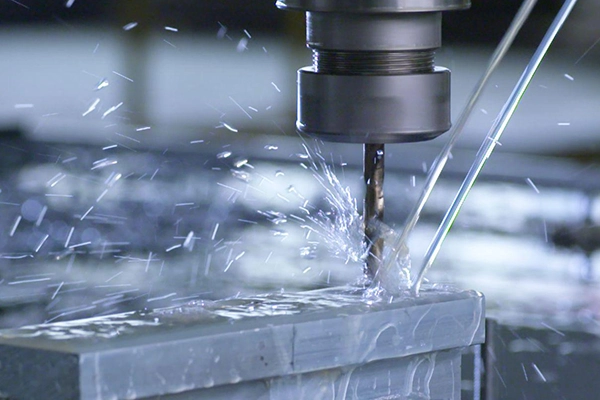
Coolant: High-pressure (1,000 PSI+) coolant is non-negotiable here. It breaks the stringy chips that wrap around the guide bushing and cause the part to bend.
Decision Logic: If your application involves bodily fluid contact (medical) or harsh chemical exposure (semiconductor wet benches), choose 316L despite the higher cycle time. If it is a structural automotive bracket or a dry environment component, choose 303 or 430F to cut your part cost by nearly 20% due to faster cycle times.
2. Titanium (Grade 5): Heat is the Enemy
Titanium is the material of choice for high-strength, lightweight medical and automotive components. However, it has poor thermal conductivity. The heat generated during cutting stays in the cutting zone rather than traveling into the chip.
The Optimization: For medical micro machining services involving titanium screws or bone fixation plates, we employ a “high-feed, low-speed” strategy.
Speed: We run at lower surface speeds (SFM) than stainless steel.
Feed: We maintain aggressive chip loads to ensure the tool cuts under the work-hardened layer.
Toolpath: We avoid full slotting. For micro milling services for small parts in titanium, we use trochoidal milling (dynamic toolpaths) to maintain consistent chip thickness and allow the tool to cool between passes.
3. Brass and Copper: Burr Control
Brass (C360) is a machinist’s best friend. It chips beautifully and holds tight tolerances easily. However, micro machining brass for communication devices or high-speed connectors requires a focus on burr management.
Because brass is soft and ductile, the entry and exit points of cuts can leave microscopic burrs that interfere with electrical contact in semiconductor probes or RF connectors.
The Optimization: We use specialized “wiper” inserts on the finishing passes. For micro milling, we program a climb milling strategy (versus conventional) and use a secondary deburring pass with a diamond-coated burr tool.
4. Aluminum: Adhesion and Built-Up Edge
Aluminum (6061 and 7075) is common in consumer electronics and automation. The issue isn’t hardness; it’s adhesion. Aluminum tends to weld itself to the carbide cutting edge, creating a “Built-Up Edge” (BUE). This changes the geometry of the tool, causing the part to go out of tolerance.
The Optimization:
Coatings: We avoid generic TiN coatings on aluminum. Instead, we use polished inserts or diamond-like carbon (DLC) coatings to reduce friction.
Coolant Concentration: We increase the coolant concentration to 10-12% for aluminum to improve lubricity, ensuring the chips slide off the rake face of the tool.
Process Optimization: Beyond Speeds and Feeds
Optimizing Swiss turning for these diverse metals isn’t just about changing the G-code. It requires a holistic approach to the setup. For a detailed overview of our equipment and capabilities, visit our micro machining services page.
1. Guide Bushing Selection For custom micro machining services, the guide bushing is often overlooked. For hard metals like titanium and stainless, we use carbide guide bushings to maintain rigidity and prevent the stock from vibrating. For softer metals like brass, hardened steel bushings suffice.
2. Chip Control Swiss machines rely on high-pressure coolant to break chips. If chips wrap around the tool, they can scratch the surface finish of a medical implant or a semiconductor component, rendering it scrap.
Stainless: Stringy chips. Use high-pressure, chip-breaking geometry inserts.
Brass: Small, granular chips. Easy to evacuate.
3. Tolerance Stack-Up We hold 0.005mm (5 microns) regularly for semiconductor and medical applications. However, to achieve this reliably, the workshop environment matters. We maintain a temperature-controlled facility (20°C ± 1°C) because a 5°C shift in the shop floor can change a 100mm long stainless steel part by several microns.
Swiss Turning vs. Traditional CNC Milling for Small Parts
A common question from engineers is when to use Swiss turning versus micro milling. Here is a decision matrix based on part geometry and material.
Feature
Swiss Turning (Sliding Headstock)
Micro Milling Services
Geometry
Cylindrical, long shafts, screws, pins
Prismatic, complex 3D surfaces, enclosures
Material
All metals, particularly long bars
All metals, best for soft metals and plastics
Volume
High-volume production (1,000+ parts)
Medium to high volume
Tolerance
Exceptional concentricity (<0.005mm)
Excellent positional tolerances
Best Fit
Medical bone screws, semiconductor pins
Consumer electronics housings, fluidic manifolds
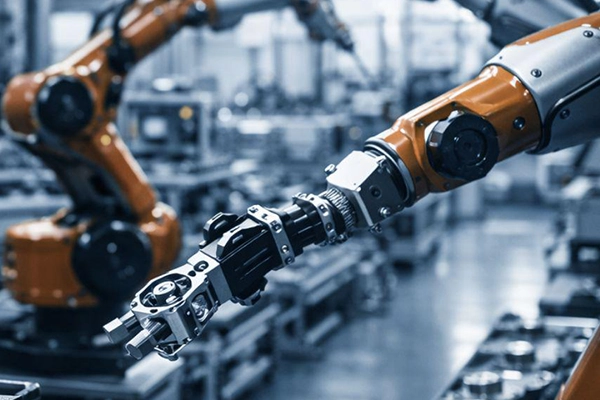
The Role of Automation in Quality Assurance
When you are looking for micro machining services near me, you should ask about their inspection methodology. For the industries we serve (medical, semiconductor, automotive), manual inspection with calipers isn’t acceptable.
We utilize in-process probing on the Swiss machine for critical features. For post-production, we use:
Vision Systems: For measuring micro features that are too small for tactile probes.
Surface Roughness Testers: Critical for sealing surfaces in fluidics and automotive fuel systems.
CMM: For complex 3D geometries.
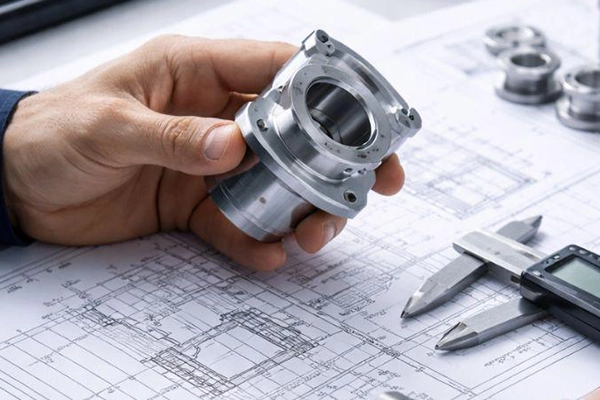
If a supplier claims they offer custom small parts micro machining services, verify if they have the metrology equipment to back it up. A machine shop is only as good as its inspection report.
Common Engineering Mistakes in Material Selection
Over-specifying stainless steel. I frequently see engineers spec 316L for a simple automotive bracket that will live its life in a dry cabin. 12L14 or 1215 steel would cut in half the time, offering a faster turnaround and lower cost.
Ignoring the micro-structure. For micro CNC machining services, the grain direction of the raw bar stock matters. For parts under 1mm in diameter, using cold-drawn bar with high internal stress can cause the part to “banana” (warp) after the centerless grinding or turning process. We often specify centerless ground stock for these micro parts to relieve stress before machining.
Forgetting the finishing process. A complex titanium medical part machined to perfection can still fail if the passivation or electropolishing isn’t done correctly. These post-processes remove a thin layer of material (usually 0.0025mm to 0.0075mm). If your design calls for a press-fit tolerance, you must account for the removal of material during finishing.
Ready to Optimize Your Next Project?
Choosing the right partner for your project is about more than just getting a quote. It’s about finding a shop that understands how material properties interact with machine dynamics.
Whether you need custom micro machining services for a Class III medical device, complex manifolds for semiconductor equipment, or high-volume pins for automotive sensors, we have the experience to guide you from prototype to production. We specialize in Swiss-type machining for diameters ranging from 0.1mm to 32mm. Contact us today to discuss your material requirements and print review—let’s ensure your project is engineered for manufacturability from the start. For engineers who prefer to dive deeper into process capabilities, our technical resources page covers machine specifications and inspection protocols in more detail.
Frequently Asked Questions (PAA)
1. What is the typical tolerance for micro machining services? For standard Swiss turning, we hold tolerances of +/- 0.005mm (5 microns) on diameter regularly. For specialized applications in semiconductor and medical, we can achieve +/- 0.002mm with optimized tooling and environmental controls. The limiting factor is usually the material stability and part geometry.
2. How do I choose between micro milling and Swiss turning? If your part is cylindrical, has a length-to-diameter ratio greater than 3:1, or requires high concentricity across multiple diameters, Swiss turning is the most efficient method. If your part requires complex pockets, flat surfaces, or undercuts that are not radial, micro milling is preferred. Many modern Swiss machines now include live tooling (milling spindles) to combine both operations.
3. Can you machine titanium for medical implants? Yes, we specialize in medical micro machining services for titanium (Grade 5 and Grade 23), 316L stainless, and cobalt-chrome alloys. We utilize high-pressure coolant systems (up to 1,500 PSI) and specialized carbide tooling to manage the heat and work-hardening characteristics of titanium, ensuring biocompatible surface finishes and no metallurgical damage.
Ready to start
Your next project?
Contact our technical experts today for a customized solution and a tailored quotation.
Our expert team will contact you within 24 hours
to provide a free technical evaluation and solution design, helping you upgrade your production process.
ADDRESS
NO.22,You Yi Road ,Wulian Community, LongCheng Street ,Long gang District ,Shen Zhen