Micro Precision Swiss Machining: How to Optimize the Process for Different Metals
Precision micro machining isn’t about hitting a number on a print—it’s about controlling the variables that make that number achievable, repeatable, and profitable. After a decade running Citizen and Tsugami Swiss type lathes, I’ve learned that the same program that works beautifully on C360 brass will fail catastrophically on 316L stainless. The cutting parameters that give you mirror finishes on 6061 aluminum will destroy an edge in Grade 5 titanium.
This guide focuses on the real world trade offs: how to match material properties to process parameters, where to invest in tooling, and how to structure your RFQ to get the best outcome from micro precision parts manufacturing in medical, semiconductor, and automotive applications.
Cost vs. Precision: The Material Trade Off You Need to Know
Most engineers assume precision drives cost. In reality, material selection often has a bigger impact on final part price than the tolerance itself. A free machining alloy can cut cycle time by 30% or more compared to a “gummy” alternative, even when both parts hold the same ±0.005 mm dimension.
The key is knowing where you can substitute without compromising function. Here’s a breakdown based on what we see on the shop floor for micro precision swiss machining:
Material
Precision Capability
Relative Cycle Time
Cost Driver
Best Application
303 Stainless
±0.005 mm achievable
Medium
Tool wear
Automotive sensors, dry environment components
316L Stainless
±0.005 mm achievable
High
Cycle time
Medical implants, semiconductor fluidics
Grade 5 Titanium
±0.005 mm achievable
Very High
Tool life
Medical instruments, high end automotive
C360 Brass
±0.003 mm achievable
Low
Raw material
RF connectors, pneumatic fittings
6061/7075 Aluminum
±0.005 mm achievable
Low
Surface finish
Consumer electronics, automation parts
1. Stainless Steel (303 vs. 316L): When Corrosion Resistance Costs You Cycle Time
Stainless steel is the backbone of medical and semiconductor components. But not all stainless is the same from a machining perspective.
303 stainless contains sulfur, which acts as a chip breaker. It machines predictably, holds ±0.005 mm without excessive tool wear, and produces manageable chips. 316L eliminates the sulfur for better corrosion resistance and weldability—but that same characteristic makes it “gummy.” Chips string out, work hardening builds up, and cycle times climb.
The Optimization:
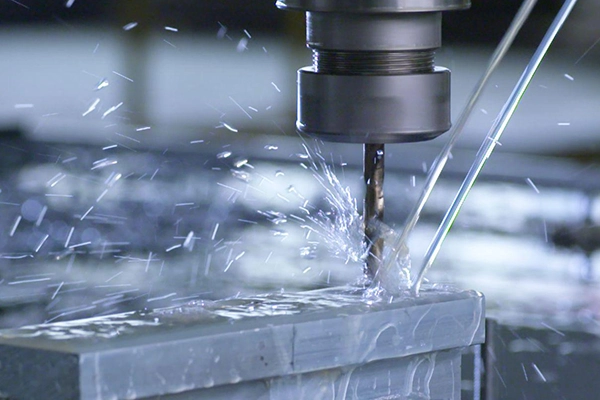
Tooling: For 316L, we switch to positive rake, sharp edge inserts with chip breaker geometry designed for austenitic stainless. Standard inserts for 303 won’t last.
Coolant: High pressure (1,000+ PSI) coolant is mandatory for 316L to break chips and prevent them from wrapping around the guide bushing.
Feed Strategy: Avoid light finishing passes on 316L. Light cuts create work hardening and make the next pass unpredictable. We use consistent chip loads to keep the cut stable.
Decision Logic:
If the part contacts bodily fluids or aggressive chemicals → choose 316L stainless despite the longer cycle time.
If the part operates in a dry or mild environment → choose 303 stainless or 430F to cut cycle time by 20–30% and reduce tooling cost.
Titanium is the go to for lightweight, high strength medical instruments and automotive components. But its low thermal conductivity means heat stays in the cutting zone, rapidly wearing tools and compromising surface finish.
The Optimization: For custom micro precision machining parts in titanium, we run a “high feed, low speed” strategy:
Surface Speed: We keep SFM lower than stainless—typically 60–120 SFM depending on tool diameter.
Chip Load: Aggressive feed per tooth ensures the tool cuts under the work hardened layer rather than rubbing.
Toolpath: For micro features, we use trochoidal milling (dynamic toolpaths) to maintain consistent engagement and allow the tool to cool between passes.
Decision Logic:
If the application requires biocompatibility (surgical instruments, implants) or extreme strength to weight ratio → titanium is non-negotiable.
If the application is structural but not weight critical → consider 17 4 PH stainless or hardened aluminum to reduce machining cost significantly.
3. Brass and Copper: Precision Without Burrs
For micro screw machining precision solutions in communication devices and electronics, brass (C360) is ideal. It machines freely, holds tight tolerances, and produces small, granular chips that evacuate easily.
The challenge isn’t achieving precision—it’s maintaining it without microscopic burrs that interfere with electrical contact in semiconductor probes, RF connectors, or high speed data components.
The Optimization:
Cutting Strategy: We use climb milling exclusively for finishing passes. Conventional milling leaves burrs on the exit side.
Tool Geometry: Wiper inserts on turning passes produce a smoother surface and reduce the need for secondary deburring.
Secondary Operations: For critical contact surfaces, we add a micro deburring pass using diamond coated tools to ensure burr free edges.
Decision Logic:
If the part requires electrical conductivity, tight tolerances, and high volume → brass (C360) delivers the best cost to precision ratio.
If corrosion resistance or strength is the priority → stainless or beryllium copper may be required despite higher machining cost.
4. Aluminum: Managing Built Up Edge for Surface Finish
Aluminum (6061, 7075) dominates consumer electronics, automation components, and automotive housings. It’s lightweight, machines quickly, and holds ±0.005 mm without much trouble—until built up edge (BUE) ruins your surface finish.
Aluminum has a tendency to weld itself to the cutting edge. That adhesion changes the tool geometry mid cycle, causing parts to drift out of tolerance and leaving a rough, matte finish.
The Optimization:
Coatings: Polished inserts or diamond like carbon (DLC) coatings prevent aluminum from sticking to the rake face.
Coolant Concentration: We increase coolant concentration to 10–12% for aluminum to improve lubricity.
Toolpath: High speed machining (HSM) toolpaths with consistent radial engagement keep heat low and chips small.
Decision Logic:
If the part requires lightweight, good strength, and cosmetic surface finish → 6061 aluminum with polished tooling is the standard.
If the part needs higher strength and wear resistance (automotive linkages, structural brackets) → 7075 aluminum, though it requires sharper tooling to avoid work hardening.
Micro CNC Turning for Precision Parts: Swiss vs. Conventional
A common question from engineers is when to use Swiss type turning versus conventional CNC turning for micro CNC turning for precision parts. Here’s the decision matrix we use:
Feature
Swiss Type Turning (Sliding Headstock)
Conventional CNC Turning
Diameter Range
0.1 mm – 32 mm
10 mm – 200 mm+
Length to Diameter Ratio
Up to 30:1 (with guide bushing)
Limited by chucking (typically <3:1)
Concentricity
Exceptional (<0.005 mm)
Good, but limited by chucking
Secondary Operations
Live tooling for milling, cross drilling, threading in one cycle
Usually requires second operation
Best Application
Long, slender parts; high volume medical and semiconductor components
Larger diameters; lower volume runs
For micro metal machining precision services, Swiss type is the clear choice when parts are under 20 mm in diameter and require tight concentricity across multiple features.
Quality Assurance: How We Validate Precision at Scale
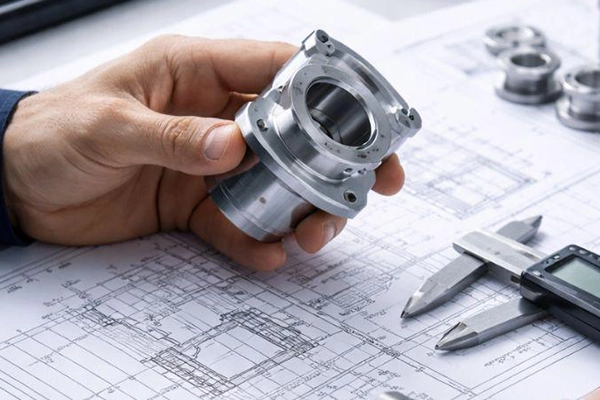
Precision is meaningless without verification. For the industries we serve—medical, semiconductor, automotive—manual inspection with calipers doesn’t meet the standard.
We use:
In Process Probing: Each Swiss machine has touch probes that verify critical dimensions during the cycle, automatically compensating for tool wear.
Vision Systems: For micro features under 0.5 mm, tactile measurement isn’t accurate enough. Vision systems measure to sub micron resolution.
Surface Roughness Testers: Essential for sealing surfaces in fluidics and automotive fuel systems.
CMM: For complex 3D geometries and first article inspection reports.
When evaluating micro machining services china manufacturer capabilities, ask about their metrology equipment. A shop that doesn’t have vision measurement for micro features isn’t equipped for precision micro work.
Common Engineering Mistakes in Precision Micro Machining
1. Over specifying material for the application I regularly see engineers specify 316L stainless for a simple bracket that will live in a dry automotive environment. 303 stainless or even 1215 steel would cut cycle time by 30% and tooling cost by 20%, with no functional downside.
2. Ignoring the finishing process A titanium medical part machined to ±0.005 mm can still fail if passivation or electropolishing removes 0.005 mm from a press fit feature. These post processes need to be accounted for in the design and tolerances.
3. Underestimating the impact of bar stock quality For micro precision parts manufacturing, the raw material matters as much as the machining. Cold drawn bar with high internal stress can warp after centerless grinding, especially for parts under 1 mm diameter. We specify centerless ground stock for these applications to relieve stress before machining.
Ready to Optimize Your Precision Micro Machining Project?
Choosing the right partner for precision micro machining means finding a shop that understands material behavior, not just machine capability. We’ve spent years refining our processes for stainless, titanium, brass, and aluminum across medical, semiconductor, consumer electronics, automotive, and automation applications.
Whether you need custom micro precision machining parts for a Class III medical device, high volume pins for semiconductor test equipment, or complex connectors for communications, we have the experience to guide you from prototype to production.
Contact us today to discuss your material requirements and print review—let’s make sure your project is engineered for precision from the start. For a deeper look at our Swiss machining capabilities, visit our micro precision swiss machining overview.
Frequently Asked Questions (PAA)
1. What tolerance can precision micro machining achieve? For standard Swiss turning, we hold ±0.005 mm (5 microns) on diameter routinely. For specialized applications in medical and semiconductor, we can achieve ±0.002 mm with optimized tooling, environmental controls, and centerless ground bar stock.
2. How do I choose between Swiss turning and CNC milling for precision small parts? If your part is cylindrical, has a length to diameter ratio greater than 3:1, or requires high concentricity across multiple diameters, Swiss turning is the most efficient method. If your part has complex pockets, flat surfaces, or undercuts that aren’t radial, micro milling is preferred. Many modern Swiss machines combine both with live tooling.
3. Can you machine titanium for medical instruments? Yes. We specialize in micro metal machining precision services for Grade 5 and Grade 23 titanium, 316L stainless, and cobalt chrome alloys for medical applications. We use high pressure coolant (up to 1,500 PSI) and specialized carbide tooling to manage the heat and work hardening characteristics of titanium.
4. What are the cost differences between materials for precision micro machining? Brass (C360) is the most cost effective for high volume precision parts, followed by aluminum (6061). 303 stainless adds 20–30% to cycle time compared to brass. 316L and titanium add significantly more due to slower speeds, higher tool wear, and longer cycle times. The right material depends entirely on the application requirements.
5. How do I evaluate a micro machining services China manufacturer for quality? Look for shops with vision measurement systems (not just calipers), temperature controlled facilities, and in process probing on Swiss machines. Ask for a first article inspection report (FAIR) on a sample part. A capable manufacturer will have documented quality processes and be willing to share them.
Ready to start
Your next project?
Contact our technical experts today for a customized solution and a tailored quotation.
Our expert team will contact you within 24 hours
to provide a free technical evaluation and solution design, helping you upgrade your production process.
ADDRESS
NO.22,You Yi Road ,Wulian Community, LongCheng Street ,Long gang District ,Shen Zhen