7 Powerful Benefits of Simultaneous 5 Axis CNC Machining You Should Know
In high-end manufacturing, 5-axis simultaneous CNC machining is a reliable way to make complex parts with high precision and efficiency across many industries. Unlike traditional machining methods, this advanced process allows continuous movement along five axes during cutting, resulting in better surface quality, reduced setup time, and tighter accuracy. For procurement teams and engineers, understanding where this technology delivers real value is essential before making sourcing decisions.
What Is Simultaneous 5 Axis CNC Machining?
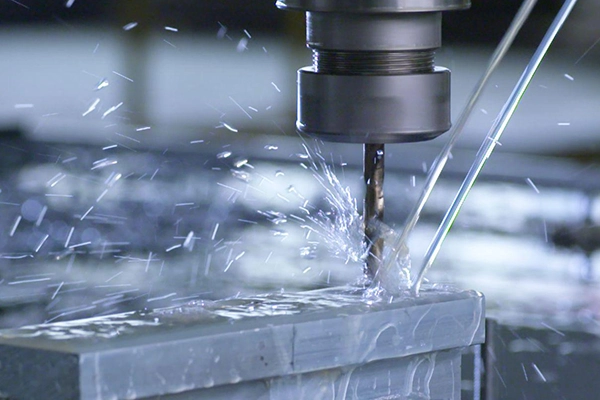
Simultaneous 5-axis machining means all five axes move nonstop while cutting material, so the cutting tool can stay in the best position toward the workpiece. This removes the need for repeated repositioning and keeps cutting conditions steady.
In actual production, this method greatly improves machining stability, cuts down on total errors, and lets makers create complex shapes that are hard or even impossible to make with traditional 3-axis or indexed machining.
3+2 vs Simultaneous 5 Axis Machining: Which One Truly Wins?
The comparison between 3+2 vs simultaneous 5 axis machining is critical when evaluating machining strategies for complex components.
While both methods utilize five axes, their operational behavior differs significantly. Indexed (3+2) machining locks the axes during cutting, whereas simultaneous machining maintains continuous movement.
Feature
3+2 Machining
Simultaneous 5 Axis CNC Machining
Axis Movement
Indexed
Continuous
Setup Requirements
Multiple
Single
Surface Finish
Moderate
Superior
Programming Complexity
Lower
Higher
Overall Efficiency
Moderate
High
From a total cost perspective, simultaneous 5 axis CNC machining often delivers better value for complex parts by reducing setups and improving first-pass yield.
Understanding 5 Axis Toolpath Strategy in Real Manufacturing
A robust 5 axis toolpath strategy is essential for achieving stable, efficient machining results. It determines how the tool engages with the material, directly impacting accuracy, surface finish, and tool life.
In practical manufacturing, engineers must balance cutting forces, machine dynamics, and thermal stability. Poor strategy selection can lead to vibration, premature tool wear, or dimensional inaccuracies.
Strategy Type
Typical Use
Advantage
Swarf Cutting
Thin walls
Consistent engagement
Morph Toolpath
Freeform surfaces
Smooth transitions
5-Axis Contouring
Complex curves
High precision
Adaptive Clearing
Roughing
Efficient removal
Choosing the right approach ensures that simultaneous 5 axis CNC machining delivers predictable and repeatable results.
How Multi Axis CNC Tool Movement Enhances Accuracy
The concept of multiaxis CNC tool movement plays a fundamental role in precision improvement. By continuously adjusting the tool angle, the machine maintains optimal cutting conditions throughout the operation.
This reduces positional errors caused by multiple setups and improves dimensional consistency across the entire part. It also allows better chip evacuation and thermal control, both of which are essential for tight tolerance manufacturing.
Precision Comparison
Tolerance
±0.01 mm
±0.003–0.005 mm
Surface Finish
Ra 1.6–3.2 µm
Ra 0.4–0.8 µm
Setup Count
Multiple
Single
Rework Rate
Higher
Lower
This is one of the main reasons why simultaneous 5 axis CNC machining is widely used in precision-critical industries.
l Applications: Complex Surface Machining Process Explained
Complex surface machining is very important for making parts with complicated shapes and smooth curves.
In industries like medical devices, semiconductor equipment, and automotive systems, parts often need accurate shapes and smooth surface transitions. Traditional machining has trouble meeting these needs because the cutting tool can only move in limited directions.
Using simultaneous 5-axis CNC machining, manufacturers can finish these surfaces in one setup. This makes sure parts are dimensionlly accurate and have high-quality surface finishes.
Freeform Surface CNC Machining for Advanced Designs
Freeform surface CNC machining enables the production of highly complex, organic shapes that are difficult to define using standard geometric parameters.
This capability is particularly valuable for parts where performance depends on smooth surface continuity or fluid dynamics. It also improves aesthetic quality for visible components in consumer-facing products.
With simultaneous 5 axis CNC machining, manufacturers can maintain continuous tool contact and achieve seamless surface transitions without visible tool marks.
When You Need an Advanced 5 Axis CNC Machining Service
For example, parts with deep cavities, undercuts, or multi-angle features benefit significantly from simultaneous machining. It also reduces fixture complexity and shortens lead times.
Working with a supplier that specializes in advanced 5 axis CNC machining service can help ensure consistent quality, optimized tool paths, and reliable production outcomes.
High Precision Multi Axis Machining: Real Cost Advantage
High precision multi axis machining is often misunderstood as a high-cost solution. In reality, it frequently reduces total manufacturing cost when applied correctly.
By minimizing setups, reducing scrap rates, and improving machining efficiency, it delivers measurable cost savings over the entire production cycle.
Cost Comparison
Cost Factor
Traditional CNC
Simultaneous 5 Axis CNC Machining
Setup Time
High
Low
Fixture Cost
High
Reduced
Scrap Rate
Higher
Lower
Cycle Time
Longer
Shorter
Total Cost
Variable
Optimized
This is where simultaneous 5 axis CNC machining demonstrates its real value beyond just technical capability.
Common Materials Used in 5 Axis Machining
Material selection plays a critical role in determining machining strategy, tool life, and final part quality.
Different materials respond differently to cutting forces, heat generation, and tool engagement angles. Understanding these differences helps optimize process parameters.
Material
Machining Difficulty
Typical Application
Aluminum
Easy
Electronics, housings
Stainless Steel
Moderate
Medical, industrial
Titanium
Difficult
High-strength components
Engineering Plastics
Easy
Insulators, precision parts
For complex geometries, simultaneous 5 axis CNC machining allows better control over cutting conditions across all these materials.
Tolerance and Surface Finish Control Techniques
Maintaining tight tolerances and high-quality surface finishes requires more than machine capability. It depends on process control, tool selection, and programming strategy.
In advanced manufacturing environments, achieving tolerances within ±0.005 mm requires careful calibration, thermal stability control, and optimized cutting parameters.
Control Factor
Impact
Tool Selection
Surface finish
Cutting Speed
Heat generation
Machine Calibration
Dimensional accuracy
Toolpath Optimization
Consistency
These techniques ensure that simultaneous 5 axis CNC machining delivers reliable, repeatable results across production batches.
Production Workflow in Real Manufacturing
Understanding the workflow behind simultaneous 5 axis CNC machining helps buyers evaluate supplier capability and risk.
The process typically includes design preparation, CAM programming, simulation, machining, and final inspection.
At the programming stage, selecting the right 5 axis toolpath strategy is essential for avoiding collisions and ensuring machining efficiency.
Step
Description
CAD Design
3D modeling
CAM Programming
Toolpath creation
Simulation
Collision detection
Machining
Continuous cutting
Inspection
CMM verification
A well-controlled workflow ensures consistent quality and predictable lead times.
Buyer Decision Guide: When Is Simultaneous 5 Axis CNC Machining Worth It?
From a procurement perspective, choosing simultaneous 5 axis CNC machining should be based on measurable return on investment rather than simply selecting the most advanced technology available.
In real manufacturing scenarios, this process delivers the greatest value when part complexity, precision requirements, and production efficiency align. However, misuse or over-specification can lead to unnecessary costs.
When It Makes Sense
You should strongly consider this process when:
The part includes complex geometries, undercuts, or multi-angle features
Tight tolerances (≤ ±0.005 mm) are required
Surface finish plays a critical role in function or appearance
Reducing setup time can significantly improve consistency
Lower scrap rates are essential for cost control
Production volume justifies advanced programming investment
Common Mistakes Buyers Should Avoid
Even experienced sourcing teams can misapply advanced machining capabilities. Avoid these common pitfalls:
Using 5-axis machining for simple parts where 3-axis or 3+2 is sufficient
Ignoring the supplier’s CAM programming capability and experience
Focusing only on hourly machine rates instead of total production cost
Overlooking inspection and quality control capabilities
Not validating whether simultaneous machining is truly required
By evaluating both the benefits and limitations, buyers can ensure that simultaneous 5 axis CNC machining is applied where it delivers the highest technical and economic value.
PAA
What is simultaneous 5 axis CNC machining used for?
It is used to manufacture complex parts with intricate geometries, high precision requirements, and superior surface finish in a single setup.
Is simultaneous 5 axis CNC machining more expensive?
While machine rates are higher, overall production cost is often lower due to fewer setups, reduced scrap, and improved efficiency.
What tolerance can 5-axis machining achieve?
Typical tolerances range from ±0.003 mm to ±0.005 mm depending on material and machining conditions.
How is it different from 3+2 machining?
3+2 machining uses fixed positions during cutting, while simultaneous machining allows continuous movement, improving accuracy and efficiency.
Ready to start
Your next project?
Contact our technical experts today for a customized solution and a tailored quotation.
Our expert team will contact you within 24 hours
to provide a free technical evaluation and solution design, helping you upgrade your production process.
ADDRESS
NO.22,You Yi Road ,Wulian Community, LongCheng Street ,Long gang District ,Shen Zhen