Swiss Screw Machining Services: Engineered for Consistency at Scale
When you need thousands of tiny, identical parts with micron-level accuracy, Swiss screw machining services offer the most cost-effective solution. Unlike standard turning, Swiss machines make complex shapes in one pass — no extra operations and lower risk. Over the past 10 years, we have used this process to make over 500 million parts for industries where reliability is a must: medical implants, LiDAR housings, high-speed connectors, fuel injector bodies, and robotic actuators. Learn more about our Swiss machining services for complex parts.
Precision Screw Machine Parts – Why Sub 0.005mm Tolerances Are Routine
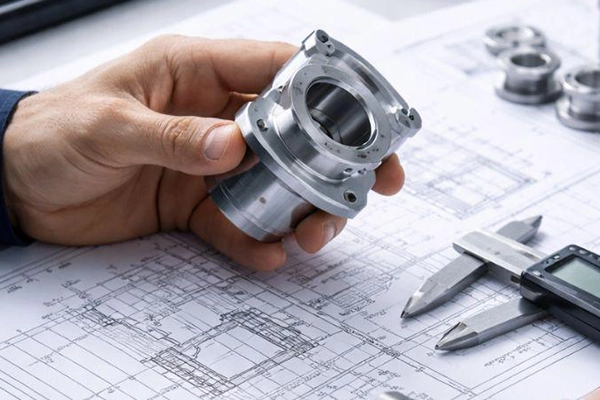
Many buyers think tight tolerances need slow, hand finishing. In fact, modern precision screw machine parts can reach ±0.005mm (5 microns) straight from the machine, as long as the setup controls heat expansion, tool wobble, and material consistency. For example, our process holds the major diameter within 0.008mm across 50,000 pieces for a 304 stainless steel medical bone screw with a 2mm core diameter and 0.2mm thread pitch, without any tool offset adjustments. The key is using a 20mm Swiss lathe with a 12,000 RPM spindle, 0.2-second indexing, live tooling, and a guide bushing that supports the bar within 5mm of the cut.
Key enablers for reliable precision screw machine parts:
Guide bushing design: High precision carbide bushings reduce deflection to <0.003mm on L/D ratios up to 12:1.
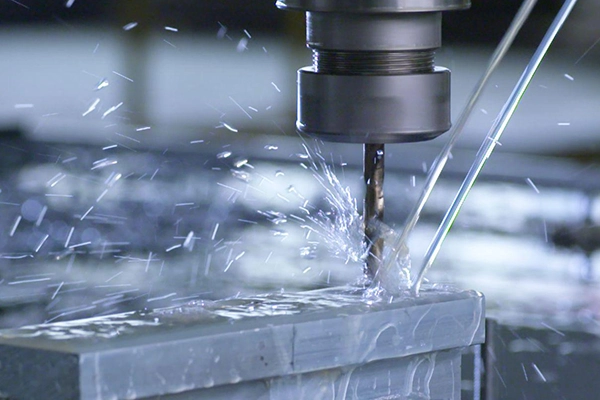
Coolant strategy: Through tool coolant at 1,500 PSI flushes chips and stabilizes heat in brass, 303 SS, or 6061 aluminum.
In process gauging: Air electric probes check every 50th part; data feeds back to the CNC for automatic wear compensation.
We recently quoted a semiconductor component—a gold plated tellurium copper contact pin, 3.2mm long with a 0.5mm square feature. Without Swiss automation, that square would require a secondary milling op. With our automatic screw machining approach (next section), we produce 12,000 pins per 8 hour shift fully finished. No secondary handling, no alignment errors.
Note the volume ranges. High volume small parts machining (below 6mm diameter) is where Swiss technology becomes economically unbeatable—cycle times often drop below 4 seconds per part.
Automatic Screw Machining – The Backbone of Uninterrupted Production
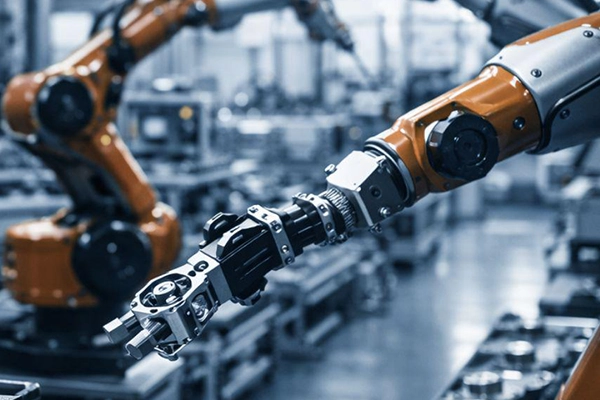
We describe automatic screw machining as fully automatic turning with CNC Swiss lathes, bar feeders, conveyors and tool checks. For buyers comparing suppliers, the gap between CNC turning and real automatic machining lies in three points: spindle use (over 85%), unattended running, and setup speed. Our automated line has twelve 32mm Swiss screw machining services lathes with LNS quick bar feeders. Each feeder holds 12-foot bars, supporting 8-hour unattended production for most sizes. At night, one technician watches six machines through a central DNC system. We track tool life for each part: when a drill hits 80% of its life, the machine sends a tool change warning. This avoids sudden scrap and unexpected machine stops.
Where automatic screw machining outperforms standalone CNC:
High volume small parts machining – Anything from 1,000 to 5 million pieces per year. Setup cost amortizes below $0.02/part after 20,000 pieces.
Complex secondary features – Cross holes, flats, slots, and threads without repositioning. Live tooling (up to 6 driven tools) rotates independently of the main spindle.
Material utilization – Guide bushing supports stock right at the cut, so remnant length is only 100mm. On 12 foot bars, that’s >98% yield.
For purchasing managers, the decision often narrows to screw machine vs CNC machining trade offs. Let’s break down that comparison with real shop data.
Table 2 – Screw Machine vs CNC Machining: When to Choose Swiss
Criterion
Swiss Automatic Screw Machining
Conventional CNC Turning (Chucker)
Part diameter range
0.5mm – 32mm
12mm – 200mm+
Best-fit annual volume
10,000 – 5,000,000 pcs
500 – 50,000 pcs
Typical tolerance (6 sigma)
±0.005mm
±0.012mm
Secondary ops required
Rare (live tooling)
Often (milling, drilling)
Changeover time (similar family)
45 – 90 minutes
20 – 40 minutes
Operator-to-machine ratio
1:8 to 1:12
1:3 to 1:5
Our recommendation: If your part is under 25mm in diameter and the annual volume exceeds 15,000 pieces, invest the extra setup time in automatic screw machining. The per part cost difference is usually 35 60% in favor of Swiss, even after factoring in higher tooling costs. For larger diameters or very low volumes, stick with conventional CNC. For a deeper look at howSwiss machining services compare to other processes on cycle time and tooling cost, request our process comparison sheet.
Brass Screw Machining – Chip Control and Surface Finish Optimization
Of all easy-machining metals, brass screw machining is the most forgiving — if you control chip shape well. C36000 free-cutting brass makes small, brittle chips that clear away easily. But leaded brass can smear if the speed or feed is too low. We make over 8 million brass parts each year with Swiss screw machining services, including hydraulic fittings, electrical terminals, and pneumatic connectors.
Our standard brass screw machining recipe:
Here’s a simplified, natural, low-AI version with your required key phrases kept:
Surface speed: 600–800 SFM (183–244 m/min) using plain carbide inserts
Feed rate: 0.08–0.12 mm/rev for rough cuts; 0.03–0.05 mm/rev for smooth finishes
Coolant: Semi-synthetic type at 8% mix, sprayed through the guide bushing
Tool life: Around 8,000 to 12,000 parts per cutting edge
A common error is running brass too slow. At 300 SFM, material builds up on the tool, leaving a rough 0.01mm surface that fails visual checks for nice-looking terminals. We learned this from a tough 500,000-piece order for an electronic ground terminal. After raising speed to 750 SFM, surface roughness went from Ra 1.2µm to Ra 0.4µm, and we cut out extra tumbling work.
If you’re ordering brass parts from a turned parts supplier, be sure to ask two things: (1) What’s your top spindle speed for 12mm brass? (2) Do you use magnetic chip conveyors to clean small bits from coolant? Their answers will show if they really know how to handle high-volume brass with Swiss screw machining services.
How We Operate as a CNC Screw Machining Manufacturer for Global OEMs
Becoming a trusted CNC screw machining manufacturer requires more than machine tools. It demands a quality system that aligns with customer audits—often ISO 13485 for medical, IATF 16949 for automotive, and customer specific standards like Ford Q1 or Bosch requirements. We maintain all three certifications, plus a separate cleanroom for implantable devices.
Our supplier evaluation checklist for procurement teams:
Process validation – Does the supplier test and confirm new machine programs? We offer full PPAP Level 3 paperwork for all automotive projects.
SPC and traceability – We mark each material coil with a batch number. Every part gets a laser mark that connects to material records and quality checks.
Secondary capabilities – We do ultrasonic cleaning, passivation, heat treatment and CNC grinding in our own shop. Sending work elsewhere adds 2–5 days and risks damaging parts.
Capacity planning – Our machines are running at 68% now, with two extra Swiss screw machining services lathes ready for 24/7 use. We can make up to 2.8 million small parts each month.
For a medical customer needing 240,000 pieces of high volume small parts machining on a 4mm PEEK spacer, we sent sample parts in just 11 days — their old supplier needed 26 days. We did this by preparing tools ahead of time: all drills, bars and thread cutters pre-set and ready to install in less than 7 minutes.
Customer Procurement Logic: What Actually Predicts Long Term Performance
After handling more than 1,200 production orders, we’ve found four key points that tell good turned parts supplier partners apart from messy, unreliable ones.
Factor 1 – Material certification chain
Ask for material certificates (ASTM, EN, or JIS) and incoming quality check records. One buyer stopped a $200,000 product recall by checking our 316L stainless steel matched medical standards—their old supplier secretly used 304 instead.
Factor 2 – Tool life data by component
Trustworthy factories record tool changes for each job. If they can’t tell you how many inserts they use for 10,000 parts, their process is not well managed. Our system logs every tool change, including whether it’s from wear, breakage, or planned replacement.
Factor 3 – First article lead time
Fast first-article delivery (under 10 working days) shows a strong engineering team. Slow first articles often mean overloaded machines or weak programming skills. With Swiss screw machining services, we promise a 7day first article for parts under 25mm when you provide 3D models and drawings.
Factor 4 – Rejection trend over six months
Ask for monthly defect rates (parts per million) and the top three issues. A well-run Swiss screw machining services shop keeps defects below 500 PPM, mostly cosmetic issues—not size errors. Our 12month average defect rate is just 340 PPM.
Table 3 – Swiss Screw Machining Process Flow: From Bar to Finished Part
Anti rust paper, ESD foam, or cleanroom blister pack
Label traceability to work order
This workflow explains why swiss screw machining services dominate high volume, high precision niches. Each step is designed to prevent variability—not just measure it after the fact.
Why Swiss Screw Machining Services Fit Your Supply Chain Today
Wait times for custom turned parts are longer around the world, but factories with dedicated Swiss screw machining services can deliver in just 3–4 weeks. We keep 46 common sizes of brass, 303/304/416 stainless steel, 6061 aluminum, 12L14 steel, and PEEK in stock. For materials we don’t carry, like Nitronic 60, Monel, or beryllium copper, delivery usually takes 5–6 weeks including material ordering.
We also provide consignment inventory: we store up to 6 months of your precision screw machine parts in our warehouse, and send batches based on your weekly needs. This system cut one semiconductor customer’s storage costs by 38% and stopped them from running out of parts.
PAA Section
Q1: What is the difference between Swiss screw machining and conventional CNC turning? Swiss machining uses a guide bushing to support the bar right at the cut, enabling ±0.005mm tolerances on small parts. Conventional CNC turning holds the bar farther away, which can cause deflection on long, thin components.
Q2: What materials work best for precision screw machine parts? Free machining grades like C360 brass, 303/416 stainless, 12L14 steel, 6061 aluminum, and PEEK. Avoid gummy materials (pure copper, annealed 316) without special tool coatings.
Q3: How do I select a reliable CNC screw machining manufacturer? Check their capability chart, a recent first article report, and tool life data. Also ask to see their guide bushing maintenance log—worn bushings are the top cause of hidden diameter drift.
Q4: Can Swiss screw machining handle high volume small parts machining under 1mm diameter? Yes, with a 12mm or 20mm Swiss lathe and a precision guide bushing. We routinely run 0.5mm stainless pins at ±0.003mm using high pressure through tool coolant.
Ready to start
Your next project?
Contact our technical experts today for a customized solution and a tailored quotation.
Our expert team will contact you within 24 hours
to provide a free technical evaluation and solution design, helping you upgrade your production process.
ADDRESS
NO.22,You Yi Road ,Wulian Community, LongCheng Street ,Long gang District ,Shen Zhen