Swiss Type Micro Machining: 7 Key Advantages That Engineers Actually Care About
When a print requires Swiss-type micro machining, engineers and procurement managers often wonder if the extra setup cost is truly worth it—and the simple answer is yes, as long as you know where this technology works best. With over a decade of experience running Swiss lathes, mainly for medical and semiconductor clients needing parts smaller than a grain of rice with sub-5-micron accuracy, this guide will cover the real advantages, key decision factors, and precise tolerances you can expect from a professional Swiss-type micro machining shop, with no unnecessary fluff, just practical information to help you confidently specify your next tiny part.
How Swiss Type Micro Machining Actually Works
Here’s the basic difference between Swiss type micro machining and regular CNC turning. A standard CNC lathe clamps the metal bar in a collet near the main spindle. The cutting tool moves along the material, but when the part becomes longer or thinner, it easily bends during machining. Once the length-to-diameter ratio reaches 4:1, even a sharp tool will push the workpiece away from the cutting area, making it impossible to maintain accurate tolerances.
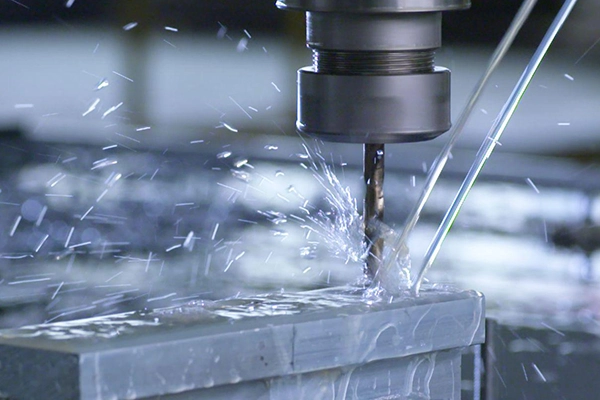
Swiss type micro machining fixes this issue by using a guide bushing. The metal bar runs through a precision bushing that sits only 0.1 to 0.5 mm behind the cutting tool. This bushing supports the material right at the cutting point, which almost completely stops bending. For small diameter machining — such as parts under 5 mm with length-to-diameter ratios of 10:1 or higher — this is the only reliable method to consistently hold strict tolerances.
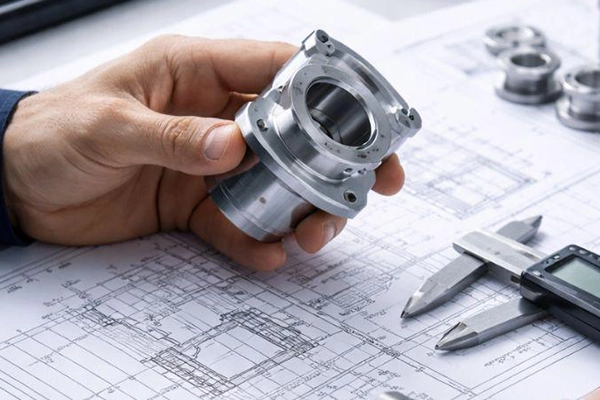
I’ve personally machined 304 stainless spacers at 1.2 mm OD with 0.8 mm ID and a length of 4.5 mm. Tolerance on the bore was +0/-0.003 mm. That run produced 5,000 parts with zero rejects. Try doing that on a standard CNC lathe. You can review our precision micro machining services at micro-machining-capabilities to see the actual machine lineup we run for these exact applications.
7 Key Advantages of Swiss Type Micro Machining for Small Parts
Why do medical device and semiconductor companies choose Swiss type micro machining for their most important parts? Here are seven clear benefits, based on actual factory data.
Better roundness and precision – The guide bushing supports the material very close to the cutting tool, so shaking and misalignment stay below 1 micron. This is essential for parts like fiber connectors and bone screws.
Strict precision without extra work – A typical Swiss machine can make parts with diameter accuracy of ±0.005 mm and length accuracy of ±0.010 mm in one go. Many parts no longer need extra grinding or polishing.
Complex shapes in one setup – With movable tools and extra spindles, the machine can cut flat surfaces, drill side holes, make threads, and finish the back of the part all at once. No re-clamping means no extra mistakes.
Smooth surface quality – Steady cutting and strong support create very smooth surfaces on common materials like 303 stainless steel and titanium.
Less material waste – Swiss machines use about 98% of the material, while standard lathes only use 80–85%. This saves a lot on costly materials like titanium.
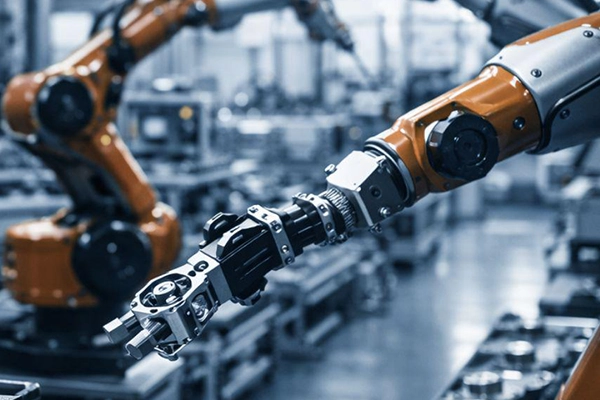
Unattended, automatic production – Auto bar feeders let the machine run 24/5 or even 72 hours without workers. For large orders over 10,000 pieces, this greatly lowers the cost per part.
Faster production for complex parts – By cutting with multiple tools at the same time, cycle times are over 40% faster than standard machines that need several setups.
These swiss machining advantages micro parts are why leading manufacturers in medical, semiconductor, and automotive industries have made Swiss type micro machining their default process for small, complex components.
Micro Turning Swiss Machines: Where Precision Meets Speed
Let’s talk clearly about micro turning swiss machines. These are Swiss-type lathes made just for small parts, usually under 12 mm in diameter, and can go as small as 0.2 mm. They have fast-spinning spindles (up to 16,000 RPM), quick movement speeds, and extremely small feeding steps of just 0.001 mm per spin. But the real key is the guide bushing and the coordinated movement between the main spindle and the Z-axis slide.
In micro CNC turning, the inside of the guide bushing is made to fit the outer diameter of the material very precisely, within 1 micron. The material goes through the bushing, and the cutting tools move along with it. This sliding head design makes sure the unsupported part of the material is never longer than 2 to 4 mm — the distance between the bushing and the tool. That’s why you can make a 20 mm long, 0.8 mm thin titanium pin without tapering or shaking.
For factories focused on swiss lathe micro machining, the working process is completely different from standard CNC turning. Instead of cutting long, unsupported parts, the Swiss lathe moves the material forward little by little, while the tools stay steady compared to the bushing. This is the only dependable way to make tiny details like 0.3 mm threads on 1 mm thin posts. We use Citizen and Star Swiss machines in our shop, and for high precision small parts machining, no other equipment works as well.
Swiss Machining vs CNC Turning: A Data-Driven Comparison
One question we hear constantly from engineers new to micro work is swiss machining vs cnc turning — which one makes sense for my part? Here is a direct comparison based on real production data.
Feature
Standard CNC Turning
Swiss Type Micro Machining
Workpiece support
Unsupported beyond chuck
Guide bushing supports within mm of cut
Minimum practical diameter
~3 mm (with good L/D ratio <4:1)
~0.1 mm (L/D up to 20:1 possible)
Typical tolerance
±0.010 mm on a good day
±0.003–0.005 mm routine
Cycle time for complex micro parts
Multiple ops, high handling time
Single setup, often <30 seconds
Surface finish (Ra)
0.4–0.8 µm
0.2–0.4 µm
Material utilization
80–85%
95–98%
Cost per part (high volume)
Higher due to secondary ops
Lower after setup optimization
For purchasing managers handling orders of over 10,000 small-diameter parts, the Swiss type micro machining method almost always offers a better total cost — even if the machine runs at a higher hourly rate. It removes the need for extra processes like grinding, EDM, and manual deburring. You also spend less time inspecting parts because the initial high accuracy stays consistent throughout the entire production run.
However, there is a downside. Swiss type micro machining takes longer to set up and needs more experienced programmers. If you’re making a simple shaft larger than 12 mm with low precision requirements, standard CNC turning is still the better option. The decision guide below will help you choose correctly.
Precision Micro Machining Technology: Step-by-Step Process
Understanding precision micro machining technology is easier when you walk through an actual job. Here is a typical workflow for a high value micro component — say, a brass connector for a semiconductor fluid handling system.
Bar stock preparation – Ground and polished round bar, diameter tolerance H6 or better, ensures smooth feeding through the guide bushing.
Machine setup – Load bar into spindle, adjust guide bushing gap using a test bar, touch off tools with a laser tool setter at 1micron accuracy.
First operation (main spindle) – Bar feeds through bushing. Turning tool roughs and finishes OD to 1.5 mm ±0.004 mm. Live tool mills a 0.8 mm hex flat.
Cross drilling – High speed drill at 20,000 RPM creates a 0.3 mm through hole for fluid passage.
Second operation (sub spindle) – Part transfers to sub spindle. Back turning completes back face and chamfer.
Cut off and part ejection – Part drops into conveyor. No secondary deburring needed.
That entire sequence runs completely unattended. For engineers designing miniature fluidics or optical mounts, this level of micro machining process integration is a game changer. You consolidate what used to be five different workcenters into one compact cycle.
Here are the typical capabilities we guarantee for customers:
Feature
Achievable Range
Typical Tolerance
Turning diameter
0.2 – 12 mm
±0.003 mm
Drilled hole diameter
0.1 – 5 mm
±0.005 mm
Milled feature size
0.3 mm corner radius
±0.010 mm
Length accuracy
up to 100 mm (multi pass)
±0.010 mm
Concentricity (OD to ID)
–
≤0.002 mm TIR
Surface roughness (Ra)
0.2 – 0.4 µm
–
Six Industries That Rely on Swiss Type Micro Machining
Our customers rely on Swiss type micro machining in six key industries, each with special needs that this process handles perfectly.
Medical – Bone screws, guidewires, dental implants, biopsy needles. Uses biocompatible materials, smooth finishes, and burr-free parts.
Semiconductor – Probe pins, contact tips, fluid nozzles, gas fittings. Requires ultra-precise tolerances, high consistency, and easy cleaning.
Consumer electronics – Hinge pins, lens barrels, connector pins, motor shafts. Cost-effective mass production, tiny threads, and complex shapes.
Communication devices – Fiber ferrules, RF connectors, tuning screws. Ensures high concentricity for stable signals and smooth surfaces.
Automotive – Fuel injector nozzles, sensor parts, ABS valve components. Built for high-pressure durability and consistent small holes.
Automation equipment – Valve spools, mini gear shafts, robot joint pins. Uses wear-resistant materials, low-friction surfaces, and tight clearances.
Each of these applications pushes small diameter machining to its limits. A fuel injector nozzle may have five 0.18 mm holes drilled at compound angles — impossible on a standard CNC lathe without a precision guide bushing. Semiconductor probe pins require tip radii under 10 microns and lengths of 15 mm with diameters tapering from 0.5 mm to 0.05 mm. That is pure Swiss territory.
Buyer’s Decision Framework: When to Choose Swiss Type Micro Machining
If you are evaluating Swiss type micro machining for your next project, here is the decision framework we use internally when advising clients. It is based on real RFQs processed over hundreds of micro part orders.
Step 1 – Define critical dimensions If any diameter or position tolerance is tighter than ±0.010 mm, Swiss is likely mandatory. For parts with L/D ratio above 4:1, the guide bushing becomes essential.
Step 2 – Calculate annual volume For prototyping or batches under 500 pieces, standard CNC turning with secondary ops might be cheaper. But above 2,000 pieces, Swiss automation and reduced handling almost always lower per part cost. We have seen cross over points as low as 800 pieces for complex geometries.
Step 3 – Assess material Free machining brass and 12L14 steel are forgiving. But gummy materials like titanium, Inconel, or PEEK need the rigidity of a Swiss bushing. Without it, you will fight built up edge and part deflection.
Step 4 – Review surface finish and burr requirements Medical and fluid power parts cannot tolerate even microscopic burrs inside cross holes. Swiss type micro machining with high pressure coolant at 1,000+ PSI and live tooling can break chips and deburr in cycle — something standard turning rarely achieves.
Step 5 – Get process validation Always ask your potential supplier to run a test part or provide a capability study. Look for Cpk values above 1.33 on critical dimensions. For a deeper dive into how we validate these methods, visit our tight tolerance machining page.
Tight Tolerance Machining Methods for Sub-5-Micron Accuracy
AcGetting consistent ±0.003 mm accuracy needs more than just good equipment — it requires strict process control. Here are the tight tolerance machining methods we use every day.
Thermal control – We keep the workshop temperature at 20°C ±1°C and use cooled cutting fluid. Even a 5°C temperature change can alter a 50 mm steel part by 3 microns.
Tool wear monitoring – For micro drills smaller than 0.5 mm, we track spindle load and drill breakage. A 0.2 mm broken drill is impossible to see, but the machine stops instantly within 0.1 second.
In-process measuring – After every 20 parts, a measuring probe checks key diameters and adjusts settings automatically. This offsets slow tool wear and keeps accuracy stable.
Guide bushing care – We polish each guide bushing to fit the material batch. Even a 1-micron mismatch can make parts oval. For stainless steel and titanium, we use carbide bushings that maintain tolerance for over 1,000 production hours.
These tight tolerance machining methods are not extra choices — they are essential standards for a professional Swiss-type shop. When a supplier says they can hold 0.005 mm, ask about their temperature control and measuring schedule. Their answers will show you whether they are real experts or just pretending.
PAA: People Also Ask
Q1: What is the smallest diameter Swiss type micro machining can handle? A1: With proper tooling and guide bushing, production diameters down to 0.1 mm are routine. For specialty jobs, some Swiss lathes can turn 0.05 mm tungsten or brass wire, though handling and inspection become extremely challenging. Most practical micro parts fall in the 0.2 mm to 5 mm range.
Q2: What is a major problem with micro machining? A2: Papid tool wear and burr formation are among the critical problems during micro machining and can lead to deterioration of machined geometry. Therefore, the determination of tool wear and tool life in micro milling SLM and EBM parts is critical.
Q3: What materials are difficult for Swiss type micro machining? A3: Pure titanium (unalloyed) and soft elastomers are problematic due to galling and deflection. Extremely brittle ceramics cannot be turned at all. Among metals, Inconel and Rene alloys are machinable but require slow speeds, rigid setups, and frequent tool changes — cost per part can triple versus 303 stainless.
Q4:What is the machinability process? A4: The metal fabrication method called machining refers to the process of shaping metal by removing the unwanted material from it. This process can be performed in a variety of ways.Many machining process exist, including drilling, turning, and milling.
Q5: Is CNC machining the future? A5: Looking into our crystal ball, we can see a bright future for those who are interested in CNC technology.
Ready to start
Your next project?
Contact our technical experts today for a customized solution and a tailored quotation.
Our expert team will contact you within 24 hours
to provide a free technical evaluation and solution design, helping you upgrade your production process.
ADDRESS
NO.22,You Yi Road ,Wulian Community, LongCheng Street ,Long gang District ,Shen Zhen