6061 Aluminum Extrusion Guide for Industrial Parts: Properties, T6 Tempers, Design and Sourcing
6061 is one of the most widely specified aluminum alloys for industrial components that need a strong balance of mechanical performance, corrosion resistance, machinability, and production availability. This 6061 aluminum extrusion guide explains how the alloy behaves during extrusion, heat treatment, cutting, CNC machining, finishing, and assembly.
It is written for engineers and overseas procurement teams evaluating structural profiles, channels, angles, tubing, equipment components, and machined extrusion parts. The focus is not simply on published material data. A reliable production decision must also account for profile geometry, temper, tolerances, machining datums, surface requirements, inspection, order volume, and supplier capability.
Used correctly, 6061 can reduce material waste and machining time while providing the strength and repeatability required for demanding B2B manufacturing programs.
Projects requiring profile DFM, tooling, extrusion, machining, and finishing can be evaluated through Yueyi Precision’s custom aluminum extrusion manufacturing capabilities.
What Makes 6061 the Right Material for Structural and Machined Extrusions?
6061 is a heat-treatable 6xxx-series aluminum alloy in which magnesium and silicon are the principal alloying elements. It is stronger than many highly extrudable cosmetic alloys while remaining practical for CNC machining, welding, anodizing, and general industrial use.
6061 Alloy Composition and Core Characteristics
Chemical composition must comply with the standard specified on the drawing or purchase order. Controlled additions of magnesium and silicon enable precipitation hardening, while copper contributes to strength. Iron, chromium, zinc, titanium, manganese, and other elements remain within defined limits.
Characteristic
Engineering significance
Heat-treatable 6xxx alloy
Supports T6 and other strengthened tempers
Medium-to-high strength
Suitable for structural and machined profiles
Good corrosion resistance
Useful in many industrial environments
Excellent machinability
Supports holes, threads, pockets, and datum faces
Good weldability
Allows fabricated profile assemblies with process control
Moderate extrudability
Supports many shapes but needs more DFM than 6063
6061 does not flow through an extrusion die as easily as 6063. Very thin walls, deep channels, narrow openings, and fragile internal features may require geometry changes or slower processing. Its value comes from combining a manufacturable cross-section with higher structural performance and dependable post-machining.
Key Advantages and Practical Limitations
Choose 6061 when the finished component benefits from:
Higher strength than typical 6063 profiles
Stable machining of precision features
Good corrosion resistance and finish compatibility
Welded or mechanically assembled structures
Wide material availability for ongoing production
A practical route from extrusion blank to finished component
The main limitations are reduced profile complexity compared with more extrudable alloys, possible distortion after aggressive machining, and the need to coordinate quenching and aging with final dimensional requirements.
6061 Aluminum Properties Engineers Should Specify Before Tooling
Material data should be treated as a starting point rather than a universal guarantee. Mechanical values vary with temper, profile thickness, product form, test direction, and the standard used for certification.
Typical Mechanical and Physical Properties
The following values are representative of 6061-T6 extruded products. Project requirements must be verified against the applicable standard and the certified material supplied for production.
Property
Typical reference value
Why it matters
Density
About 2.70 g/cm³
Supports lightweight assemblies
Ultimate tensile strength
About 260–310 MPa
Indicates resistance to tensile failure
Yield strength
About 230–275 MPa
Helps evaluate permanent deformation
Elongation
Commonly about 8–12%
Indicates ductility before fracture
Elastic modulus
About 69 GPa
Used in stiffness and deflection calculations
Thermal conductivity
Approximately 150–180 W/m·K
Relevant to thermal management
Actual design strength should come from the governing specification, not a generic web table. A thin extrusion and a thick 6061 aluminum rod may not share identical guaranteed properties even when both are described as 6061-T6.
How Product Form and Thickness Affect Published Values
An engineer should specify the alloy, temper, product form, applicable standard, critical mechanical properties, and required certification. If the drawing only states “6061,” the supplier may not know whether T6, T6511, T4, or another condition is expected.
The manufacturing route also matters. Extrusion, quenching, stretching, aging, welding, and machining can change residual stress or local performance. For critical parts, define whether certificates, hardness checks, tensile test reports, or batch traceability are required.
Which 6061 Temper Should Engineers Specify: T6, T6511, or T4?
Temper selection defines how the alloy has been heat treated and stress relieved. It affects strength, straightness, dimensional stability, machinability, and the sequence of later operations.
When 6061-T6 Is the Practical Starting Point
6061-T6 has been solution heat treated and artificially aged. It is commonly specified for structural profiles, machined housings, brackets, channels, and equipment parts requiring higher strength than as-extruded or partially aged conditions.
The phrase heat treating 6061 covers several controlled stages. The profile must receive an appropriate solution-treatment or press-quench route, followed by aging that develops the specified properties. Poor control can contribute to inconsistent hardness, distortion, or failure to meet certification requirements.
When T6511 or T4 Better Fits the Manufacturing Route
Temper
General condition
Typical selection reason
T4
Solution heat treated and naturally aged
Useful when additional forming is planned
T6
Solution heat treated and artificially aged
Higher strength for structural and functional profiles
T6511
T6-type condition with stretching for stress relief and minor straightening
Improved dimensional stability for machined extrusions
T6511 may be valuable when substantial material will be removed by CNC machining, but it does not eliminate every distortion risk. Profile balance, stock removal, fixturing, and machining sequence remain important. The supplier should confirm temper availability for the required section and standard before quotation.
How Should Buyers Choose Between 6061, 6063, and 6005 Aluminum?
6061 is often selected for strength and machining, while 6063 is commonly favored for complex cross-sections and cosmetic anodizing. Neither alloy is universally better.
6061 vs. 6063 for Strength, Finish, and Machining
Selection factor
6061
6063
Relative strength
Higher
Moderate
Extrudability
Good
Excellent
Thin or detailed sections
More design-sensitive
Generally more suitable
CNC machinability
Excellent
Good
Cosmetic anodizing
Good
Excellent
Typical focus
Structural and precision-machined profiles
Enclosures, thermal and cosmetic profiles
【内链点 2】When appearance, thinner walls, or more complex geometry is the priority, review the 6063 aluminum extrusion guide before finalizing the alloy.
6005 Aluminum vs. 6061 for Structural Profiles
The query 6005 aluminum vs 6061 usually reflects a structural material decision. 6005 and 6005A can offer useful extrusion performance for frames and load-bearing profiles, while 6061 is widely selected when machining, availability, or established mechanical performance is central.
Compare certified properties, section complexity, welding requirements, finish, and regional supply rather than choosing from alloy names alone.
How Are 6061 Profiles Extruded, Quenched, Aged, and Verified?
A stable 6061 aluminum extrusion guide must connect material selection with the actual manufacturing route. Profile quality depends on the billet, die, press parameters, quenching, stretching, aging, cutting, and inspection working as one controlled system.
Billet, Die, Extrusion, Quenching, and Aging
Production begins with a traceable 6061 aluminum billet. The billet and die are preheated before a hydraulic press forces the alloy through the die opening. The emerging profile is supported, quenched, stretched, cut, and aged to the required condition.
Production stage
Key control
Risk if poorly controlled
Billet and die heating
Uniform temperature
Unstable flow or surface defects
Extrusion
Speed, pressure, and exit temperature
Tearing, dimensional variation, or die stress
Quenching
Cooling rate and uniformity
Reduced properties, twisting, or bowing
Stretching
Controlled tension
Cross-section deformation if excessive
Aging
Time and temperature
Incorrect strength or hardness
Final inspection
Drawing-based checks
Undetected profile or surface defects
6061 generally requires closer process control than 6063 because its extrusion window is less forgiving. A balanced cross-section and practical wall thickness help reduce press force, die correction, and distortion.
Process Controls That Determine Repeat Production Quality
Important controls include billet traceability, die condition, exit temperature, quench delay, stretch percentage, aging records, straightness, twist, wall thickness, and surface inspection.
When mechanical properties are contractual, the inspection plan should identify the required certificate and test method before production.
H2: Which 6061 Extruded Forms Fit Different Industrial Applications?
6061 can be extruded into solid, hollow, and semi-hollow forms. Product terminology varies by region, so a controlled 2D cross-section is more reliable than a product name alone.
Channels, Angles, Rods, and Tubing
Product form
Typical requirement
Example use
6061 t6 aluminum channel
Straightness, flange dimensions, and machining access
Equipment rails and supports
6061 aluminum angle
Leg dimensions, squareness, and finish
Brackets and structural assemblies
6061 t6 aluminum angle
Certified temper and load performance
Higher-strength frames and mounts
6061 aluminum rod
Diameter, straightness, and surface condition
Machined connectors and supports
aluminum extrusion tubing
Wall thickness, internal dimensions, and cut length
Housings and lightweight structures
Generic terms such as pipe, tube, channel, and bar can be ambiguous. The RFQ should state whether the section is solid or hollow, identify critical dimensions, and distinguish extrusion tolerances from later machining requirements.
Automotive, Electronics, Medical, and Automation Uses
6061 profiles are used for automotive mounts, electronics housings, robotic structures, medical-equipment frames, automation components, LED stage supports, and industrial machinery. The alloy is especially useful when the profile will be drilled, tapped, milled, welded, or assembled after extrusion.
Applications should be validated against actual loads, fatigue, temperature, corrosion exposure, and regulatory requirements.
Although buyers sometimes search for marine grade aluminum 6061, more corrosion-resistant marine alloys may be preferable for prolonged saltwater exposure. 6061 can still be used in selected marine-related structures when the design, finish, maintenance, and environment support it.
When Does a 6061 Extrusion Need Cutting, CNC Machining, or Fabrication?
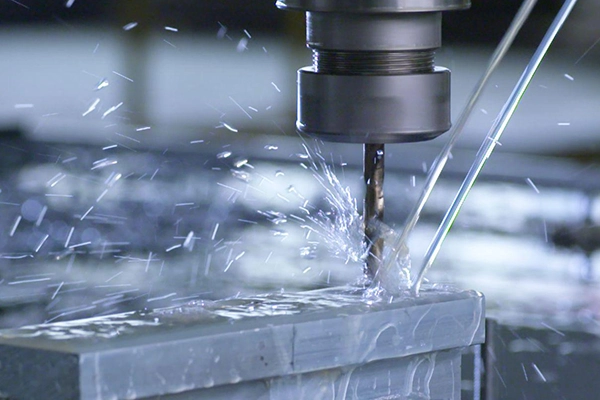
Extrusion creates the continuous cross-section; CNC operations create localized precision. This hybrid route often uses less material and machine time than producing the entire component from solid stock.
From Production Cutting to Precision CNC Features
Aluminum extrusion cutting may range from production sawing to precision CNC facing. A saw-cut end is suitable for some parts, while sealing faces, accurate lengths, or perpendicular assembly datums may require machining.
Typical secondary features include:
Precision holes and threads
Connector and display openings
Pockets, slots, and counterbores
Flat sealing or mounting surfaces
Cross-holes and end details
Assembly datums and inspection features
【内链点 3】Profiles requiring controlled milling, drilling, tapping, or finishing can be completed through aluminum CNC machining after extrusion and heat treatment.
Thin or open profiles need supported fixtures. Clamping forces must not change the free-state dimensions, and inspection should be performed after the part is released from the fixture.
Welding and Assembly Risks in 6061-T6 Profiles
Welding extruded aluminum can reduce separate fasteners and produce larger assemblies, but welding heat may soften the heat-affected zone, create distortion, and change surface appearance.
Engineers should define the joint design, filler selection, welding process, sequence, post-weld straightening, inspection, and whether the loss of local T6 properties affects performance.
Complete aluminum extrusion fabrication may combine cutting, CNC machining, welding, inserts, anodizing, powder coating, inspection, and packaging. Responsibility for the finished component should be clear when multiple suppliers are involved.
How Should Engineers Control Tolerances, Distortion, and Surface Quality?
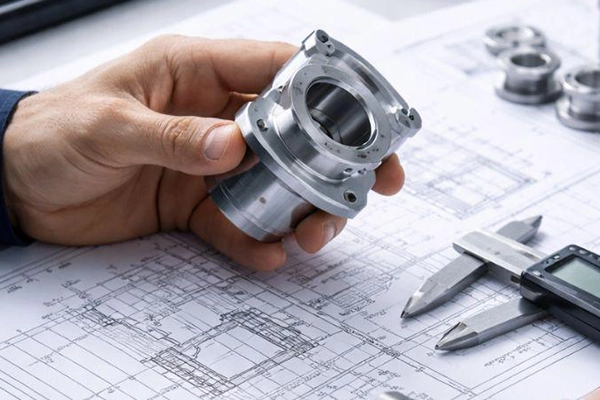
Applying CNC-level tolerances to an entire extrusion can increase tooling corrections, inspection time, scrap, and price. A better drawing separates as-extruded dimensions from machined critical features.
Extrusion Tolerances vs. CNC-Controlled Features
Requirement
As-extruded control
CNC-machined control
Continuous profile shape
Primary process
Normally unnecessary
Wall thickness
Process and die dependent
Limited correction possible
Straightness and twist
Controlled through cooling and stretching
Difficult to correct fully by machining
Hole position and threads
Not created in the profile section
High precision achievable
Sealing or bearing face
May need machining stock
Suitable for tight local control
【内链点 4】For parts with tight local tolerances, complex features, or documented inspection requirements, review Yueyi Precision’s precision CNC machining services. The capability page describes integrated milling, turning, process planning, and dimensional verification for custom components.
The quality plan may include alloy and temper verification, cross-sectional measurement, straightness, twist, first-article inspection, CMM reporting, surface inspection, material certification, and lot traceability.
H2: Which Surface Finish Best Protects and Completes a 6061 Profile?
Anodizing and Other Finishes
6061 can be clear or black anodized, powder coated, bead blasted, brushed, conversion coated, or supplied as machined.
A black aluminum extrusion specification should define anodizing type, coating thickness, color limits, cosmetic faces, acceptable racking marks, masking requirements, and batch consistency.
Because finishing adds thickness or changes electrical behavior, mating features, threads, and grounding areas must be planned in advance.
How Should Engineers Design 6061 Profiles for Extrusion, CNC, and Assembly?
The most effective designs use extrusion for continuous geometry and machining only where localized precision adds value. This principle is central to a practical 6061 aluminum extrusion guide for production engineers.
Wall Thickness, Radii, Channels, and Datums
Keep walls reasonably consistent, use gradual transitions, and avoid unsupported deep channels. Internal radii improve material flow and die strength. Ribs may increase stiffness more efficiently than heavy solid sections.
For CNC operations, provide machining stock and identify a stable primary datum, secondary orientation feature, axial stop, and acceptable clamping surfaces. Cosmetic faces should be marked so fixtures and handling do not damage them.
What Determines the Cost of a Custom 6061 Extrusion Project?
The cost of aluminum alloy 6061 is only one part of the delivered component price. Total cost also includes die construction, trial corrections, extrusion setup, scrap, heat treatment, cutting, machining, finishing, inspection, packaging, and logistics.
Cost can often be reduced by:
Balancing the cross-section
Avoiding unnecessary solid mass
Applying tight tolerances only to functional features
Designing stable CNC datums
Consolidating multiple components into one profile
Matching order quantity to economic production runs
Defining realistic cosmetic requirements
How Should Overseas Buyers Evaluate 6061 Aluminum Suppliers?
Professional 6061 aluminum suppliers should provide more than a price per kilogram. Buyers need evidence that the supplier can manage tooling, heat treatment, machining, finishing, inspection, documentation, and repeat production.
Technical and Production Capabilities to Verify
DFM support for profile and die design
Confirmed alloy, temper, and material standard
Tooling ownership and correction terms
Controlled quenching and aging
CNC fixture and inspection capability
Approved finishing processes
Batch traceability and material certificates
Prototype-to-volume capacity
Export packaging and logistics support
Searches for aluminium 6061 t6 suppliers often reflect the same requirements in British English. The evaluation criteria should remain based on technical capability, documentation, communication, and delivered quality.
What Information Belongs in a 6061 Extrusion RFQ?
Provide a 2D profile drawing, 3D finished-part model, alloy and temper, profile and cut lengths, annual volume, critical tolerances, machining features, finish, inspection documents, packaging expectations, and delivery destination.
Using the same technical package for every bidder makes quotations easier to compare.
Engineering and Procurement Questions About 6061 Extrusions
Is 6061 Aluminum Suitable for Complex Extrusion Profiles?
Yes. 6061 is suitable for many structural and machined profiles, although it is less extrudable than 6063. Thin walls, deep channels, and complex hollow sections require closer DFM and process control.
Is 6061-T6 Stronger Than 6063-T6?
6061-T6 generally has higher mechanical strength, while 6063-T6 normally provides better extrudability and cosmetic finishing.
【内链点 5】See the detailed 6061 vs 6063 aluminum strength comparison before choosing an alloy solely from nominal strength.
H3: Can 6061 Extrusions Be CNC Machined?
Yes. 6061 has excellent machinability and is commonly milled, drilled, tapped, faced, and bored after extrusion. Profile geometry, temper, residual stress, machining stock, and fixture support influence final accuracy.
Can 6061 Aluminum Be Welded After T6 Heat Treatment?
Yes, but welding may reduce strength in the heat-affected zone and introduce distortion. Joint design, filler material, welding sequence, load requirements, and inspection should be evaluated by qualified engineers.
Does T6511 Eliminate Machining Distortion?
No. T6511 can improve dimensional stability by reducing residual stress through controlled stretching, but it cannot compensate for an unbalanced profile, excessive one-sided stock removal, weak fixturing, or an unsuitable machining sequence.
Critical parts should be inspected after release from the fixture.
Can 6061 Be Used in Marine Environments?
6061 can be used in selected marine-related structures, but it should not automatically be treated as the best alloy for prolonged saltwater exposure.
Engineers should compare it with more corrosion-resistant marine alloys and define anodizing, coating, isolation from dissimilar metals, drainage, inspection, and maintenance requirements.
What Should a Complete 6061 Extrusion Quote Include?
It should identify tooling, alloy and temper, profile price, minimum run, cutting, machining, finishing, inspection, documentation, packaging, lead time, delivery terms, and any technical exceptions.
Request an Engineering Review for a Custom 6061 Extrusion
Use this 6061 aluminum extrusion guide to prepare a complete RFQ. Send the profile drawing, finished-part model, temper, annual demand, critical tolerances, CNC features, finish, inspection requirements, and destination.
A coordinated engineering review before tooling helps reduce corrections, control cost, and create a stable route from extrusion billet to finished industrial component.
Ready to start
Your next project?
Contact our technical experts today for a customized solution and a tailored quotation.
Our expert team will contact you within 24 hours
to provide a free technical evaluation and solution design, helping you upgrade your production process.
ADDRESS
NO.22,You Yi Road ,Wulian Community, LongCheng Street ,Long gang District ,Shen Zhen