6063 Aluminum Extrusion: Properties, Tempers, Manufacturing, and Applications
6063 aluminum extrusion is widely used for industrial profiles that require complex cross-sections, low weight, corrosion resistance, and a high-quality finished surface. As a 6xxx-series aluminum-magnesium-silicon alloy, 6063 combines excellent extrudability with reliable anodizing and secondary-processing performance.
These characteristics make it suitable for tubes, electronic enclosures, LED thermal-management profiles, equipment frames, medical-device structures, automotive components, and other custom industrial parts. However, successful material selection depends on more than the alloy designation. Temper, profile geometry, extrusion tolerances, CNC post-machining, and surface treatment must all be considered. This guide explains the properties, common tempers, manufacturing requirements, design considerations, applications, and sourcing factors engineers and industrial buyers should evaluate before ordering 6063 aluminum profiles.
What Makes 6063 Aluminum Suitable for Extrusion?
6063 is a heat-treatable 6xxx-series alloy containing magnesium and silicon as its principal alloying elements. These elements allow the material to develop useful mechanical properties through controlled cooling and artificial aging. Within the family of extruded aluminum alloys, 6063 is valued for its balance of extrusion performance, corrosion resistance, surface quality, and moderate strength.
6063 Alloy Composition
The exact chemical composition must comply with the material standard specified on the drawing or purchase order. Magnesium and silicon support age hardening, while iron, copper, manganese, chromium, zinc, titanium, and other elements are maintained within controlled limits.
Element group
Role in 6063 aluminum
Aluminum
Base metal
Magnesium and silicon
Support age hardening and mechanical strength
Iron
Controlled impurity that may affect appearance and material behavior
Copper, manganese, and chromium
Maintained within specified limits
Zinc and titanium
Controlled according to the applicable material standard
Composition affects extrusion behavior, heat-treatment response, mechanical performance, and anodized appearance. For repeat cosmetic production, manufacturers should control material batches rather than rely only on the general alloy designation.
Why 6063 Has Excellent Extrudability
During alloy extrusion, heated aluminum must flow through the die without producing incomplete features, unstable dimensions, excessive die stress, or unacceptable surface defects. For industrial aluminum alloy extrusion, 6063 generally flows more easily than many higher-strength alloys and supports detailed cross-sections at practical production speeds.
Its main manufacturing advantages include:
Suitability for solid, semi-hollow, and hollow profiles
Good performance in relatively thin-wall designs
Smooth surfaces suitable for anodizing
Ability to integrate ribs, channels, screw ports, and mounting features
Compatibility with cutting, drilling, milling, and tapping
A practical balance between profile complexity and strength
This does not mean every 6063 profile is easy to manufacture. Deep channels, fragile die tongues, uneven wall thicknesses, and highly unbalanced cross-sections still require design-for-manufacturing review.
Main Advantages and Limitations
Area
Advantage
Limitation or consideration
Extrudability
Supports detailed profiles
Deep channels and weak die tongues require DFM
Strength
Suitable for many industrial parts
Lower than 6061, 6005, or 6082 in comparable conditions
Surface quality
Excellent anodizing response
Batch variation must be managed for cosmetic parts
Corrosion resistance
Suitable for many environments
Aggressive exposure may require additional protection
Machinability
Supports common CNC operations
Thin sections require stable workholding
Thermal performance
Useful for thermal profiles
Final performance depends on the complete design
6063 is most effective when a project values extrusion complexity, appearance, corrosion resistance, and secondary-processing flexibility more than maximum material strength.
6063 Aluminum Properties: Strength, Corrosion Resistance, and Thermal Performance
The properties of 6063 aluminum extrusion depend on temper, profile thickness, heat-treatment history, product form, and the material standard used for production. Published values should be treated as typical references. Guaranteed minimum properties must be defined by the applicable standard, drawing, or purchase specification.
Mechanical Properties
Mechanical strength changes significantly between T5 and T6 conditions.
Property
6063-T5 typical range
6063-T6 typical range
Engineering significance
Ultimate tensile strength
Approximately 150–190 MPa
Approximately 205–245 MPa
Resistance to tensile failure
Yield strength
Approximately 110–150 MPa
Approximately 170–215 MPa
Resistance to permanent deformation
Elongation
Commonly around 8–12%
Commonly around 8–12%
Ability to deform before fracture
Brinell hardness
Approximately 55–65 HB
Approximately 70–75 HB
General indication of hardness
Actual values vary with profile thickness, testing direction, temper certification, and material standard. They should not be copied directly into a drawing without verification.
Hardness influences handling, wear, machining response, and resistance to surface damage. Elongation matters when a component will undergo post-extrusion bending, swaging, press fitting, or other mechanical forming. When forming is required after aging, the temper and operation sequence should be reviewed before tooling begins.
Physical and Functional Properties
Property
Typical characteristic
Design relevance
Density
Approximately 2.7 g/cm³
Supports lightweight assemblies
Thermal conductivity
Good
Useful for LED and electronics thermal management
Electrical conductivity
Useful but below electrical-grade aluminum
Relevant to housings, frames, and conductive structures
Corrosion resistance
Good in many industrial environments
Can be improved through finishing
Surface response
Excellent
Suitable for cosmetic and functional anodizing
The low density of 6063 helps reduce equipment and assembly weight. This can benefit consumer electronics, automotive assemblies, robotics, medical equipment, industrial automation, and LED stage-support structures. The profile must still be optimized: excessive wall thickness or unnecessary solid mass can eliminate the weight advantage.
6063 is also useful for moving heat away from LED modules, electronic components, drivers, and power supplies. Thermal performance depends on base thickness, fin geometry, airflow, profile orientation, contact area, interface materials, and operating conditions—not material conductivity alone.
The alloy naturally develops a protective oxide layer and performs well in many normal industrial environments. Anodizing, powder coating, or conversion coating may be specified for outdoor exposure, frequent handling, cosmetic requirements, or additional corrosion protection. Because anodizing forms an electrically insulating surface, grounding and conductive contact areas may require masking or machining after finishing.
6063-T5 vs 6063-T6: How to Choose the Right Temper
A temper designation describes how the material is cooled, heat-treated, and aged after extrusion. Temper selection affects strength, dimensional stability, machinability, production cost, and finished-part performance.
What Is 6063-T5?
6063-T5 is cooled after extrusion and then artificially aged. It provides moderate strength, good extrusion practicality, strong surface-finishing performance, and reliable production for many industrial profiles.
T5 is commonly considered when:
Mechanical loads are moderate
Detailed profile geometry is important
Cosmetic anodizing is required
The component needs light or moderate machining
Stable, cost-effective repeat production is the priority
Typical uses include housings, covers, rails, tubes, lighting profiles, equipment frames, and general industrial components.
What Is 6063-T6?
6063-T6 is solution heat-treated and artificially aged. It generally provides higher strength than T5 and may be selected for more highly loaded components, greater rigidity, or certified mechanical-property requirements.
T6 should not be specified automatically. Its additional heat-treatment route may affect straightness, residual stress, production cost, and lead time. The manufacturer should evaluate the profile geometry and post-machining plan before confirming the temper.
Key Differences Between T5 and T6
Selection factor
6063-T5
6063-T6
Relative strength
Moderate
Higher
Processing route
Cooled after extrusion and artificially aged
Solution heat-treated and artificially aged
General production practicality
Favorable
Requires closer process planning
Surface finishing
Excellent
Excellent
CNC machining
Good
Good
Typical application
General industrial and cosmetic profiles
More highly loaded functional profiles
Choose T5 as a starting point when the component is lightly or moderately loaded and profile detail, appearance, and production efficiency are priorities. Consider T6 when higher minimum strength, rigidity, or material certification justifies the added process requirements.
T52 is a stress-relieved condition used for certain applications and product forms. Availability and mechanical properties should be confirmed with the supplier. It should not replace T5 or T6 without an engineering review.
6063 vs 6061, 6005, and 6082: Which Aluminum Alloy Should You Choose?
6063 is not the strongest extrusion alloy, but strength is only one selection factor. Engineers must also consider cross-sectional complexity, surface quality, corrosion resistance, thermal performance, machining, availability, and total production cost.
6063 vs 6061 Aluminum
6061 generally provides higher mechanical strength and better performance for extensively machined structural components. In comparison, 6063 usually offers better extrudability and cosmetic-finishing performance.
Selection factor
6063 aluminum
6061 aluminum
Relative strength
Moderate
Higher
Extrudability
Excellent
Good
Complex cross-sections
Highly suitable
Requires closer design review
Thin-wall profiles
Generally favorable
More process-dependent
Cosmetic anodizing
Excellent
Good
CNC machinability
Good
Excellent
Typical focus
Housings, tubes, LED and cosmetic profiles
Machined structural and functional parts
For a detailed comparison of mechanical performance and material selection, review our guide to 6061 vs 6063 aluminum strength.
6005 and 6005A may be considered when a structural profile needs more strength than 6063 while retaining useful extrusion characteristics. 6082 generally provides higher strength but may introduce additional limitations for thin, detailed, or highly cosmetic cross-sections.
Project requirement
Recommended starting alloy
Complex profile with cosmetic anodizing
6063
Thin-wall industrial enclosure
6063
LED thermal-management profile
6063
Higher-strength machined component
6061
Structural industrial profile
6005 or 6005A
More demanding mechanical load
6082, subject to DFM review
The final choice should be based on the finished component rather than one isolated material property.
How 6063 Aluminum Profiles Are Extruded and CNC Machined
Producing a stable profile requires coordinated control of billet preparation, die design, extrusion temperature, cooling, stretching, aging, cutting, machining, and inspection.
Billet, Die, and Extrusion Preparation
Production begins with a traceable 6063 billet. The billet and die are heated to controlled temperatures before a hydraulic press forces the aluminum through the die opening.
The tooling must account for:
Wall thickness and overall profile size
Solid, semi-hollow, or hollow construction
Deep channels and internal cavities
Unsupported die tongues
Material-flow balance
Surface-quality requirements
Expected die deflection
A trial extrusion is normally inspected before the die is approved for repeat production. Bearing lengths may be corrected to balance material flow and reduce twisting, bowing, or dimensional variation.
Cooling, Stretching, and Aging
After leaving the die, the profile is cooled using controlled air, mist, or water. It is then stretched to improve straightness and reduce twisting before being cut into production lengths.
Process variable
Why it matters
Possible result if uncontrolled
Billet and die temperature
Controls material flow
Surface defects or unstable dimensions
Extrusion speed
Affects productivity and surface quality
Tearing, die lines, or overheating
Cooling rate
Influences strength and distortion
Bowing, twisting, or uneven properties
Stretching force
Improves straightness
Cross-sectional deformation if excessive
Aging cycle
Develops the specified temper
Incorrect strength or hardness
Artificial aging develops the specified T5 or T6 condition. Relevant heat-treatment records should be maintained when certified properties are required.
Cutting and CNC Post-Machining
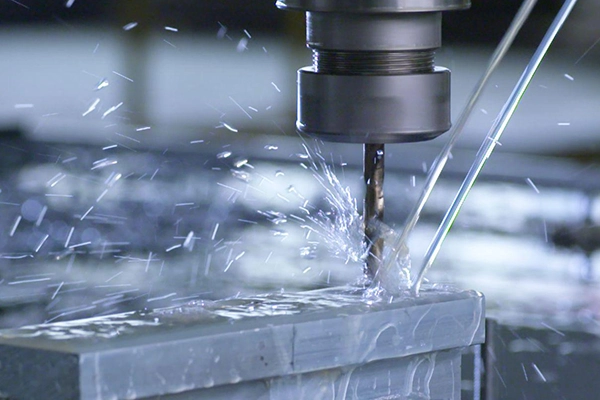
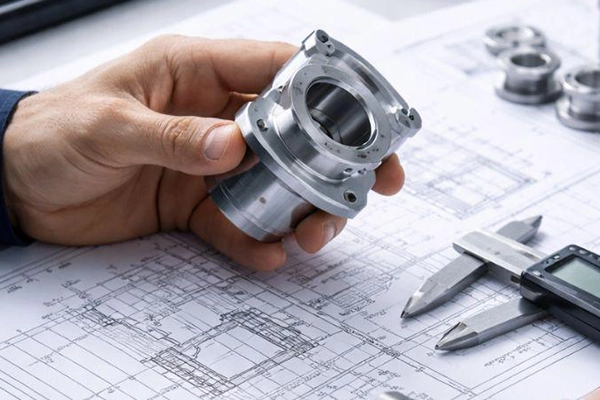
Extrusion efficiently produces a continuous cross-section, but it cannot form every local feature needed on the finished component. Precision mounting holes, threads, pockets, sealing surfaces, connector openings, and assembly datums are produced through aluminum extrusion machining.
Profiles requiring these features can be completed through aluminum CNC machining after extrusion, aging, and initial cutting.
Thin-wall and hollow profiles require supported fixtures. A practical setup identifies the primary datum, secondary orientation feature, axial stop, acceptable clamping zones, cosmetic surfaces, and areas requiring profile-specific soft jaws. Final inspection should take place after the part is removed from the fixture so clamp-induced deformation is not hidden.
Dimensional Inspection and Quality Control
Inspection stage
Typical checks
Incoming material
Alloy, batch identity, and documentation
After extrusion
Cross-section, wall thickness, straightness, and twist
After heat treatment
Temper, hardness, and dimensional stability
After CNC machining
Hole position, threads, datums, GD&T, and roughness
After finishing
Color, coating thickness, cosmetic quality, and masking
Final release
Documentation, packaging, quantity, and traceability
Complex cross-sections may require profile scanners, optical equipment, dedicated gauges, fixtures, or CMM measurement rather than standard calipers alone.
Common 6063 Extrusion Challenges and Quality Solutions
6063 flows well, but geometry and process conditions can still create defects. Most problems are easier to prevent during design and tooling review than to correct after volume production begins.
Manufacturing challenge
Likely cause
Engineering response
Profile twisting
Unbalanced cross-section or cooling
Balance wall mass and optimize stretching
Bowing
Residual stress or insufficient support
Improve cooling, handling, and straightening
Wall variation
Uneven flow or die deflection
Adjust bearings and monitor die wear
Thin feature not filling
Difficult or undersized geometry
Increase thickness or revise the feature
Die lines
Die wear, buildup, or unstable process
Polish tooling and adjust speed or temperature
Machining deformation
Thin walls or excessive clamping
Use supported, profile-specific fixtures
Anodizing variation
Batch or surface-condition differences
Control batches and approve finish samples
Twisting often results from a heavy wall on one side and a thin feature on the other. Improvements may include more consistent wall thickness, ribs instead of solid mass, gradual transitions, and better cross-sectional balance.
Residual stress may also be released when machining removes material from one side of a profile. Balanced stock removal, supported fixtures, appropriate aging, and inspection after unclamping help control movement.
Surface Finishes for 6063 Aluminum Extrusions
6063 is widely selected for components requiring both protection and a controlled appearance. Finishing should be specified during design because it can affect dimensions, electrical contact, assembly fit, and cosmetic consistency.
Clear and Black Anodizing
Anodizing improves corrosion resistance and appearance. Clear anodizing retains a metallic look, while black aluminum extrusion is common in electronic enclosures, LED components, control housings, medical-equipment covers, and industrial display or stage equipment.
An anodizing specification should define type, thickness, color, gloss, cosmetic surfaces, acceptable variation, racking locations, and masked contact areas. Black anodizing does not hide extrusion defects; die lines, scratches, and uneven blasting may remain visible.
Other Finishing Options
Finish
Main purpose
Main consideration
Hard anodizing
Wear-resistant functional surface
Thickness and dimensional buildup
Powder coating
Durable colored coating
Assembly clearance and masking
Bead blasting
Uniform matte appearance
Consistency before anodizing
Brushing
Directional cosmetic texture
Grain direction and handling
Conversion coating
Protection or electrical function
Conductive areas and specification
The correct finish depends on environment, wear, appearance, tolerances, electrical requirements, and production volume.
Common 6063 Profile Shapes and Industrial Applications
6063 can form tubes, bars, hollow enclosures, thermal-management profiles, and application-specific shapes. Geometry should be selected according to structural load, assembly, machining, finishing, and operating conditions.
Tubes, Bars, and Structural Profiles
A 6063 aluminium tube may be round, square, rectangular, oval, or based on a custom hollow section. Buyers may also use aluminium tube extrusions, extruded aluminium tubes, aluminum extrusion tubes, or aluminum extrusion tubing to describe these products. A drawing must still define the exact dimensions, temper, tolerance, length, and finish.
An extruded aluminum bar is a solid profile that can be supplied as a finished section or a machining blank. A round aluminum extrusion may describe either a solid round bar or a hollow tube, so the RFQ should state the required form clearly. Rectangular aluminum extrusions can include solid bars, rectangular tubes, enclosure bodies, structural rails, and CNC blanks.
Industrial Application Matrix
Profile form
Why 6063 is used
Secondary process
Example application
Round or rectangular tube
Low weight and finish quality
Cutting, drilling, anodizing
Equipment support
Solid bar
Consistency and machinability
CNC milling or turning
Mounting component
Hollow enclosure
Integrated internal features
CNC openings and anodizing
Electronics housing
Finned profile
Thermal conductivity
Cutting and finishing
LED thermal component
Structural profile
Design flexibility
Drilling, tapping, assembly
Automation or stage equipment
Electronic and LED profiles may integrate PCB guides, cooling fins, screw ports, cover interfaces, cable paths, and mounting surfaces. Automotive applications may require material traceability, controlled machining, batch approval, and production documentation. Non-implantable medical-equipment profiles may require cleanable surfaces, burr-free features, consistent finishing, and reliable assembly fit.
Design Guidelines for Custom 6063 Aluminum Profiles
A successful design balances product function with material flow, die strength, dimensional stability, machining access, finishing, and production cost. For detailed guidance on wall thickness, radii, hollow sections, machining allowances, and die-ready geometry, see our custom aluminum extrusion design guide.
Wall Thickness, Corners, and Profile Balance
Uniform walls help material flow at a similar speed across the profile. Abrupt thickness changes can cause uneven cooling, twisting, incomplete features, and additional die corrections. Where possible, use ribs, internal webs, hollow structures, and gradual transitions instead of heavy solid sections.
Sharp internal corners restrict flow and weaken tooling. Deep, narrow channels may create fragile die tongues. These features should use practical radii, adequate openings, and sufficient support.
Design feature
Main risk
Preferred response
Sharp internal corner
Restricted flow and weak tooling
Add a practical radius
Deep narrow channel
Fragile die tongue
Widen or reduce the channel
Long thin rib
Incomplete filling
Increase thickness or shorten the rib
Heavy section beside thin wall
Uneven flow and cooling
Balance material distribution
Complex hollow cavity
Difficult die support
Simplify or review die construction
Tolerances, Machining Allowances, and Finishing
Effective aluminium extrusion design distinguishes as-extruded dimensions, machined dimensions, critical-to-function requirements, reference dimensions, and cosmetic surfaces. Tight tolerances should be applied only where they affect assembly or performance.
Profiles requiring CNC work should provide machining stock, a stable primary datum, a secondary orientation feature, an axial stop, and areas that can withstand clamping. Finishing requirements should identify coating thickness, cosmetic faces, masked threads, electrical contacts, racking locations, and acceptable color variation.
Before tooling, confirm that:
Wall thickness is reasonably consistent
Heavy and light sections are balanced
Corners use practical radii
Deep channels have adequate die support
Critical CNC surfaces include machining stock
Extrusion and machining tolerances are separated
Finishing thickness is included in assembly clearances
Cosmetic surfaces are marked on the drawing
How to Source Custom 6063 Aluminum Extrusions for Industrial Production
An accurate quotation requires more than a profile sketch. The supplier must understand the finished component, production volume, machining operations, appearance requirements, inspection plan, and delivery expectations.
Information Required for Quotation
RFQ information
Why it is required
2D profile drawing
Defines cross-section, dimensions, and tolerances
3D finished-part model
Shows machining and assembly geometry
Alloy and temper
Defines material and mechanical requirements
Profile and cut lengths
Supports handling and cutting planning
Annual volume
Influences tooling and production cost
Critical tolerances
Identifies extrusion and machining controls
Surface finish
Defines coating and cosmetic requirements
Inspection documents
Establishes reporting and traceability
Delivery destination
Supports packaging and logistics planning
A qualified supplier should support profile DFM, die development, tooling trials, CNC post-machining, finishing, inspection, traceability, sample approval, and repeat production. Review our custom aluminum extrusion manufacturing capabilities for support with profile development, machining, finishing, inspection, and production coordination.
How to Compare Supplier Quotations
Two extrusion quotations may appear similar while covering very different scopes. A useful comparison should separate the one-time tooling investment from recurring profile, machining, finishing, inspection, packaging, and logistics costs.
Quotation item
What the buyer should confirm
Extrusion die
Die type, ownership, trial allowance, corrections, maintenance, and replacement terms
Raw material
Alloy, temper, material standard, certification, and scrap assumptions
Profile price
Pricing unit, minimum run, setup charge, and quantity breaks
Cutting and machining
Included operations, fixtures, tolerances, deburring, and inspection
Surface finishing
Finish type, thickness, color standard, masking, and cosmetic acceptance
Quality documentation
First-article report, material certificate, dimensional report, and traceability
Packaging
Protective film, separators, custom cartons, pallets, and length restrictions
Delivery
Incoterm, destination, lead time, shipping method, and responsibility for damage
The lowest per-kilogram price of aluminum extrusion does not equal the lowest finished part cost. Unstable extrusion profiles cause extra machining, inspection, rework and waste, while cheap tooling often lacks trial tweaks and die maintenance. To compare fairly, buyers submit identical drawings, output and specs to suppliers, list technical deviations in writing. Both sides validate tooling drawings, prototypes and full specs before mass production.
Frequently Asked Questions About 6063 Aluminum Extrusion
What is 6063 aluminum extrusion best used for?
6063 aluminum extrusion is well suited to detailed profiles requiring low weight, corrosion resistance, good surface appearance, and moderate strength. Common uses include tubes, electronic enclosures, LED thermal profiles, equipment frames, medical-equipment structures, and automotive components.
Is 6063-T5 or 6063-T6 better?
T5 is often suitable for general industrial and cosmetic profiles. T6 provides higher strength but may require additional heat-treatment and dimensional control. Selection should be based on load, geometry, machining, finishing, and certification requirements.
Is 6063 aluminum suitable for CNC machining?
Yes. It can be cut, drilled, milled, tapped, and machined to create precision local features. Thin and hollow profiles require supported fixtures to prevent deformation during clamping.
What is the difference between 6061 and 6063 extrusion?
6061 generally provides higher strength and better performance for heavily machined structural parts. 6063 generally provides better extrudability, supports more detailed cross-sections, and produces a higher-quality anodized surface.
Can a 6063 aluminium tube be anodized black?
Yes. A 6063 aluminium tube can be produced as a black aluminum extrusion through controlled surface preparation and anodizing. The drawing should define color, thickness, cosmetic surfaces, contact marks, masking, and batch-matching requirements.
Request a Custom 6063 Aluminum Extrusion Quote
A reliable quotation begins with complete engineering information. Send your 2D profile drawing, 3D finished-part model, required temper, annual volume, critical tolerances, CNC features, surface-finish specifications, inspection requirements, and delivery location.
The complete manufacturing route should be reviewed before tooling begins, including extrusion feasibility, die construction, heat treatment, machining, finishing, inspection, packaging, and production scalability.
Primary CTA: Request a 6063 Extrusion Quote
Secondary CTA: Upload Your Profile Drawing
Ready to start
Your next project?
Contact our technical experts today for a customized solution and a tailored quotation.
Our expert team will contact you within 24 hours
to provide a free technical evaluation and solution design, helping you upgrade your production process.
ADDRESS
NO.22,You Yi Road ,Wulian Community, LongCheng Street ,Long gang District ,Shen Zhen