7075 Aluminum Machining: Proven CNC Strategies for Stronger, More Stable Parts
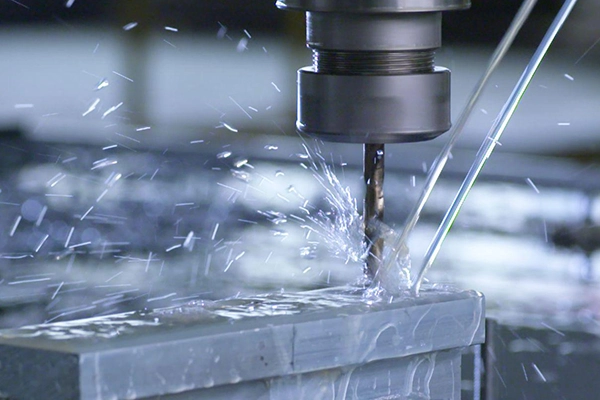
7075 aluminum machining is the first choice for many high-load, lightweight parts. It gives engineers a strong strength-to-weight ratio, but it also brings tighter process demands than 6061. If the stock temper, cutting strategy, or wall layout is wrong, the part may move after roughing, lose flatness, or show poor surface consistency.
For CNC production, 7075 is not a difficult alloy in the usual sense. Chip formation is generally good, cutting speeds can stay high, and the material supports tight tolerances. The challenge is dimensional stability. Thin walls, large pockets, and one-sided stock removal can release internal stress and shift the part during machining. That is why engineers need to think about alloy temper, process sequence, and finish allowance before the drawing goes to production.
Why 7075 Is Used for High-Strength Machined Parts
7075 is a zinc-based aluminum alloy developed for structural duty. It is widely used in aerospace hardware, robotics structures, fixture plates, couplers, performance automotive parts, and load-bearing brackets. In many projects, the comparison is not 7075 versus 6061. It is 7075 aluminum vs steel.
Table 1. Typical Properties of 7075 for CNC Part Design
Property
7075-T6
7075-T651
Why It Matters
Density
2.81 g/cm³
2.81 g/cm³
Reduces component weight
Ultimate tensile strength
~572 MPa
~572 MPa
Suitable for high-load parts
Yield strength
~503 MPa
~503 MPa
Improves structural rigidity
Brinell hardness
~150 HB
~150 HB
Raises cutting force vs 6061
Elastic modulus
~71.7 GPa
~71.7 GPa
Affects deflection under load
Corrosion resistance
Moderate
Moderate
Often needs anodizing or coating
The core merit of 7075 aluminum machining lies in its outstanding balance: this material boasts far greater strength than regular general aluminum alloys, maintaining light weight and good machinability simultaneously, an irreplaceable combo for engineers developing structural machined parts.
When early design work is still open, it helps to compare the feature limits and finishing options of aluminum CNC machining before locking wall thickness, pocket depth, and cosmetic requirements.
7075 Aluminum Machining Performance on the Shop Floor
In real production, machining 7075 aluminum is efficient, but it rewards disciplined process planning. The alloy cuts cleaner than softer gummy aluminum grades and supports high spindle speeds. At the same time, its higher hardness and strength increase cutting load, edge wear, and sensitivity to part stress.
What 7075 aluminum machinability really means
7075 aluminum machinability is generally rated as good to very good. It is well suited for milling, drilling, tapping, and multi-axis contouring. However, “good machinability” does not mean every 7075 part is easy to hold in tolerance.
Typical shop-floor behavior includes:
clean chip formation and low built-up edge risk
good response to high-speed carbide milling
higher cutting force than 6061
part movement risk after heavy roughing on thin-wall geometry
better results when roughing and finishing are separated into stages
For precision parts, the safer route is usually a staged cycle:
rough machine with balanced stock removal
leave controlled finish stock
semi-finish critical walls and floors
finish after the part has stabilized
This is especially important for housings, large plates, and parts with multiple datum surfaces.
7075-T6 vs 7075-T651: Which Temper Is Better for Precision Work?
Engineers often specify 7075 aluminum T6 because it is the best-known condition. In actual machining work, though, 7075 T651 aluminum alloy is often the better choice for plate, block, and structural parts because it has been stress relieved by stretching.
Table 2. T6 vs T651 for Precision CNC Production
Item
7075-T6
7075-T651
Temper condition
Solution heat treated + artificially aged
T6 + stretched for stress relief
Residual stress level
Higher
Lower
Stability after heavy roughing
Fair
Better
Typical use
General high-strength components
Precision plates, fixtures, structural machined parts
Distortion risk in thin sections
Higher
Lower
For parts with large cavities, broad sealing faces, or strict flatness requirements, T651 is usually the safer starting stock. It does not eliminate distortion, but it reduces the risk.
This matters even more when the part needs multiple setups or complex angular features. In those cases, 5-axis CNC machining can reduce re-clamping error and help keep feature relationships more stable across the full process.
Why Stress Relief Matters in 7075 Parts
Residual stress is one of the most common reasons a 7075 part drifts after roughing. That is why stress relieving 7075 T6 aluminum remains a practical engineering topic, not just a materials note on paper.
T651 stock already includes stress relief from stretching, but the finished part can still move if too much material is removed from one side or if the geometry is thin and unbalanced.
Cases where extra stress control is worth it
Use tighter process control when the part has:
large pockets machined from one side only
walls below about 2.0 mm
long unsupported spans
tight flatness or parallelism requirements
a high billet-to-finished-part removal ratio
Common control methods include:
choosing T651 instead of unstabilized stock
roughing both sides in a balanced sequence
leaving enough stock for semi-finishing and final finishing
resting the part between roughing and finishing when needed
clamping from stable datum surfaces only
If the part also needs anodizing, bead blasting, or conversion coating, finishing allowance should be planned early. Surface treatment changes both appearance and dimension on critical features, so it should not be treated as an afterthought. Yueyi’s surface finish reference is a useful checkpoint when deciding finish callouts.
Recommended CNC Strategy for 7075 Aluminum Parts
There is no single feed-and-speed recipe for every machine, but there are safe starting windows that engineers can use when discussing manufacturability with a supplier.
Table 3. Typical Starting Parameters for Milling 7075
Operation
Tool Type
Cutting Speed
Feed Guidance
Notes
Rough milling
3-flute carbide end mill
250–500 m/min
Medium to high chip load
Use adaptive paths and stable radial engagement
Finish milling
Sharp carbide end mill
300–600 m/min
Lower chip load
Light radial cut improves wall finish
Drilling
Carbide drill
80–150 m/min
Per tool maker recommendation
Control chip evacuation in deep holes
Tapping
Form or cut tap
Lower speed
Controlled torque
Check thread quality in blind holes
These values are starting points, not fixed rules. Final parameters depend on machine rigidity, holder runout, tool overhang, coolant method, and tolerance target.
For stable results in 7075 aluminum machining, most precision suppliers will focus on:
rigid fixturing
short tool stick-out
sharp carbide tooling
staged roughing and finishing
heat and chip control
in-process inspection on critical datums
For complex parts, it is often more efficient to review the process with a qualified CNC machining service before finalizing the print, especially when flatness, true position, and surface finish all matter at the same time.
Part Design Rules That Help 7075 Stay in Tolerance
A strong alloy does not automatically create a stable machined part. Geometry still controls much of the result.
Recommended design practices:
keep wall thickness as even as possible
avoid deep narrow pockets with sharp internal corners
add practical internal radii to reduce tool load
place critical tolerance features near rigid support zones
apply very tight tolerances only to functional surfaces
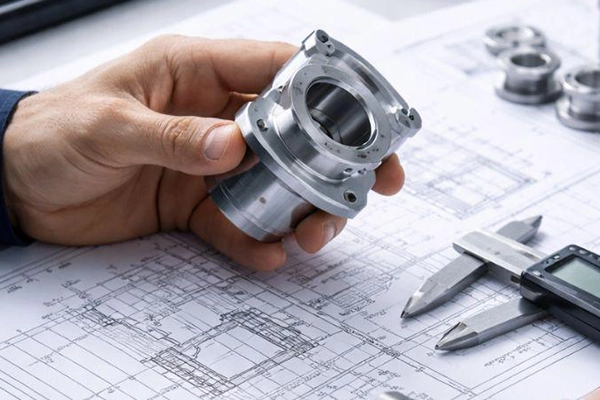
Proper blank preparation and process control enable 7075 aluminum machining to deliver ultra-high precision, with stable features hitting machining accuracy ≤0.005 mm. Yet this tight tolerance should only apply to critical functional bores, datum faces, bearing fits and sealing features; imposing it on all dimensions merely raises costs with no functional gains for finished parts.
For lightweight structural brackets, housings, and drivetrain hardware, the design logic used in automotive CNC machining parts is often a useful benchmark for wall layout, fastening zones, and finishing requirements.
7075 Aluminum vs Steel: When Does 7075 Make Sense?
The 7075 aluminum vs steel decision depends on more than tensile strength. Weight, stiffness, corrosion exposure, machining route, and downstream assembly all matter.
7075 is a strong option when:
weight reduction is a major design goal
the part is machined from billet or plate
high specific strength is more important than weldability
the part benefits from fast CNC production and reduced mass
Steel may still be the better option when:
maximum stiffness is required in the same geometry
the part will be welded after machining
impact toughness matters more than weight
raw material cost is the main driver in a non-weight-sensitive design
In other words, 7075 should not be viewed as a direct steel replacement in every case. It is a high-strength aluminum alloy that works best when the design takes advantage of low weight and CNC-friendly geometry.
PAA: People Also Ask
Is 7075 aluminum easy to machine?
Yes. Compared with many structural metals, it machines well. Compared with 6061, it needs better process control because cutting force is higher and thin features are more likely to move after roughing.
Is T651 better than T6 for machined 7075 parts?
For many precision parts, yes. 7075 T651 aluminum alloy is often preferred because it offers lower residual stress and better dimensional stability than standard 7075 aluminum T6 stock.
Does 7075 need stress relieving before machining?
Not always. But stress relieving 7075 T6 aluminum or selecting pre-stretched T651 stock is often worthwhile for thin-wall parts, large pocketed plates, and components with strict flatness requirements.
What tolerance can 7075 parts hold in CNC machining?
That depends on geometry, fixturing, machine condition, and inspection strategy. For stable features, precision machining can reach ≤0.005 mm, but not every feature on a part should be held to that level.
Is 7075 stronger than steel?
Not across every property. In a 7075 aluminum vs steel comparison, many steels still offer higher stiffness or toughness. But 7075 delivers a very strong strength-to-weight ratio, which is why it is widely used in lightweight structural components.
Ready to start
Your next project?
Contact our technical experts today for a customized solution and a tailored quotation.
Our expert team will contact you within 24 hours
to provide a free technical evaluation and solution design, helping you upgrade your production process.
ADDRESS
NO.22,You Yi Road ,Wulian Community, LongCheng Street ,Long gang District ,Shen Zhen