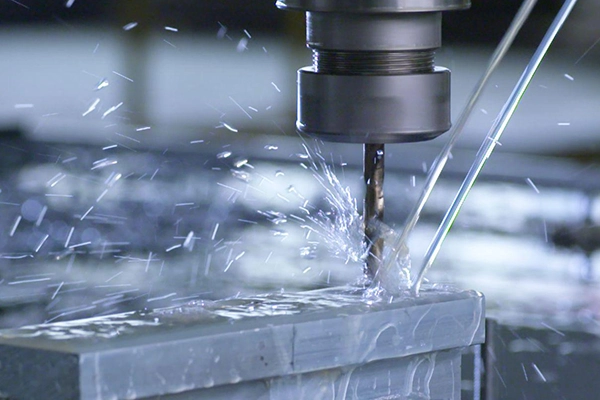
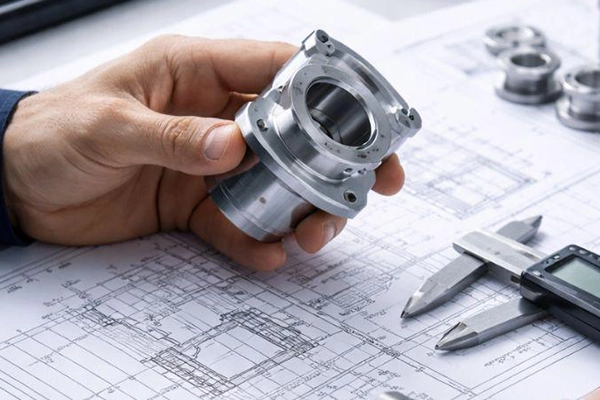
Explore professional 7075 aluminum machining techniques, machinability, cutting parameters, T6 material properties, and precision CNC manufacturi7075 aluminum machining is a challenging but high-value precision manufacturing process. Featuring an outstanding strength-to-weight ratio, this premium alloy suits parts requiring strong mechanical performance, dimensional stability and long-term reliability. Smooth machining relies on mastering its chip formation, cutting forces, heat buildup and tool selection; unlike soft grades such as 6061, it needs refined cutting parameters yet yields superior surface finish and ultra-tight tolerances with proper processing. For engineers weighing aluminum alloys and fabrication approaches, solid awareness of aluminum cnc machining materal optitions helps confirm if 7075 fits their specific use case.
Why Is 7075 Aluminum Machining a Preferred Choice for High-Performance Parts?
7075 aluminum is a zinc-based aluminum alloy containing approximately 5.6–6.1% zinc, combined with magnesium and copper. The T6 heat-treated condition provides significantly higher strength than common aluminum alloys while maintaining good machinability.
The following table compares the basic mechanical characteristics of popular CNC machining aluminum alloys.
Property
7075-T6 Aluminum
6061-T6 Aluminum
5052 Aluminum
Ultimate Tensile Strength
510–570 MPa
290–310 MPa
210–260 MPa
Yield Strength
430–500 MPa
240–275 MPa
130–190 MPa
Density
2.81 g/cm³
2.70 g/cm³
2.68 g/cm³
Machinability Rating
70%
90%
60%
Corrosion Resistance
Moderate
Excellent
Excellent
The major advantage of 7075 is its strength. It approaches certain steels while remaining nearly one-third of the weight. This allows designers to reduce component mass without sacrificing structural performance.
Common forms of raw material used in precision production include:
7075 aluminum bar stock for general machined components.
7075 t6 aluminum bar stock for high-strength precision parts requiring stable mechanical properties.
7075 aluminum rod for shafts, spacers, and rotational components.
7075 t6 aluminum rod when additional hardness and strength are necessary.
7075 aluminum square bar for custom blocks, brackets, and complex CNC milled components.
Understanding 7075 Aluminum Machinability and Processing Characteristics
7075 aluminum machinability is considered very good compared with many engineering metals. The alloy produces short chips and allows high-speed cutting with proper tooling. However, its hardness means that tool wear can occur faster than when machining 6061 aluminum.
Several factors determine machining performance:
Tool Material and Geometry
Carbide cutting tools are generally recommended because of their high wear resistance and rigidity. Sharp cutting edges and polished flutes help prevent material adhesion and improve chip evacuation.
For complex surfaces and precision pockets, selecting a suitable tool geometry and working with experienced cnc milling process experts can significantly improve dimensional accuracy and surface consistency.
The selection of the best end mill for 7075 aluminum usually depends on feature geometry and production volume:
End Mill Type
Recommended Application
Key Advantage
2-Flute Carbide End Mill
High-speed roughing
Excellent chip removal
3-Flute Carbide End Mill
General precision machining
Balance of speed and finish
Variable Helix End Mill
Thin walls and complex geometry
Reduced vibration
Coated Carbide Tool
Long production runs
Improved tool life
Practical Cutting Parameters for High-Precision 7075 Aluminum Machining
The quality of 7075 aluminum parts is highly influenced by spindle speed, feed rate, depth of cut, and cooling strategy. During machining 7075 aluminum, engineers must balance productivity, tool life, and final surface quality.
The following parameters are commonly used as a starting reference for CNC processing. Actual values should be adjusted according to machine rigidity, tooling, and part geometry.
Machining Operation
Cutting Speed
Feed Rate
Depth of Cut
Rough Milling
400–800 m/min
0.08–0.25 mm/tooth
1–5 mm
Finish Milling
600–1200 m/min
0.02–0.10 mm/tooth
0.1–0.5 mm
Drilling
80–200 m/min
0.05–0.25 mm/rev
Depends on diameter
Turning
300–1000 m/min
0.05–0.30 mm/rev
0.5–3 mm
Precision Tolerance Control in 7075 Aluminum Components
One of the major advantages of precision 7075 machining is its ability to achieve excellent dimensional stability. With advanced CNC equipment, high-quality cutting tools, and controlled environmental conditions, critical dimensions can typically be maintained within ±0.005 mm.
However, achieving ultra-tight tolerance requires attention to multiple factors:
Machine thermal stability and positioning accuracy.
Tool wear monitoring and replacement strategy.
Proper fixture design to reduce deformation.
Controlled cutting force during finishing operations.
Accurate inspection using CMM and precision measuring equipment.
For engineers defining dimensional requirements, understanding practicalprecision machining tolerancesand achievable accuracy helps balance design requirements, manufacturing cost, and production efficiency.
CNC Turning and Rotational Parts Made from 7075 Aluminum
Although milling is commonly used for complex geometries, many cylindrical components are produced through CNC turning. Examples include shafts, bushings, spacers, connectors, and threaded components.
Because 7075 has high strength and good chip-breaking characteristics, it performs well in turning operations. Proper control of cutting speed and tool nose radius allows manufacturers to achieve excellent roundness and smooth surface finishes.
For parts manufactured from 7075 aluminum rod or 7075 t6 aluminum rod, specialized turning strategies are often required to maintain concentricity, straightness, and surface integrity. Engineers evaluating these components can benefit from understanding custom CNC turning capabilities for precision rotational parts.
Selecting 7075 Aluminum Raw Materials and Custom Profiles
Choosing the correct raw material form has a direct impact on machining efficiency, material utilization, and final part performance. Engineers should select the appropriate stock shape based on the component structure, machining allowance, and production volume.
Common material options include round bars, square bars, plates, and custom-shaped extrusions.
For components with complex cross-sections or applications requiring reduced material waste, custom aluminum extrusion profiles for near-net-shape manufacturing can provide a more efficient starting material before final CNC machining.
Common Challenges in 7075 Aluminum Machining and Solutions
Although 7075 aluminum offers excellent mechanical performance, manufacturers may face several processing challenges. Understanding these issues helps improve production consistency and reduce machining defects.
Challenge
Cause
Recommended Solution
Tool wear
High hardness and abrasive alloy elements
Use sharp carbide tools and optimize cutting parameters
Surface marks
Vibration, improper tool path, or worn tools
Apply stable fixturing and optimized tool strategies
Dimensional deviation
Thermal expansion or residual stress
Control cutting heat and use multiple finishing passes
Deformation of thin walls
Excessive cutting force
Reduce radial engagement and use balanced machining sequences
For precision manufacturers, successful 7075 aluminum machining requires not only advanced CNC equipment but also practical experience in tool selection, process planning, fixturing, and quality control.
Best Practices for Achieving Superior 7075 Aluminum Parts
Engineers can improve production efficiency and part quality by following several proven practices:
Use high-quality carbide tools with optimized flute geometry.
Select cutting parameters according to feature size and machining strategy.
Choose stable material conditions, especially 7075 t6 aluminum bar stock, for critical applications.
Reserve appropriate finishing allowance to minimize residual stress.
Verify important dimensions using CMM and precision inspection systems.
Collaborate with experienced CNC manufacturers capable of controlling tight tolerances and complex geometries.
Following these principles allows manufacturers to maximize the strength and machinability advantages of 7075 aluminum while maintaining stable production quality.
People Also Ask (PAA)
Is 7075 aluminum easy to machine?
Yes. 7075 aluminum machinability is considered good among high-strength engineering metals. It produces clean chips and supports high-speed cutting. However, because it is harder than common aluminum alloys, proper tooling, cutting parameters, and cooling methods are necessary to reduce tool wear.
What is the best end mill for 7075 aluminum?
The best end mill for 7075 aluminum is typically a sharp carbide end mill with two or three flutes. For high-speed roughing, a two-flute design provides excellent chip evacuation, while three-flute and variable-helix tools are preferred for precision finishing and improved vibration control.
Is 7075-T6 better than 6061 for CNC machining?
7075-T6 offers much higher strength and hardness than 6061-T6, making it suitable for high-load mechanical components. However, 6061 has better corrosion resistance and slightly easier machining. The material selection depends on the required balance between strength, cost, and environmental conditions.
Can 7075 aluminum achieve tight machining tolerances?
Yes. With advanced CNC equipment, stable machining processes, and proper quality control, 7075 aluminum components can achieve precision levels of ±0.005 mm or even tighter for certain critical features.
Ready to start
Your next project?
Contact our technical experts today for a customized solution and a tailored quotation.
Our expert team will contact you within 24 hours
to provide a free technical evaluation and solution design, helping you upgrade your production process.
ADDRESS
NO.22,You Yi Road ,Wulian Community, LongCheng Street ,Long gang District ,Shen Zhen