7075 extruded aluminum is one of the strongest commercial aluminum materials available today. It is widely selected for high-performance structural components where excellent strength-to-weight ratio, dimensional stability, and reliable machining performance are essential.
Compared with standard aluminum grades, 7075 aluminum provides significantly higher mechanical strength because of its zinc-based alloy composition. When supplied in heat-treated conditions such as 7075 aluminum T6 or 7075 T651 aluminum alloy, it achieves exceptional hardness and resistance to mechanical stress.
For engineers developing lightweight but durable components, understanding the complete range of 7075 aluminum properties helps optimize material selection, manufacturing methods, and long-term product reliability.
Modern precision manufacturers often combine extrusion technology with advanced CNC processing to create complex parts with tight dimensional requirements. For applications requiring customized extrusion geometries, properly designed custom aluminum extrusion profiles can reduce material waste and improve production efficiency.
What Is 7075 Extruded Aluminum?
7075 extruded aluminum is a high-strength aluminum-zinc-magnesium-copper alloy produced by forcing heated aluminum billets through a specially designed die. The extrusion process creates continuous profiles with consistent cross-sectional shapes.
The alloy was originally developed for applications requiring extremely high strength while maintaining lower weight than many traditional metals. Today, it is commonly used in:
The unique performance of 7075 aluminum alloy properties comes from its carefully controlled chemical composition.
Element
Typical Content (%)
Engineering Function
Zinc (Zn)
5.1–6.1
Primary strengthening element
Magnesium (Mg)
2.1–2.9
Improves hardness and strength
Copper (Cu)
1.2–2.0
Enhances mechanical performance
Chromium (Cr)
0.18–0.28
Improves corrosion resistance
Aluminum (Al)
Balance
Base material
The combination of zinc and magnesium allows the alloy to achieve outstanding strength after solution heat treatment and artificial aging.
Key 7075 Extruded Aluminum Properties Engineers Should Know
Selecting materials requires more than comparing ultimate strength. Engineers must evaluate hardness, elasticity, machinability, fatigue behavior, and dimensional stability.
Mechanical Properties of 7075-T6 and 7075-T651
The most common tempers are T6 7075 aluminum and 7075 T651 aluminum alloy. Both provide excellent strength, while T651 includes stress relief through stretching, reducing the risk of distortion during precision machining.
Property
7075-T6
7075-T651
Ultimate Tensile Strength
510–570 MPa
510–570 MPa
Yield Strength
430–505 MPa
430–505 MPa
Hardness
~150 HB
~150 HB
Density
2.81 g/cm³
2.81 g/cm³
Elongation
8–11%
8–11%
These values explain why 7075 aluminum properties are often compared with certain steels despite aluminum being approximately one-third the weight of steel.
Another important design parameter is the modulus of elasticity of aluminum 7075, which is approximately 71.7 GPa. This value indicates the material stiffness and helps engineers calculate deformation under applied loads.
7075 Aluminum vs Steel: Strength and Weight Comparison
When evaluating 7075 aluminum vs steel, many engineers focus on the balance between mechanical strength and overall component weight.
Although steel generally provides higher stiffness and better wear resistance, 7075 aluminum offers a superior strength-to-weight ratio, making it an excellent choice for lightweight precision components.
Material
Density
Typical Tensile Strength
Weight Advantage
7075-T6 Aluminum
2.81 g/cm³
Up to 570 MPa
Lightweight
Carbon Steel
7.85 g/cm³
400–700 MPa
Heavier
Stainless Steel
7.9–8.0 g/cm³
500–1000 MPa
Corrosion resistant but heavy
In precision manufacturing, engineers often choose 7075 aluminum when reducing moving mass, improving energy efficiency, or simplifying mechanical assemblies is a priority. These lightweight components are commonly produced through advanced aluminum CNC machining services, allowing engineers to achieve complex geometries and strict dimensional requirements.
CNC Machining Performance of 7075 Extruded Aluminum
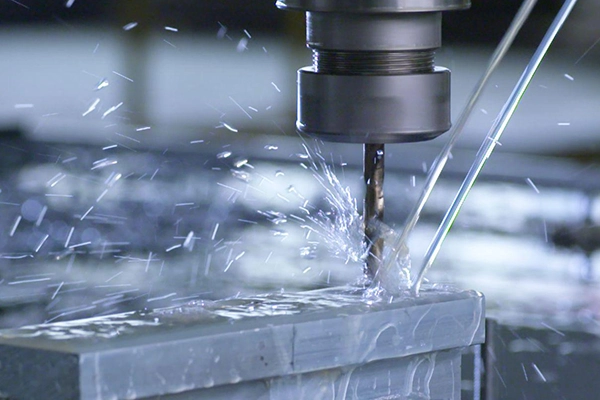
One of the major advantages of 7075 extruded aluminum is its excellent machinability compared with many other high-strength metals. Although its hardness is higher than common grades such as 6061 aluminum, it still delivers clean cutting surfaces, stable chip formation, and efficient material removal during high-speed CNC operations.
For manufacturers producing precision mechanical parts, selecting suitable machining processes is essential. Complex geometries, pockets, slots, and multi-surface features are usually produced throughprecision CNC milling servicesfor high-accuracy aluminum components, while cylindrical components such as shafts, bushings, and threaded parts are often completed using high-accuracy CNC turning operations.
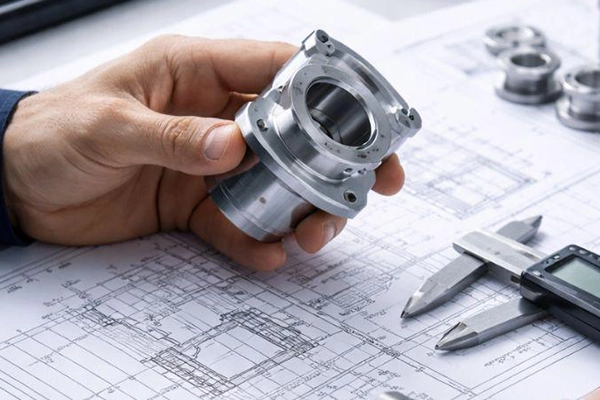
During the manufacturing stage, engineers must also consider machining allowance, material stress, and dimensional requirements. For detailed dimensional standards, acceptable variation ranges, and engineering specifications, Engineers should review CNC machining tolerances and manufacturing standards before defining critical dimensions and inspection requirements.
Compared with softer aluminum alloys, 7075 requires optimized cutting conditions to achieve excellent surface quality and dimensional consistency.
Recommended CNC Cutting Parameters for 7075 Aluminum
The high strength of 7075 aluminum does not prevent efficient machining. With sharp carbide tools, proper cooling strategies, and optimized tool paths, manufacturers can achieve excellent productivity and repeatable precision.
Typical reference machining parameters are shown below:
CNC Operation
Recommended Tool
Cutting Speed
Feed Rate
Notes
Rough Milling
Carbide end mill
300–600 m/min
0.10–0.40 mm/tooth
High material removal
Finish Milling
Fine-grain carbide tool
400–800 m/min
0.03–0.15 mm/tooth
Improved surface finish
Turning
Carbide insert
200–500 m/min
0.05–0.30 mm/rev
Stable chip evacuation
Drilling
Carbide drill
100–300 m/min
Based on diameter
Use adequate coolant
Beyond selecting suitable cutting parameters, engineers should also establish clear CNC machining tolerances and manufacturing standards based on functional requirements, inspection methods, and assembly conditions. Proper tolerance planning helps ensure consistent part quality and reduces manufacturing variation.
Precision Manufacturing Considerations for 7075 Extruded Aluminum Components
Although 7075 extruded aluminum offers excellent strength, controlling residual stress and deformation is an important challenge during high-precision machining.
The 7075 T651 aluminum alloy condition is frequently preferred for precision components because the material has undergone stress-relief stretching after heat treatment. This additional process reduces internal stress and minimizes distortion during heavy material removal.
Common engineering practices include:
Using symmetrical machining strategies to balance internal stress release.
Leaving appropriate stock allowance between rough and finish machining.
Applying low-force finishing tools to improve surface integrity.
Using coordinate measuring machines (CMM) to verify critical dimensions.
Maintaining stable workshop temperature during ultra-precision machining.
For components requiring complex shapes, Manufacturers often combine extruded stock with aluminum CNC machining services to achieve both material efficiency and ultra-precision geometry control.
Surface Finishing Options for 7075 Aluminum Parts
The surface condition of a component affects corrosion resistance, appearance, wear performance, and service life.
Although 7075 aluminum alloy properties provide excellent mechanical strength, its natural corrosion resistance is lower than some magnesium-silicon aluminum grades such as 6061. Therefore, additional surface treatments are commonly applied.
Surface Treatment
Main Benefit
Typical Application
Clear Anodizing
Improved corrosion resistance
Industrial components
Hard Anodizing
Increased surface hardness and wear resistance
High-load mechanical parts
Chemical Conversion Coating
Electrical conductivity retention
Electronic assemblies
Bead Blasting + Anodizing
Uniform matte appearance
Consumer and industrial products
During anodizing, engineers should consider dimensional changes caused by oxide layer growth, especially for precision holes, mating surfaces, and threaded features.
Why Engineers Choose 7075 Extruded Aluminum for High-Performance Parts
The combination of lightweight design and exceptional mechanical performance makes 7075 extruded aluminum a preferred material for demanding engineering applications.
Key advantages include:
High strength approaching some grades of steel.
Excellent strength-to-weight ratio.
Good CNC machining efficiency.
Availability in stable tempers such as 7075 aluminum T6 and T6 7075 aluminum.
Reliable dimensional stability when proper machining methods are applied.
However, material selection should always consider the complete engineering environment, including load conditions, corrosion exposure, surface requirements, and manufacturing cost.
Typical Applications of 7075 Extruded Aluminum in Precision Engineering
High-strength 7075 material is also widely used for precision shafts, bushings, threaded connectors, and other rotational components, which are efficiently manufactured through precision CNC turning services with excellent concentricity and surface finish. Typical applications include:
Precision mechanical structures and support frames.
Industrial automation equipment and robotic components.
High-load fixtures, jigs, and customized tooling.
Performance transportation and motorsport components.
Electronic equipment requiring lightweight but rigid structures.
Precision shafts, housings, brackets, and mounting systems.
For parts with complex three-dimensional features, selecting suitable machining methods is as important as selecting the correct material. Multi-axis machining strategies allow engineers to produce intricate geometries while maintaining excellent surface quality and tight dimensional control.
7075 Aluminum Material Selection Summary
Choosing the correct aluminum alloy requires balancing strength, machinability, corrosion resistance, and manufacturing cost.
Selection Factor
7075 Aluminum
Engineering Advantage
Mechanical Strength
Excellent
Suitable for high-stress components
Weight Reduction
Excellent
Approximately one-third the density of steel
CNC Machinability
Very Good
Supports efficient precision manufacturing
Corrosion Resistance
Moderate
Usually improved through surface treatment
Dimensional Stability
Excellent in T651 condition
Reduced deformation during machining
For engineering projects where weight reduction and strength are the primary concerns, 7075 remains one of the most effective high-performance aluminum choices available.
PAA: Frequently Asked Questions About 7075 Extruded Aluminum
Is 7075 extruded aluminum stronger than steel?
When comparing tensile strength, some heat-treated 7075 aluminum grades can approach certain carbon steels. However, steel generally provides higher stiffness because its elastic modulus is approximately three times greater than aluminum. The major advantage of 7075 is its outstanding strength-to-weight ratio.
What is the difference between 7075-T6 and 7075-T651 aluminum?
Both conditions provide similar mechanical strength. The T651 temper includes an additional stress-relief stretching process after heat treatment. This reduces residual stress and improves dimensional stability during precision machining.
Is 7075 aluminum suitable for CNC machining?
Yes. Despite its high strength, 7075 aluminum has excellent machinability. With optimized cutting parameters, high-quality carbide tools, and stable machining environments, manufacturers can achieve fine surface finishes and critical dimensional tolerances down to ≤0.005 mm.
Does 7075 aluminum have good corrosion resistance?
7075 aluminum provides moderate natural corrosion resistance. Because of its high copper content, it is generally less corrosion resistant than 6000-series alloys. Anodizing, hard anodizing, and conversion coatings are commonly used to improve durability in demanding environments.
Is 7075 extruded aluminum expensive?
The cost of 7075 aluminum is typically higher than standard grades such as 6061 because of its alloy composition and superior mechanical properties. However, for high-performance components where strength, weight reduction, and reliability are critical, the additional material cost can provide significant engineering value.
Ready to start
Your next project?
Contact our technical experts today for a customized solution and a tailored quotation.
Our expert team will contact you within 24 hours
to provide a free technical evaluation and solution design, helping you upgrade your production process.
ADDRESS
NO.22,You Yi Road ,Wulian Community, LongCheng Street ,Long gang District ,Shen Zhen