Custom Aluminum Extrusion Profiles Design Guidelines: How Precision CNC Machining Turns Standard Shapes into High-Performance Components
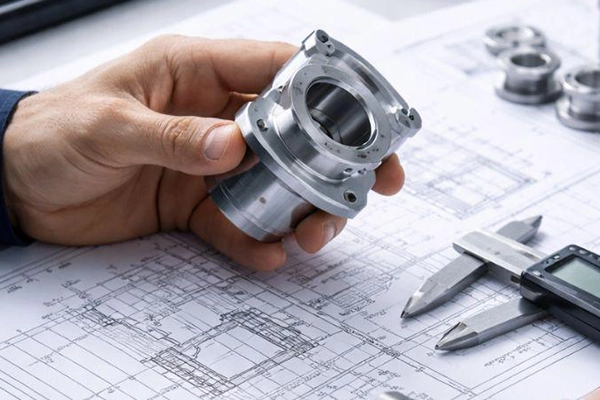
For product structure engineers, mechanical designers, and procurement engineers, Custom Aluminum Extrusion Profiles Design Guidelines offer an efficient starting point for countless mechanical components. Extrusion gives you a near-net shape — but raw extrusions alone rarely meet final engineering requirements. Holes must be drilled. Mounting faces must be milled flat. Threads must be tapped. Critical datums must be machined to tight tolerances.
That is where precision CNC machining for aluminum transforms a standard extrusion into a finished, functional part. This guide walks you through the technical considerations — alloy selection, tolerance standards, CNC post-machining processes, and surface finish options — so you can specify Custom Aluminum Extrusion Profiles Design Guidelines with confidence.
Understanding Aluminum Alloys for Extrusion Profiles
The alloy you choose directly affects extrudability, machinability, strength, and surface finish. The 6000 series is the most common family for extrusion, with three primary grades used in engineering applications.
Table 1: Comparison of Common Aluminum Extrusion Alloys
Property
6061
6063
6005A
Strength
High (Tensile 260 MPa min)
Medium
Medium-high
Extrudability
Good
Excellent
Good
Machinability
Excellent
Good
Good
Surface Finish
Good (anodizing response fair)
Excellent smooth finish
Good
Corrosion Resistance
Excellent
Excellent
Excellent
Typical Applications
Structural, automotive, CNC machined parts
Architectural, window frames, decorative
Structural extrusions, thin-wall complex profiles
6061 is the workhorse alloy for components that require both structural strength and extensive CNC machining. For more detailed properties, refer to our 6061 aluminum extrusion guide when selecting temper and heat treatment. 6063 delivers the best surface finish for architectural and cosmetic applications. 6005A offers a balance for thin-wall, complex extrusions where extrudability is prioritized.
For most Custom aluminum extrusion profiles design guidelines that undergo secondary CNC operations, 6061-T6 is the default choice due to its strength and machinability.
Extrusion Tolerances: What the Standards Specify
Extruded profiles are produced by forcing a heated aluminum billet (around 500°C) through a die. The high deformation forces involved mean that extrusion tolerances are inherently wider than machined tolerances. Understanding this distinction is critical when designing custom aluminum extrusion profiles design guidelines.
Table 2: Extrusion Tolerance Standards Overview
Standard
Scope
Key Details
DIN 17615
Precision profiles, sections within 300 mm circumscribing circle
Limit deviations for precision extrusions
DIN 1748
Sections exceeding 300 mm circumscribing circle
General extrusion tolerances
DIN ISO 755-9
Extrusion tolerances
General engineering tolerances
EN 755
Extruded rod/bar/tube tolerances
European standard for dimensions and form
As a rule of thumb, extrusion tolerances range from ±0.1 mm to several millimeters, depending on section size. Tighter tolerances increase cost due to lower output and higher scrap rates.
Pro Tip: Do not specify unnecessarily tight extrusion tolerances. Instead, design the extrusion with extra material on critical surfaces, then use CNC machining to achieve the final precision. A typical approach: extrusion holds ±0.2–0.5 mm, while CNC post-machining achieves ≤0.005 mm on critical features.
CNC Post-Machining: Turning Extrusions into Finished Parts
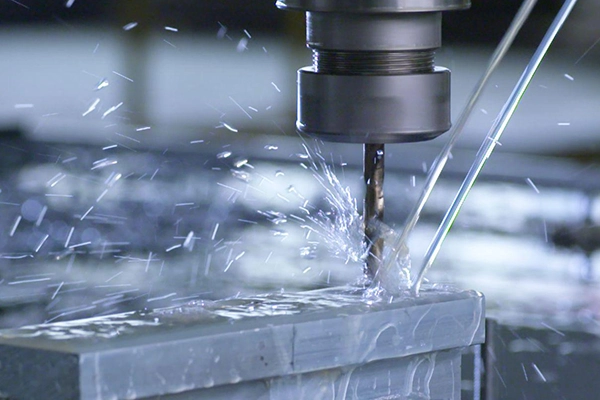
Raw custom aluminum extrusion profiles design guidelines leave the press with their cross-sectional shape intact. But most engineering applications require additional features — holes, slots, threads, pockets, or flat mounting surfaces. This is where CNC machining adds value.
CNC machining of aluminum extrusions can achieve tolerances as tight as ±0.005 inches (±0.127 mm) , with high-end precision work reaching ≤0.005 mm. The key is coordinating extrusion design with CNC fixturing and toolpath strategy early in the product development cycle — a prototype-to-production manufacturing approach helps reduce iterations and cost.
When you design custom aluminum extrusion profiles design guidelines for post-machining, consider these rules:
Add 0.5–1.0 mm of extra material on surfaces that will be milled flat.
Avoid placing critical hole locations too close to extrusion draft angles.
Design CNC locating features (pockets or edges) into the extrusion for consistent fixturing.
Specify CNC machining tolerances only on functional interfaces — not on the entire profile.
For a deeper dive into secondary operations, explore our dedicated page on CNC post-machining processes for extrusion-based components.
Surface Finishing Options for Extruded and Machined Profiles
After extrusion and CNC machining, surface finishing protects the part and enhances its appearance. The two most common finishes are anodizing and powder coating.
Anodizing is an electrochemical process that thickens the natural aluminum oxide layer. It improves corrosion resistance and durability. Clear anodizing is standard, with thicknesses ranging from AA10 to AA25 microns. Architectural-grade anodizing is available in black, clear, and bronze.
Powder coating applies a dry paint that is cured under heat. It is environmentally friendly with near-zero VOCs and offers a full spectrum of colors. Powder coating is ideal for high-humidity or coastal environments.
Order of operations matters: Perform all CNC machining before surface finishing. Anodizing or powder coating applied over machined surfaces protects the precision features you just created. Finishing first, then machining, exposes raw aluminum at the machined areas — compromising corrosion protection.
Design Checklist for Custom Aluminum Extrusion Profiles Design Guidelines with CNC Machining
Select the right alloy (6061 for strength + machinability; 6063 for surface finish)
Specify extrusion tolerances per DIN 17615 or EN 755 — only where needed
Add machining stock on critical surfaces (0.5–1.0 mm)
Design CNC locating features into the extrusion
Plan the CNC operation sequence: cut → mill/drill/tap → deburr → finish
Specify surface finish (anodizing or powder coating) after all machining
Involve your extrusion and CNC machining partner early in the design phase — adopting a prototype-to-production manufacturing mindset ensures smoother scale-up (already linked above, but the principle holds throughout).
PAA
Q1: What are Custom Aluminum Extrusion Profiles Design Guidelines? A: Custom Aluminum Extrusion Profiles Design Guidelines are aluminum shapes produced by forcing heated aluminum alloy through a die to create a specific cross-sectional geometry. These profiles are then customized further through CNC machining — adding holes, slots, threads, and precision surfaces — to meet exact engineering specifications.
Q2: What tolerance can CNC machining achieve on aluminum extrusions? A: CNC machining of aluminum extrusion profiles typically achieves tolerances within ±0.005 inches (±0.127 mm). High-precision CNC operations can reach ≤0.005 mm on critical features. Extrusion tolerances, by contrast, are wider — typically ±0.2–0.5 mm — so CNC post-machining is used to bring critical dimensions to final specification.
Q3: Which aluminum alloy is best for custom extrusion profiles with CNC machining? A: 6061 is the most versatile choice for Custom Aluminum Extrusion Profiles Design Guidelines that require extensive CNC machining. It offers excellent machinability, good strength (260 MPa tensile minimum), and corrosion resistance. 6063 is preferred when surface finish is the priority. 6005A suits thin-wall, complex extrusions.
Q4: What is the difference between extrusion tolerances and CNC machining tolerances? A: Extrusion tolerances (per DIN 17615, EN 755) apply to the as-extruded profile shape and are relatively wide due to the high-force forming process. CNC machining tolerances apply to secondary operations — holes, flat surfaces, threads — and are significantly tighter (≤0.005 mm vs. ±0.2–0.5 mm). Engineers should design extrusions with extra material on critical surfaces and use CNC machining only where precision is required.
Q5: Should anodizing be done before or after CNC machining? A: Anodizing and powder coating should be done after all CNC machining operations. Machining after finishing exposes raw aluminum at the machined areas, compromising corrosion protection. The correct sequence is: extrude → CNC machine → surface finish.
Ready to start
Your next project?
Contact our technical experts today for a customized solution and a tailored quotation.
Our expert team will contact you within 24 hours
to provide a free technical evaluation and solution design, helping you upgrade your production process.
ADDRESS
NO.22,You Yi Road ,Wulian Community, LongCheng Street ,Long gang District ,Shen Zhen