9 Proven Engineering Strategies for Custom Aluminum Parts High-Precision CNC Manufacturing
Custom Aluminum Parts are widely used in precision industries due to their balance of strength, machinability, and cost efficiency. In modern CNC production, engineers require stable dimensional control, repeatable processes, and predictable material behavior.
This guide explains how real CNC manufacturing decisions are made in production environments, not just theoretical design rules. The goal is to help engineers avoid deformation, tolerance drift, and unstable machining outcomes.
Material Selection for Custom Aluminum Parts
Material selection directly defines machining stability and final performance. Different aluminum alloys respond differently under cutting forces, heat, and tool pressure.
Aluminum Alloy Comparison Table
Alloy
Strength
Machinability
Corrosion Resistance
Typical Use
6061
Medium
Excellent
High
Structural components
7075
Very High
Medium
Medium
High-load parts
6082
Medium-High
Good
High
Precision frames
Key engineering notes:
6061 is the most stable choice for general CNC machining
Surface finishing affects not only the outward appearance of custom machined aluminum components but also long-term structural durability, anti-corrosion capability and overall thermal transfer performance critical for heat sink and mechanical assembly applications.
Surface Treatment Comparison
Method
Function
Protection
Cost
Anodizing
Corrosion resistance
High
Medium
Sandblasting
Surface uniformity
Medium
Low
Hard anodizing
Wear resistance
Very high
High
Key engineering insights:
Hard anodizing significantly improves wear resistance
Pre-finishing affects final dimensional accuracy
Surface roughness influences sealing performance
In thermal-related applications, engineers often optimize heat dissipation structure design together with surface treatment to improve performance stability.
Engineering Design Applications
Custom Aluminum Parts are widely used in systems requiring both lightweight structure and high thermal efficiency.
Typical applications:
Robotics frames
Automation fixtures
Electronic housings
Thermal management structures
Design guidelines:
Avoid sharp internal corners
Maintain uniform wall thickness
Reduce stress concentration zones
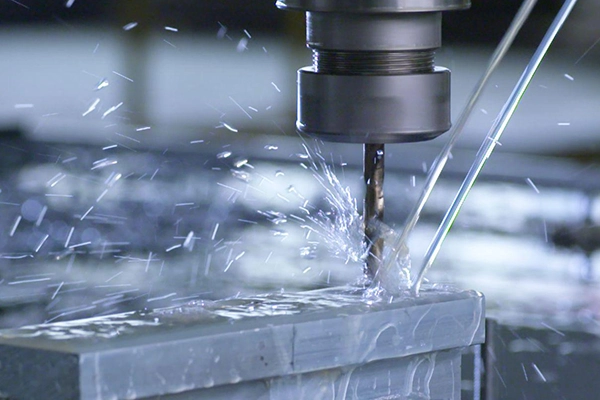
CNC milling operations are often used for complex geometry structures requiring multi-axis precision and surface quality control.
Quality Control in CNC Manufacturing
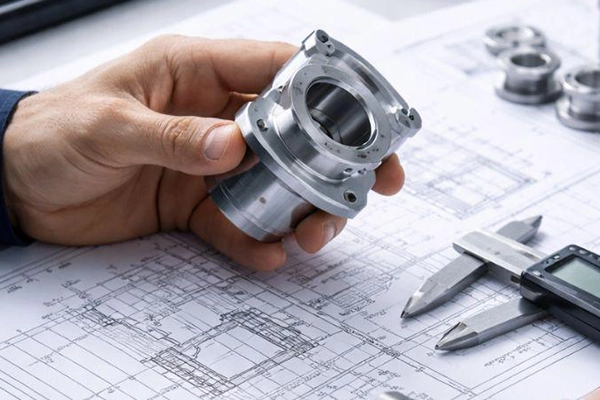
Quality assurance ensures parts remain consistent across production batches. Strict QC standards eliminate dimensional deviations and surface flaws. Our multi-stage inspection system uses high-precision devices to verify every component meets drawing tolerances, stabilizing product performance and lowering customer rejection rates in mass orders.
Inspection Methods
Method
Tool
Accuracy
Purpose
CMM measurement
Coordinate Measuring Machine
±0.002 mm
Full dimensional check
Optical inspection
Vision system
±0.005 mm
Surface defect detection
Roughness test
Profilometer
Ra 0.2–3.2
Surface quality validation
Core QA workflow:
First article inspection before batch production
In-process sampling every 10–20 parts
Final inspection report for delivery
Cost Optimization in Aluminum CNC Manufacturing
Cost efficiency is not only about price—it depends on machining time, tool wear, and material utilization.
Optimization strategies:
Reduce unnecessary tool travel paths
Use near-net-shape raw material
Optimize fixture setup time
Combine operations in single CNC setup
Engineering tolerance reference range also helps avoid over-tight specifications that unnecessarily increase machining cost.
PAA Section
Q1: What makes aluminum suitable for CNC machining? Aluminum has good machinability, low cutting resistance, and stable dimensional performance.
Q2: Which aluminum alloy is best for precision parts? 6061 is widely used due to its balance of strength and machinability.
Q3: How accurate can CNC aluminum parts be? High precision CNC systems can achieve up to ±0.005 mm under controlled conditions.
Q4: What surface finish is most common? Anodizing is the most widely used finish for protection and durability.
Engineering Consultation CTA
For projects requiring stable CNC machining performance, tight tolerance control, or scalable aluminum component production, engineering support is available from prototype to mass production.
If you need process evaluation or manufacturability feedback for CNC aluminum parts, production capability details are available for review before quoting.
Ready to start
Your next project?
Contact our technical experts today for a customized solution and a tailored quotation.
Our expert team will contact you within 24 hours
to provide a free technical evaluation and solution design, helping you upgrade your production process.
ADDRESS
NO.22,You Yi Road ,Wulian Community, LongCheng Street ,Long gang District ,Shen Zhen