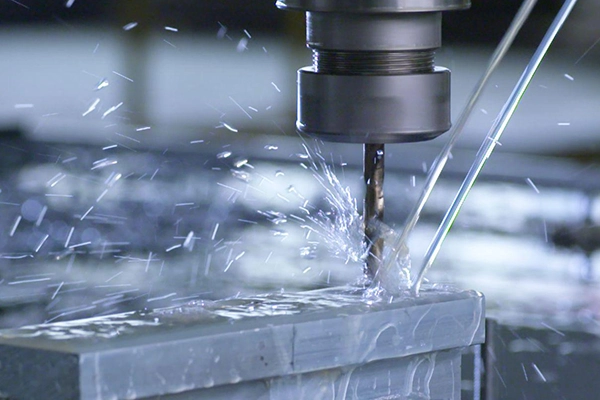
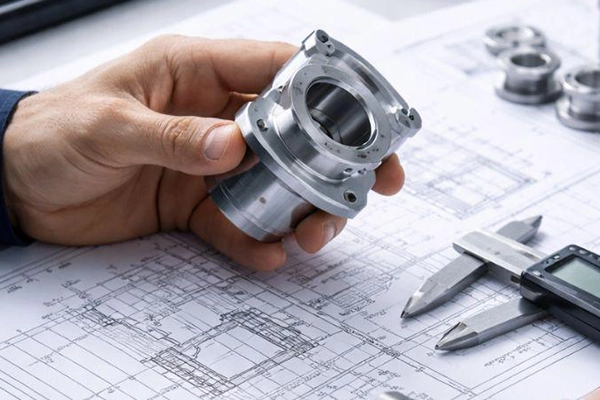
Standard aluminum shapes can be practical for prototypes, but they often require excess machining, separate brackets, or additional assembly. Custom aluminum profiles allow engineers to place ribs, mounting channels, screw bosses, thermal features, and machining stock directly into a continuous cross-section.
For overseas industrial buyers, the decision involves more than selecting a shape. Alloy, temper, wall thickness, die design, extrusion tolerance, CNC datums, surface finish, inspection, order volume, and supplier capability all influence part quality and total cost.
This guide explains how to design, manufacture, machine, finish, inspect, and source profiles for automotive components, electronics, medical equipment, automation systems, LED stage supports, and other industrial applications.
Projects requiring DFM, die development, extrusion, machining, and finishing can be evaluated through Yueyi Precision’s custom aluminum extrusion manufacturing capabilities.
When Do Custom Aluminum Profiles Reduce Total Part Cost Better Than Stock Shapes?
A catalog channel, tube, or angle avoids new tooling and may be economical for a prototype or a very small order. However, adapting a standard shape can require extensive milling, multiple purchased components, welding, or additional fasteners.
A custom aluminum extrusion requires an initial die investment, but its cross-section can incorporate mounting flanges, screw bosses, cable channels, locating grooves, ribs, and thermal features. This integration can reduce material waste and eliminate separate manufacturing steps.
Decision factor
Custom profile
Standard stock shape
Initial tooling
A new extrusion die is normally required
Existing shapes are usually available
Cross-section
Designed around the application
Limited to catalog dimensions
Material efficiency
Material is placed where structurally useful
Excess stock may need to be removed
Secondary operations
Continuous features reduce CNC work
More cutting and milling may be required
Assembly
Several functions can be integrated
Extra brackets and fasteners may be needed
Production economics
Better suited to stable repeat demand
Better suited to prototypes and low volume
The correct comparison is not simply die price versus material price. Buyers should compare total delivered-part cost, including raw material, CNC cycle time, purchased hardware, assembly labor, inspection, scrap, packaging, and repeat-order stability.
Custom profile extrusions are especially effective when the same cross-section will be used across a stable production program and when integrated features can replace other components.
How Functional Requirements Become an Extrudable Aluminum Cross-Section
The design process should begin with what the finished component must accomplish. A profile may need to carry bending loads, guide another component, dissipate heat, protect electronics, position a seal, or provide repeatable assembly points.
These requirements must be converted into a cross-section that can flow through a steel die without creating unstable walls, weak tooling features, excessive distortion, or unnecessary weight.
Wall Thickness, Radii, Ribs, and Metal-Flow Balance
Uniform walls generally cool and shrink more evenly than sections containing abrupt changes between heavy and thin regions. Internal radii improve metal flow and reduce stress concentration in the die.
Five DFM principles should guide early profile development:
Keep wall thickness reasonably consistent.
Replace sharp internal corners with practical radii.
Avoid deep channels supported by thin die tongues.
Place material where it improves function rather than adding solid mass.
Reserve CNC machining stock only on surfaces that require localized precision.
Unique extrusions should simplify the finished assembly rather than merely create an unusual outline. Integrating too many small features can increase die correction, reduce extrusion speed, and make dimensional inspection more difficult.
Which Features Should Be Extruded and Which Should Be CNC Machined?
Features that remain constant along the complete length are strong candidates for extrusion. Ribs, rails, channels, fins, grooves, and screw-boss envelopes can often be produced continuously.
Localized holes, threads, sealing faces, connector openings, pockets, bearing locations, and precision end dimensions are generally better controlled by CNC machining. Separating continuous geometry from localized precision prevents the drawing from demanding machining-level tolerances across the entire extrusion.
Engineers developing new cross-sections can review the custom aluminum extrusion design guide for additional guidance on wall thickness, radii, hollow sections, die limitations, and machining allowance.
Which Aluminum Alloy and Temper Best Match the Profile’s End Use?
Alloy selection affects extrudability, mechanical strength, corrosion resistance, machinability, welding, and surface appearance. The alloy with the highest nominal strength is not automatically the best manufacturing choice.
Alloy
Extrudability
Relative strength
Machinability
Finish quality
Typical industrial use
6061
Good
Higher
Excellent
Good
Structural and CNC-machined profiles
6063
Excellent
Moderate
Good
Excellent
Detailed profiles, housings, and thermal components
6005/6005A
Good
Medium to high
Good
Good
Frames and load-bearing profiles
6063 is frequently selected for detailed custom aluminium profiles that require good surface quality and complex geometry. Its extrusion behavior can support thinner or more intricate sections than 6061 under comparable manufacturing conditions.
6061 is often preferred when strength, machining, threaded features, or structural performance is more important than maximum extrudability. The final choice must account for section thickness, applicable material standard, temper, load direction, and inspection requirements.
Why Temper Must Be Defined with the Alloy
Specifying only “6061” or “6063” does not provide enough information for production. Temper determines the thermal condition, mechanical properties, formability, and suitability for later machining or fabrication.
Temper
General condition
Engineering and procurement impact
T4
Solution heat treated and naturally aged
Lower strength but better formability before final aging
T5
Cooled after extrusion and artificially aged
Practical for many 6063 industrial profiles
T6
Solution heat treated and artificially aged
Higher strength for structural and machined parts
The drawing or purchase order should state the alloy, temper, governing standard, required certification, and any later welding, bending, or extensive stock removal that may influence the selected condition.
How Solid, Hollow, and Semi-Hollow Shapes Change Die Complexity
Aluminum extruded shapes are classified according to their cross-sectional geometry. The category influences die construction, metal flow, production speed, dimensional control, and tooling cost.
Solid Profiles for Structural and Machined Components
A solid profile contains no completely enclosed cavity.
Best suited for: bars, angles, open channels, rails, brackets, and profiles requiring direct machining access.
Tooling advantage: the die is generally simpler than a hollow-profile die.
Main risk: deep channels and unbalanced flanges may still create weak die tongues or uneven exit flow.
Solid profiles are usually the practical starting point when the finished component needs structural stiffness, open mounting features, or extensive localized CNC machining.
Hollow Profiles for Lightweight and Enclosed Functions
Aluminum tubing extrusions contain one or more fully enclosed cavities. Their production normally follows three metal-flow stages:
The heated aluminum divides around bridges supporting the internal mandrel.
The separate metal streams rejoin under pressure inside welding chambers.
The bonded material flows through the die bearing and exits as a continuous hollow profile.
Die design must control longitudinal seam formation, internal dimensions, wall thickness, cooling, and distortion. Square, rectangular, round, oval, and application-specific cavities can be produced when the geometry matches the available press and tooling capability.
Semi-Hollow Profiles and Die-Tongue Limitations
A semi-hollow section contains a partially enclosed void with a restricted opening. Its projecting die tongue may deflect or fail when the cavity is too deep or the opening is too narrow.
Possible engineering responses include:
Widening the profile opening
Reducing the cavity depth
Increasing the internal radius
Strengthening the die-tongue connection
Converting a difficult void into a more open channel
The final decision should balance functional access, material efficiency, die strength, extrusion speed, dimensional stability, and expected order volume.
Where Precision Extrusion Tolerances End and CNC Tolerances Begin
Precision extrusions do not mean that every dimension can economically hold the same tolerance as a machined feature. Extrusion controls the continuous cross-section, while CNC machining provides tighter localized control.
Requirement
Primary manufacturing process
Recommended inspection approach
Profile envelope
Extrusion and die correction
Section measurement or optical inspection
Wall thickness
Extrusion
Micrometer, gauge, or section scan
Straightness and twist
Cooling and stretching
Controlled surface, fixture, or straightedge
Cut length
Sawing or CNC facing
Caliper, height gauge, or dedicated fixture
Hole position
CNC machining
CMM or functional gauge
Threads
CNC machining
Thread gauge and visual inspection
Sealing or bearing face
CNC machining
CMM, flatness, or surface-finish inspection
Building a Functional Tolerance Strategy
The drawing should identify critical dimensions, reference dimensions, machining datums, inspection datums, and cosmetic surfaces. Tight tolerances should be applied where they influence fit, sealing, load transfer, motion, or assembly.
Long or open profiles may flex under their own weight or change shape when clamped. Inspection conditions should therefore define whether the part is measured in a free state, on a controlled surface, or in an agreed fixture.
For a precision aluminum extrusion, the supplier must coordinate die correction, cooling, stretching, cutting, machining, and inspection. A profile that satisfies its cross-sectional tolerance can still produce an unacceptable finished component if the CNC fixture uses an unstable datum.
For additional guidance on cross-sectional accuracy, straightness, twist, inspection, and realistic profile tolerances, review the precision aluminum extrusion tolerances guide.
How CNC Machining and Fabrication Convert Profiles into Finished Components
Extrusion efficiently creates continuous geometry, but most B2B industrial parts require localized features before assembly. Machined aluminum extrusions can include precision holes, threads, slots, pockets, sealing faces, connector openings, and controlled end dimensions.
A typical post-extrusion route follows five stages:
Precision cutting and end facing establish the part length and initial reference surfaces.
Datum establishment and supported fixturing control profile orientation without crushing thin walls.
Milling, drilling, tapping, boring, and slotting create localized functional features.
Deburring, edge finishing, and cleaning prepare the component for finishing or assembly.
Free-state dimensional inspection confirms that the part remains within tolerance after unclamping.
Fixture Design and Machining-Distortion Control
Thin-wall and open profiles need support close to the cutting area. Excessive clamping force can temporarily deform the component, allowing it to appear correct during machining but move out of tolerance after release.
Residual stress is another concern. Removing substantial material from one side can disturb the stress balance and cause bowing or twisting. Engineers can reduce this risk by balancing stock removal, using an appropriate temper, sequencing roughing and finishing, and verifying dimensions after fixture release.
Fabrication and Assembly Operations
Aluminum extrusion fabrication may extend beyond CNC machining. The secondary route should be selected according to the finished assembly:
Install threaded or press-fit inserts after critical machining.
Complete welding with controlled sequence and fixture support.
Apply the required surface finish and masking.
Assemble compatible components and verify accumulated tolerances.
Perform final dimensional or functional inspection.
Welding heat, insert forces, coating buildup, and assembly variation must be considered before the profile drawing and manufacturing route are approved.
Profiles requiring precision cutting, milling, drilling, tapping, or finished-part inspection can be completed through Yueyi Precision’s aluminum CNC machining capabilities.
Which Surface Finish Protects the Profile Without Disrupting Assembly?
Surface finishing can improve corrosion resistance, appearance, wear performance, and product identification. It can also affect dimensions, electrical contact, threads, and assembly fits.
Finish
Main benefit
Dimensional or procurement concern
Clear anodizing
Corrosion protection with metallic appearance
Thickness and natural color variation
Black anodizing
Functional and cosmetic black surface
Batch consistency and racking marks
Powder coating
Durable colored coating
Film buildup and masking requirements
Brushing
Controlled directional texture
Grain direction and handling consistency
Bead blasting
Uniform matte appearance
Surface preparation must remain consistent
As-machined
No coating buildup
Tool-mark and corrosion requirements must be defined
The drawing should identify cosmetic faces, permitted racking locations, masking areas, acceptable color variation, and coating-thickness requirements.
Threads, precision bores, press fits, sealing faces, and grounding areas may need masking. Alternatively, selected features can be machined after finishing, although this adds another handling step and may expose uncoated aluminum.
For visible components, an approved physical sample communicates appearance more reliably than general wording such as “smooth black finish.”
How Custom Profiles Support Automotive, Electronics, Medical, and Automation Parts
Industrial custom aluminum profiles deliver the greatest value when the continuous cross-section performs several functions and the secondary machining route is planned around stable features.
Automotive Structural and Mounting Profiles
Automotive extrusions can be used for mounting rails, brackets, enclosures, support structures, and lightweight assemblies. Selection must account for alloy, temper, stiffness, fatigue, joining, corrosion exposure, dimensional repeatability, and production traceability.
Projects combining extruded blanks with precision holes, pockets, threads, and controlled assembly surfaces can be evaluated through Yueyi Precision’s automotive CNC machining parts capabilities.
Electronics Housings and Thermal Frames
Electronics profiles can integrate enclosure walls, PCB channels, connector regions, and heat-dissipation features.
Finish requirements: cosmetic anodizing, controlled color, masking, and electrical-contact areas.
Procurement focus: dimensional consistency, surface appearance, cleanliness, and batch repeatability.
Medical and Automation Equipment Components
Medical-equipment structures and automation profiles often require repeatable assembly, clean surfaces, controlled edges, precise hole patterns, and traceable materials.
Long rails or equipment supports may also need defined straightness and twist. These requirements should be coordinated with machining datums and the final assembly method rather than applied as isolated profile tolerances.
LED Stage Supports and Industrial Assemblies
LED stage supports and industrial equipment structures benefit from aluminum’s strength-to-weight ratio and corrosion resistance.
Secondary operations: precision cutting, drilled holes, threaded features, and assembly.
Procurement priorities: weight, structural performance, black finish consistency, and export-resistant packaging.
What Determines Tooling Cost, Profile Price, and Production Lead Time?
Tooling is only one component of project cost. Buyers should compare the complete manufacturing route from profile engineering to the delivered component.
Cost driver
Why it increases cost
Engineering or procurement response
Complex hollow die
More tooling, trial, and correction work
Simplify internal cavities where possible
Excess profile weight
Higher material and freight cost
Remove non-functional mass
Global tight tolerances
More die corrections and inspection
Tighten only functional dimensions
Heavy CNC stock removal
Longer cycle time and distortion risk
Move continuous geometry into the extrusion
Strict cosmetic criteria
Higher finishing rejection risk
Define cosmetic faces and approved samples
Low order quantity
Setup and tooling distributed over fewer parts
Compare prototype and production pricing separately
Five cost-control actions are especially valuable:
Complete DFM before releasing the extrusion die.
Balance stiffness requirements against profile weight.
Separate extrusion tolerances from CNC tolerances.
Standardize holes, threads, inserts, and finishes where practical.
Provide realistic prototype and annual volume estimates.
A low profile price can be misleading if machining, finishing, inspection, packaging, or tooling corrections are excluded. Quotations should state all assumptions and technical exceptions so buyers can compare suppliers on the same basis.
How Buyers Should Qualify an Aluminum Profile Manufacturer Before Tooling
An experienced aluminium profile manufacturer should be able to explain how the cross-section will be tooled, extruded, quenched, stretched, machined, finished, and inspected.
The best aluminum profiles suppliers are not necessarily those with the largest press or lowest price. Their capabilities must match the alloy, profile envelope, die type, order volume, machining complexity, finish, documentation, and delivery requirements.
Capability to verify
Evidence to request
Information the buyer should provide
Profile engineering
DFM comments or marked drawing
2D section and functional requirements
Die development
Tooling plan and correction terms
Tool ownership and approval expectations
Alloy and temper control
Material certificates and process records
Alloy, temper, and governing standard
Extrusion capacity
Press and profile-size capability
Profile length, weight, and annual demand
CNC machining
Equipment and inspection capability
Finished-part 3D model and critical features
Surface finishing
Finish samples and coating records
Finish specification and cosmetic faces
Quality control
First-article and traceability examples
Inspection plan and required reports
Export delivery
Packaging and logistics experience
Destination, labeling, and shipping terms
A complete RFQ should identify prototype quantity separately from annual production demand. It should also distinguish the profile drawing from the finished-part drawing so the supplier understands which features are extruded and which are machined.
Before approving tooling, buyers should confirm quotation exclusions, die ownership, expected corrections, sample approval, minimum production runs, material certification, inspection records, packaging, lead time, and engineering-change procedures.
Frequently Asked Questions About Custom Aluminum Profiles
What Is Aluminum Extrusion?
Aluminum extrusion is a manufacturing process in which a heated aluminum billet is forced through a shaped steel die. The material exits as a continuous profile with a consistent cross-section before it is cooled, stretched, cut, aged, machined, finished, and inspected.
What Are the Most Common Aluminum Extrusion Profiles?
Common categories include:
Solid bars, angles, rails, and open channels
Hollow round, square, rectangular, and custom tubes
Semi-hollow profiles with partially enclosed cavities
Functional profiles with ribs, fins, grooves, and mounting features
The appropriate category depends on load, weight, assembly, machining access, tooling complexity, and cost.
Why Is Aluminum Extrusion So Expensive?
The material itself is only one cost element. Project price may also include:
Profile engineering and DFM
Die manufacturing and correction
Minimum extrusion runs
Heat treatment and cutting
CNC machining
Surface finishing
Inspection, packaging, and logistics
A custom profile may still reduce total cost by eliminating material waste and separate components.
How Much Does It Cost to Make a Custom Aluminium Extrusion?
There is no reliable universal price. Cost depends on profile size, weight, alloy, solid or hollow construction, die complexity, tolerances, cut length, machining, finish, inspection, and order quantity. Buyers should request separate pricing for tooling, prototype samples, production extrusion, secondary processing, and delivery.
Where Can I Buy Aluminum Extrusion Profiles?
Standard profiles can be purchased from stock distributors. Application-specific profiles normally require a custom extrusion manufacturer.
Before selecting a supplier, verify:
Profile and press-size capability
Alloy and temper control
Die-development experience
CNC and finishing resources
Inspection and export-delivery capability
The RFQ should contain both the profile drawing and finished-part requirements.
Which Is Better, 6061 or 6063 Aluminum?
Neither alloy is universally better.
Choose 6061 when higher strength and extensive CNC machining are central requirements.
Choose 6063 when extrudability, detailed geometry, or cosmetic finishing has greater priority.
Confirm both against the required temper, wall thickness, mechanical properties, tolerances, welding, and service environment.
Request an Engineering Review for a Custom Aluminum Profile Project
To evaluate custom aluminum profiles, provide the 2D cross-section, finished-part 3D model, alloy and temper, expected quantities, critical tolerances, CNC features, finish, inspection requirements, packaging, and delivery destination.
A coordinated review before tooling can identify weak die features, unnecessary material, tolerance conflicts, insufficient machining stock, finishing risks, and supplier-capability gaps before they increase corrections, scrap, lead time, or production cost.
Ready to start
Your next project?
Contact our technical experts today for a customized solution and a tailored quotation.
Our expert team will contact you within 24 hours
to provide a free technical evaluation and solution design, helping you upgrade your production process.
ADDRESS
NO.22,You Yi Road ,Wulian Community, LongCheng Street ,Long gang District ,Shen Zhen