Hardness of 6061 Aluminum: What Engineers Need to Know
The hardness of 6061 aluminum is one of the first material properties engineers evaluate when designing precision components. It influences wear resistance, machining efficiency, dimensional stability, thread strength, and overall product performance. Because 6061 is a heat-treatable aluminum alloy, its hardness varies significantly depending on the temper condition, making material selection just as important as part design.
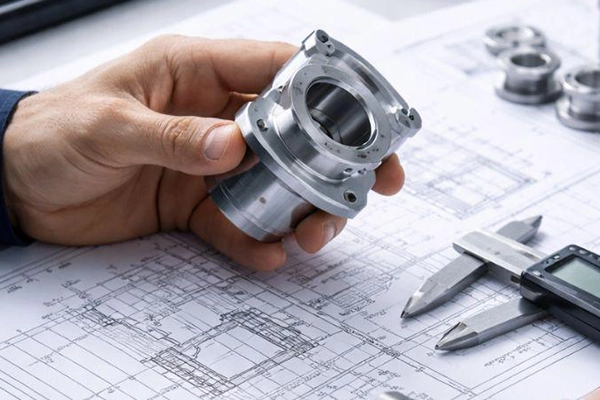
For manufacturers producing high-precision CNC components, understanding hardness helps optimize cutting parameters, improve tool life, and reduce deformation during machining. It also affects welding performance, anodizing quality, and long-term durability in service.
Whether you are designing aerospace brackets, automation equipment, medical devices, or industrial machinery, selecting the proper temper can reduce production costs while improving part reliability. If your project requires precision-machined aluminum components, our Aluminum CNC Machining servicesexplain how different aluminum grades are processed for tight-tolerance applications.
What Is the Hardness of 6061 Aluminum?
Hardness measures a material’s resistance to indentation, scratching, and permanent deformation. Engineers commonly use the Brinell (HB) hardness scale when evaluating aluminum alloys because it provides a reliable indication of wear resistance and machining behavior.
The hardness of 6061 aluminum depends primarily on heat treatment. In the annealed condition, the alloy is relatively soft and easy to form. After artificial aging, hardness increases substantially, improving both strength and machining performance.
For most precision CNC applications, 6061-T6 is considered the standard temper because it offers an excellent balance between mechanical strength, corrosion resistance, and machinability.
Table 1. Typical Hardness of 6061 Aluminum Tempers
Temper
Brinell Hardness (HB)
Typical Use
Annealed (O)
30–35
Deep forming
aluminium 6061 T4
65–70
Bent and formed parts
6061-T6
95–97
Precision CNC machining
aluminium 6061 T6511
95–97
Extruded structural profiles
Although T6 and T6511 have similar hardness values, their manufacturing processes produce different residual stress characteristics, which influence machining stability.
Aluminum 6061 T6 vs T651: Which Temper Should You Choose?
One of the most common engineering questions is aluminum 6061 T6 vs T651. While both tempers achieve nearly identical hardness and strength, T651 undergoes an additional stretching process after heat treatment to relieve internal stress.
For small machined parts, the performance difference is usually minimal. However, for large plates, thin-wall components, or precision fixtures, T651 offers improved dimensional stability and reduces the risk of distortion during CNC machining.
By comparison, aluminium 6061 T4 remains a good option when extensive bending or forming is required before final heat treatment. It provides greater ductility but lower hardness, making it less suitable for high-precision machined parts.
Similarly, aluminium 6061 T6511 is commonly supplied as extruded profiles. It combines the strength of T6 with improved straightness and reduced residual stress, making it ideal for machine frames, automation systems, and structural assemblies.
Table 2. 6061 Temper Comparison
Temper
Hardness
Machinability
Typical Application
T4
Medium
Good
Formed components
T6
High
Excellent
Precision machined parts
T651
High
Excellent
Large precision plates
T6511
High
Excellent
Extruded profiles
When tight tolerancesare critical, selecting the correct temper is only part of the process. Proper machining strategies and tolerance planning are equally important.
6061 Aluminum Machinability in Precision CNC Machining
Excellent 6061 aluminum machinability is one of the main reasons this alloy is widely used across aerospace, robotics, electronics, and industrial automation.
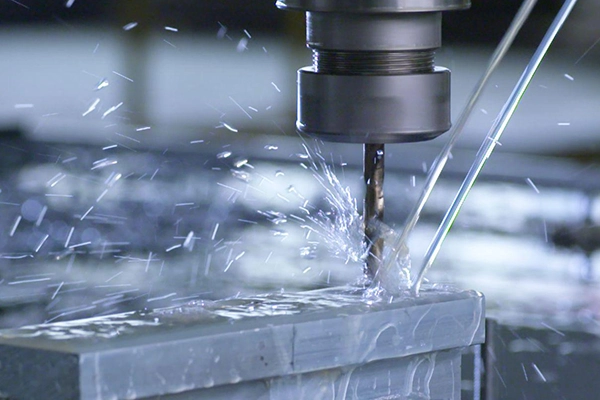
Compared with many other aluminum alloys, machining 6061 aluminum produces stable chips, lower cutting forces, and consistent surface finishes. These characteristics reduce tool wear while improving production efficiency.
General machining recommendations include:
Use polished carbide tools designed for aluminum.
Maintain high spindle speeds with moderate feed rates.
Apply adequate coolant for continuous chip evacuation.
Prefer climb milling to improve surface finish.
Balance material removal to minimize residual stress.
Table 3. Typical CNC Cutting Parameters for 6061-T6
Operation
Cutting Speed
Notes
Face Milling
600–1200 m/min
High productivity
End Milling
500–900 m/min
Excellent finish
Drilling
120–250 m/min
Use peck drilling for deep holes
Tapping
Low Speed
Use proper lubrication
With optimized tooling, rigid fixturing, and process control, manufacturers can routinely achieve dimensional tolerances of ≤0.005 mm on critical features.
Complex geometries often benefit from advanced CNC Milling Services or simultaneous 5 Axis CNC Machining, reducing setups while improving positional accuracy.
6061 Aluminum Welding and Heat Treatment
Although 6061 is easy to machine, welding requires additional consideration. During 6061 aluminum welding, heat dissolves the strengthening precipitates responsible for the alloy’s hardness. As a result, the heat-affected zone experiences lower strength and reduced wear resistance.
Understanding how to weld 6061 aluminum begins with proper surface preparation. Remove contaminants and the natural oxide layer before welding. AC TIG welding is generally preferred for thin sections and cosmetic parts, while MIG welding is more efficient for thicker structural components.
The most common filler metals are:
ER4043 for general-purpose welding
ER5356 for higher joint strength and better anodizing color match
Another frequently asked question is how to heat treat 6061 aluminum after welding. Complete solution heat treatment followed by artificial aging can restore much of the original mechanical performance, although this process may not be practical for every finished assembly.
For components subjected to heavy loading, engineers should account for the reduced hardness near welded joints when designing wall thicknesses and load paths.
Engineering Tips for Better Component Performance
Selecting the right temper is only one part of successful product design. Engineers should also consider manufacturing methods throughout the development process.
Best practices include:
Choose T6 for most precision CNC machined components.
Select T651 for large plates where dimensional stability is critical.
Use T4 when extensive forming is required before final aging.
Avoid placing welds in highly stressed regions.
Specify realistic tolerances based on feature size and manufacturing capability.
Consider anodizing to improve corrosion and wear resistance after machining.
For highly complex components requiring multi-face machining, 5 Axis CNC Machining reduces repositioning errors and improves overall production efficiency.
Frequently Asked Questions About Hardness of 6061 Aluminum
1. What is the typical hardness of 6061 aluminum?
The hardness of 6061 aluminum depends on its temper. Annealed (O) material is typically around 30–35 HB, T4 is approximately 65–70 HB, while T6, T651, and T6511 generally reach 95–97 HB. For most precision CNC applications, T6 or T651 provides the best balance of hardness, strength, and machinability.
2. Is 6061-T651 stronger than 6061-T6?
Not significantly. The mechanical properties of T6 and T651 are nearly identical. The main advantage of T651 is that it has been stress-relieved by stretching after heat treatment, resulting in lower residual stress and better dimensional stability during machining. This makes T651 a preferred choice for large plates, precision fixtures, and components requiring minimal distortion.
3. Does welding reduce the hardness of 6061 aluminum?
Yes. During 6061 aluminum welding, the heat-affected zone loses some of the strengthening precipitates created during artificial aging. As a result, hardness and yield strength around the weld decrease until the component undergoes a full solution heat treatment and aging cycle. Engineers should account for this reduction when designing welded structures subjected to high loads.
4. Why is 6061 aluminum easy to machine?
Excellent 6061 aluminum machinability comes from its balanced combination of hardness, strength, and ductility. Compared with softer aluminum alloys, 6061 produces shorter chips, reduces built-up edge on cutting tools, and delivers consistent surface finishes. These characteristics improve tool life and support high-speed CNC machining for both prototype and production parts.
5. Can 6061-T4 be heat treated into T6?
Yes. After forming, aluminium 6061 T4 can be solution heat treated, quenched, and artificially aged to achieve T6 mechanical properties. This manufacturing route is commonly used when parts require extensive bending or forming before final machining.
Ready to start
Your next project?
Contact our technical experts today for a customized solution and a tailored quotation.
Our expert team will contact you within 24 hours
to provide a free technical evaluation and solution design, helping you upgrade your production process.
ADDRESS
NO.22,You Yi Road ,Wulian Community, LongCheng Street ,Long gang District ,Shen Zhen