CNC Milling Aluminum: The Engineer’s Blueprint for Flawless Parts Every Time
Aluminum is deceptive. It machines faster than steel, yet its soft, “gummy” nature makes it one of the most challenging materials to mill successfully. The material’s high chemical affinity causes aluminum to weld onto cutting edges, leading to built-up edge (BUE), poor surface finish, and catastrophic tool failure.
For product engineers, mechanical designers, and procurement specialists specifying CNC milling aluminum components, understanding the metallurgy, tooling, and process parameters is non-negotiable. This guide delivers the technical depth you need—backed by real machining data and precision manufacturing standards—to specify, design, and produce high-quality milled aluminium parts.
At Yueyi Precision, we apply these principles daily across our 5-axis CNC machining centers, achieving tolerances down to ≤0.005mm on critical aluminum features. This guide reflects what we’ve learned from thousands of aluminum jobs across aerospace, automotive, and medical sectors. For a deeper dive into material-specific data, visit our dedicatedaluminum CNC machiningresource page.
Selecting the Right Aluminum Alloy for CNC Milling
The alloy you choose determines machinability, mechanical properties, and final part performance. Each series behaves differently under the cutting tool.
H3: 6000 Series – The Workhorse (6061, 6063)
6061-T6 is the most common aluminum for CNC milling. It offers excellent machinability, good corrosion resistance, and moderate strength (UTS: 310 MPa). Chip formation is clean, cutting forces are low, and surface finishes of Ra ≤ 1.6μm are achievable without extensive post-processing.
6063 prioritizes surface finish and formability over strength, making it ideal for architectural and cosmetic components.
7000 Series – High-Strength Precision (7075)
7075-T6 delivers ultra-high strength (UTS: 572 MPa)—stronger than many steels while remaining lightweight. It machines with higher hardness than 6000 series, requiring carbide or PCD tooling. The payoff is superior cutting precision for complex geometries and excellent resistance to deformation during heavy machining.
2000 Series – Aerospace Fatigue Resistance (2024)
2024-T351 offers high strength (UTS: 470–485 MPa) and exceptional fatigue resistance. It’s the go-to for aircraft structural parts and high-stress mechanical components. Machinability is good in annealed states, though harder tempers demand robust tooling.
5000 Series – Corrosion-Resistant (5052, 5083)
These magnesium-rich alloys are soft and ductile, ideal for forming and bending without cracking. They deliver excellent surface finish for marine, automotive, and corrosion-sensitive applications.
Table 1: Aluminum Alloy Comparison for CNC Milling
Alloy
UTS (MPa)
Machinability
Key Applications
Tooling Recommendation
6061-T6
310
Excellent
Aerospace brackets, automotive parts, robotics
Carbide, 2–3 flute
7075-T6
572
Good (harder)
Aircraft structures, motorsport, precision molds
Carbide or PCD
2024-T351
470–485
Good
Wing spars, landing gear, high-stress components
Carbide, robust tooling
5052
Moderate
Very good
Marine parts, decorative components, sheet metal
Carbide, sharp edges
Tooling Strategies for CNC Milling Aluminum
Tool selection is the single most critical variable in CNC milling aluminum success. The wrong tool welds, breaks, or produces scrap. Knowing the best aluminum for CNC milling is only half the battle—you also need the correct milling tools for aluminum.
Flute Count – The Chip Evacuation Decision
Aluminum produces long, stringy chips that must exit the cut zone immediately. Flute count directly impacts chip clearance.
2-flute end mills: The traditional workhorse for slotting and deep pocketing. The 180° flute separation provides maximum chip evacuation when the tool is fully engaged.
3-flute end mills: The modern standard for high-efficiency milling aluminium. Offers more rigidity than 2-flute, enabling higher feed rates and better surface finish, while retaining sufficient chip room for profiling and light pocketing.
4-flute end mills: Avoid. Tighter flute spacing causes chip packing and welding with aluminum’s soft chips.
Single-flute: Best for high-speed routing or machining “gummy” low-grade aluminum where heat buildup is extreme.
Substrate and Coating – What Works and What Fails
Substrate: YG-class carbides (sub-micron grain) are preferred because they have low chemical affinity with aluminum. If the substrate “likes” aluminum, the material welds to the cutting edge.
Coating: Never use TiAlN-coated tools for aluminum. The aluminum in the coating reacts with the workpiece, accelerating adhesive wear. Choose uncoated carbide, ZrN, or diamond-like carbon (DLC) coatings instead.
Helix angle: A high helix angle between 20° and 45° ensures shearing action that reduces cutting forces and dampens vibration. However, exceeding 35° can compromise edge strength—find the equilibrium between sharpness and rigidity.
Recommended Tool Brands and Types
Modern tooling advances deliver dramatic productivity gains. Guhring’s RF 100 AL Micro, for example, reduces cycle times by up to 76% compared to conventional small end mills. These 3-flute solid carbide cutters feature nano-polished geometry, ultra-thin Carbo+ coating, and internal cooling channels.
To see how our advanced equipment leverages such tooling, explore our 5-axis CNC machining capabilities for complex aluminum geometries.
Cutting Parameters for CNC Milling Aluminum
Getting speeds and feeds right separates efficient production from tool breakage and scrap. Whether you are dry milling aluminum or using coolant, the parameters must be optimized.
Speed, Feed, and Depth of Cut – The Core Trio
Spindle speed is the most influential parameter for surface roughness, contributing up to 88.76% to Ra values. For Al 6061 under dry conditions, optimal combinations include spindle speeds of 1500–3000 RPM with feed rates of 300–800 mm/min.
Feed per tooth is the largest contributor to surface roughness in CNC milling aluminum. For wrought 6061, recommended chip loads range from 0.005–0.010 inches per tooth.
Depth of cut: For finishing operations on 2024 aluminum, stability ranges are axial depth 0.03–0.05 mm and radial depth 0.275–0.300 mm. For roughing, deeper cuts (up to 10 mm) are possible with appropriate tooling.
Surface Speed Recommendations
Operation
Cutting Speed (m/min)
Feed per Tooth (mm)
Depth of Cut (mm)
Roughing (6061)
250–400
0.08–0.15
2.0–5.0
Finishing (6061)
400–600
0.02–0.06
0.1–0.5
High-Speed Finishing
600–800+
0.01–0.03
0.03–0.10
7075 Roughing
200–300
0.06–0.10
1.0–3.0
Dry Milling Aluminum vs. Coolant – What the Data Says
The debate between dry milling aluminum and coolant-assisted machining has real consequences for tool life, surface finish, and shop-floor costs.
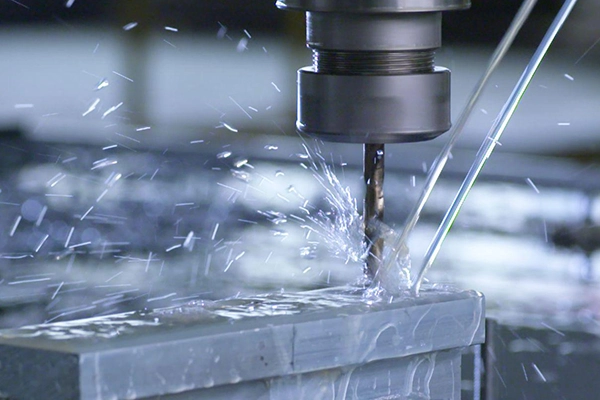
Wet cutting (flood coolant) produces better surface finish than dry cutting. Coolant applied precisely to the chip formation area reduces temperature, friction, and improves chip control. However, flood coolant creates environmental and disposal costs.
Minimum Quantity Lubrication (MQL) offers the best compromise. MQL reduces cutting forces, friction, and tool wear compared to dry cutting. Chip morphology shows coolant embrittles the chip, improving evacuation.
Dry milling is viable for high-speed machining of aluminum with optimized parameters and proper tooling. However, studies confirm that wet cutting with lubricant delivers the best surface roughness outcomes.
Our recommendation: For precision CNC milling aluminum parts requiring Ra ≤ 1.6μm or better, use MQL or mist coolant. For roughing operations, dry machining with through-tool air blast is acceptable if tool geometry and speeds are optimized.
If you are also working with other materials, ourstainless steel CNC machining guide offers similar parameter insights for ferrous alloys.
Achieving Precision Tolerances in CNC Milling Aluminum
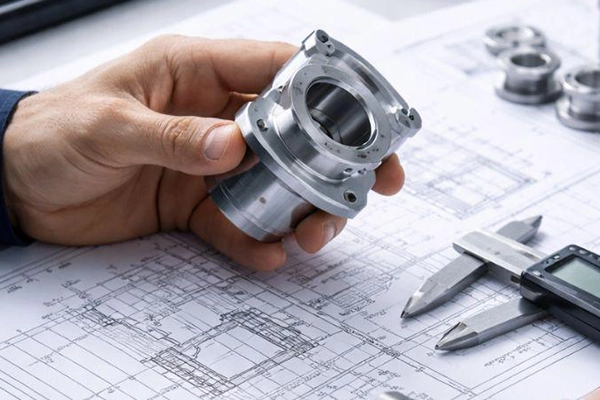
Precision is where milled aluminium parts prove their value. Standard CNC machining tolerance for aluminum is ±0.05mm (ISO 2768-m). However, with advanced 5-axis machining centers and proper process control, tolerances down to ±0.005mm are achievable on critical features.
For parts requiring anodizing post-machining, note that anodizing reveals surface texture—tool marks and scratches become more visible after treatment. Specify finer surface finishes (Ra ≤ 0.8μm) if anodizing is planned.
Our comprehensiveCNC machining services cover all these aspects, ensuring your aluminum parts meet the tightest specifications.
Common Challenges and Troubleshooting in CNC Milling Aluminum
Even experienced machinists encounter issues. Here’s how to solve them, with milling aluminium tips that are practical and actionable.
Table 2: Troubleshooting Guide for CNC Milling Aluminum
Problem
Root Cause
Solution
Built-up edge (BUE)
Wrong tool coating or substrate; insufficient speed
Switch to uncoated carbide or DLC; increase cutting speed
Poor surface finish
Incorrect feed per tooth; worn tool
Reduce feed per tooth; replace tool
Excessive tool wear
Cutting speed too high; inadequate lubrication
Reduce speed; apply MQL or coolant
Chip welding to tool
4-flute tool; insufficient chip clearance
Switch to 2- or 3-flute design
Part dimensional error
Tool wear not compensated
Apply tool offset compensation in CNC program
Excessive burrs
Dull tool; incorrect speeds and feeds
Use fresh tool; optimize parameters
Vibration/chatter
Low helix angle; insufficient rigidity
Use 35°+ helix angle; reduce radial engagement
Surface Finishing and Post-Processing for Milled Aluminium Parts
CNC milling aluminum produces excellent as-machined surfaces. For applications requiring enhanced corrosion resistance, wear protection, or aesthetics, post-processing is essential.
Anodizing is the most widely used finishing technique for CNC aluminum parts. This electrochemical process creates a durable aluminum oxide layer that becomes part of the base material rather than a coating applied on top. Sulfuric acid anodizing is the industry standard.
Preparation for anodizing: The anodizing process reveals every surface texture. Parts must be machined with finer surface finishes (Ra ≤ 0.8μm recommended) and thoroughly cleaned of oils and machining residues before anodizing.
Deburring: Minimize burr formation during machining by optimizing feeds, speeds, and toolpaths. For remaining burrs, hand deburring with precision files, rotary tools, or abrasive wheels are common methods.
For high-volume automotive applications, our experience with automotive CNC machined parts demonstrates how proper finishing ensures durability and aesthetics.
Why Precision CNC Milling Aluminum Matters for Your Next Project
CNC milling aluminum is not a commodity process. The difference between a part that fits and performs and one that fails comes down to alloy selection, tooling strategy, cutting parameters, and quality control.
At Yueyi Precision, we operate a fleet of advanced 5-axis CNC machining centers capable of holding ±0.005mm tolerances on aluminum components. Our process controls include:
CMM inspection on all critical dimensions
Tool wear monitoring and automatic compensation
Rigorous material certification and traceability
Surface finish verification to customer specifications
Whether you need aerospace-grade 7075 brackets, automotive 6061 housings, or medical-device aluminum components, our engineering team applies the principles in this guide to every job. To learn how to mill aluminum on a milling machine effectively, or to discuss your specific requirements, reach out to our technical sales team.
PAA – People Also Ask
Q: What is the best aluminum for CNC milling? A: 6061-T6 is the most commonly specified aluminum for CNC milling due to its excellent machinability, good strength, and corrosion resistance. For high-strength applications, 7075-T6 offers superior strength-to-weight ratio.
Q: Can you dry mill aluminum? A: Yes, dry milling aluminum is possible with optimized parameters and proper tooling. However, wet cutting with MQL or coolant generally produces better surface finish and longer tool life.
Q: How do you mill aluminum on a CNC machine? A: To mill aluminum on a milling machine, select 2- or 3-flute carbide end mills with high helix angle (20–45°), set spindle speed based on alloy (250–600+ m/min surface speed), maintain proper chip load (0.005–0.015 inches/tooth), and use MQL or mist coolant for finishing operations.
Q: What is the best end mill for aluminum? A: The best tools for aluminum milling are 3-flute solid carbide end mills with uncoated or DLC-coated substrates. Brands like Guhring (RF 100 AL series), Harvey Tool, and OSG offer aluminum-specific geometries.
Q: What surface finish can CNC milling aluminum achieve? A: Standard milled aluminium surface finish is Ra ≤ 1.6μm. With optimized parameters and finishing passes, Ra ≤ 0.8μm is achievable. Precision applications can reach Ra values below 0.1μm with specialized tooling and processes.
Q: What tolerances can CNC milling aluminum hold? A: Standard tolerance is ±0.05mm. With advanced 5-axis machining and process control, critical features can hold ±0.005mm.
Ready to Machine Your Next Aluminum Project?
Precision CNC milling aluminum requires expertise, the right equipment, and rigorous quality control. Yueyi Precision delivers all three. Our engineering team works alongside you from material selection through final inspection, ensuring your milled aluminium parts meet every specification.
Contact us today to discuss your aluminum machining requirements. Send your RFQ with 2D drawings and 3D models—we’ll respond with design-for-manufacturability feedback and competitive pricing within 24 hours.
Ready to start
Your next project?
Contact our technical experts today for a customized solution and a tailored quotation.
Our expert team will contact you within 24 hours
to provide a free technical evaluation and solution design, helping you upgrade your production process.
ADDRESS
NO.22,You Yi Road ,Wulian Community, LongCheng Street ,Long gang District ,Shen Zhen