Swiss Machining Applications: When to Choose Swiss or CNC Turning
Swiss-type lathes and conventional turning centers can both produce threaded, bored, grooved, and milled components. The meaningful difference is how each machine supports the workpiece, reaches secondary features, and distributes setup cost.
The best Swiss machining applications combine small diameter, limited rigidity, multiple features, repeat quantity, and a need to reduce datum transfers. Conventional turning remains preferable for many short, rigid, large-diameter, or low-volume parts. This guide uses geometry and production conditions to support that choice.
Swiss Turning vs CNC Turning: The Application Difference
Both methods rotate the workpiece against cutting tools, but their support strategies create different process windows. Swiss machining feeds bar through a guide bushing near the cut. A fixed-head lathe grips the workpiece while tools travel along the exposed stock. The resulting difference affects deflection, permissible stock, cutting sequence, remnant length, tooling access, and setup economics.
The comparison should therefore begin with the part during machining—not with its finished appearance. A rigid 10 mm component can behave predictably in a chuck, while another part of the same diameter may become unstable after a long section is reduced to 2 mm. Engineers should review the unsupported length at every operation, where cutting forces enter the part, and whether critical features can be completed from one datum.
How a Sliding Headstock and Guide Bushing Support the Cut
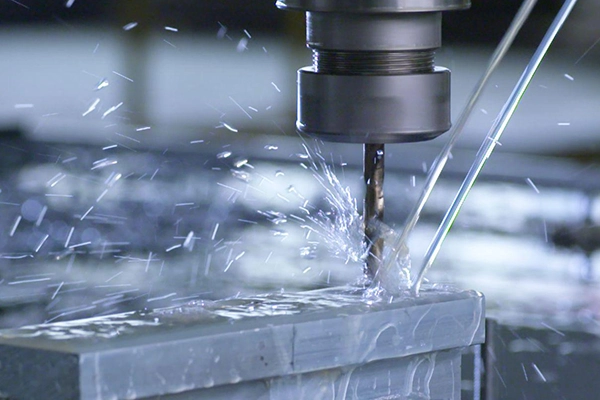
On a Swiss-type machine, the headstock feeds bar through a close-fitting guide bushing. Cutting near that support reduces effective unsupported length, which is why sliding headstock machining suits slender shafts, pins, valve stems, contact bodies, needles, and thin-walled sleeves.
The guide bushing does not eliminate process risk. Its benefit depends on four controls:
Bar geometry: Straightness and outside-diameter variation must remain compatible with the bushing clearance.
Surface condition: An unmachined bar surface passing through the bushing must not bind or carry damaging scale.
Tool proximity: Critical diameters should be cut close to the support instead of after a long section has been exposed.
Thermal stability: Oil temperature, spindle growth, and repeated cutting load must be stable before final offsets are approved.
When these conditions are ignored, a Swiss machine can still produce chatter, taper, surface marking, or inconsistent diameters.
How a Fixed-Head CNC Lathe Holds the Workpiece
A conventional turning center grips the workpiece in a stationary chuck or collet. Short projection suits bushings, flanges, rings, adapters, and compact shafts; tailstocks or sub-spindles can support longer work.
The absence of a guide bushing is not automatically a disadvantage. For a short, strong part, a fixed head CNC lathe can offer three practical benefits:
Less dependence on tightly controlled bar diameter.
Shorter remnants and more freedom to use cut blanks.
Easier access for large drills, boring bars, and heavy turning tools.
If the workpiece is already rigid, these benefits may be more valuable than near-cut guide support.
Decision factor
Swiss-type machining
Conventional CNC turning
Workpiece support
Guide bushing close to cutting zone
Chuck or collet at one end, with optional support
Best starting geometry
Small-diameter, slender, feature-dense parts
Short, rigid, larger, or simpler round parts
Stock sensitivity
Bar diameter and straightness can be critical
Broader stock and blank options
Secondary features
Often integrated with live tools and sub-spindle
Available when machine configuration supports them
Setup economics
Strong when complexity or repeat volume justifies setup
When Swiss Machining Applications Outperform Conventional Turning
The strongest Swiss machining applications are not defined by diameter alone. A short 8 mm spacer may run economically on either machine, while an 8 mm shaft with a long 2 mm tip and several cross-features creates a very different challenge. Selection should consider rigidity during each cutting stage, not just the final outside dimensions.
Long Length-to-Diameter Ratios and Limited Part Rigidity
As unsupported length grows relative to diameter, a workpiece becomes more sensitive to radial cutting force. The bar can move away from the insert, leaving taper, chatter, poor roundness, or inconsistent shoulder positions. A simple length-to-diameter ratio is useful for screening, but it is not a universal rule. Material modulus, wall thickness, diameter transitions, cutting direction, tool geometry, and tolerance all change the risk.
Swiss machining finishes one segment near the bushing before feeding the next forward. This protects reduced sections from later cutting loads and is valuable for stepped shafts, metering needles, pins, and narrow bearing lands.
Cross Holes, Flats, Slots, and Back-Working Features
Many modern Swiss CNC machining applications extend beyond two-axis turning. Driven tools and C-axis indexing can add cross-holes, wrench flats, slots, milled windows, and off-axis details. A sub-spindle can collect the component before cutoff, face the second end, complete a bore, add a rear chamfer, or finish a back-side thread.
Combining operations preserves positional relationships but adds indexing and chip-management time. A fast, noncritical, or poorly accessible feature may still belong in a secondary operation. Compare completed-part cost and datum risk.
High-Volume Swiss Machining From Bar Stock
Stable repeat orders can justify high volume Swiss machining. Bar feeding, synchronized spindles, tool-life control, and managed ejection reduce handling and produce completed parts without rebuilding the datum.
Repeatability depends on a production control loop rather than cycle time alone:
Verify each incoming bar lot for diameter, straightness, and material identity.
Establish tool-change limits from dimensional trend and burr growth, not only catastrophic failure.
Separate parts produced during warm-up, alarm recovery, and bar-change verification.
Link inspection frequency to the feature most sensitive to wear.
Prevent completed parts, setup pieces, and suspect restart parts from sharing one container.
The existing Swiss machining and CNC turning comparison explains the underlying machine differences; the present guide applies those differences to process selection. When Conventional CNC Turning Is the Better Application
Choosing a Swiss machine for every precision component adds cost without value. Conventional turning often provides the shortest route for compact parts and accommodates stock forms, diameters, and cutting loads outside a Swiss machine’s range. These Swiss machining applications boundaries should be evaluated before quotation.
The strongest conventional-turning candidates remain rigid after facing and roughing, expose their important features from one or two accessible directions, and do not gain meaningful stability from a guide bushing. A buyer should also consider how the blank reaches the machine. Saw-cut bar, forgings, castings, and preformed blanks may fit chucking or soft jaws naturally but be unsuitable for passage through Swiss tooling.
Short and Rigid CNC Turned Components
Short bushings, collars, rings, spacers, and fittings present little deflection risk near the chuck. These CNC turned components can be faced, bored, threaded, grooved, and parted directly, with a sub-spindle handling the reverse side.
The process becomes especially attractive when the main features share the spindle axis and cross-features are limited. Signs that ordinary turning deserves priority include:
A low length-to-diameter ratio throughout machining.
A large central bore requiring a rigid boring bar.
A flange or stock form that cannot pass through a guide bushing.
Only one or two accessible reverse-side features.
Low quantity with frequent drawing revisions.
Larger Diameters and Heavy Material Removal
Swiss machines have limits for bar diameter, power, tooling envelope, and bushing range. Large flanges, heavy bushings, thick valve bodies, and substantial stock removal often favor conventional turning, where chucking range and torque dominate.
For non-bar stock, planning begins with a secure gripping surface and datum sequence rather than bar-fed automation.
Prototype and Low-Volume CNC Turning Applications
For a small order of uncomplicated parts, setting a conventional lathe may be faster than preparing a Swiss machine, guide bushing, bar feeder, and dense tool layout. A long, flexible prototype may still require guide support.
The quotation should separate setup necessity from production quantity. If ordinary turning needs a steady rest, repeated repositioning, or relaxed tolerances, Swiss machining may remain competitive. For continuously produced threaded parts and inserts, custom screw machine parts for repeat production show how geometry and volume support automated bar-fed manufacturing.
Swiss Machining Applications by Part Geometry
Industry names do not select a process. Geometry is more useful because it reveals how the component behaves under cutting force and how many features can share one datum. Parts can be grouped by their dominant manufacturing risk: slender shafts are governed by deflection, contact bodies by feature integration, thin sleeves by clamping distortion, and bushings by bore access and stock removal.
This classification prevents an application label from becoming a shortcut. A medical collar may suit conventional turning, while an industrial metering needle may demand Swiss support. The process decision should follow the feature that is hardest to hold, reach, deburr, or inspect—not the market in which the finished assembly will operate.
Precision Shafts, Pins, and Valve Stems
Typical Swiss machined components in this group include actuator pins, drive shafts, valve spools, metering needles, hinge pins, and sensor stems. They may combine bearing diameters, grooves, tapered tips, threads, and cross-holes along an elongated body.
Review which diameter establishes the axis and which shoulder controls assembly height. Runout, straightness, cylindricity, and finish may matter more than bilateral size. The sequence must protect bearing or sealing lands.
Connector Contacts, Threaded Inserts, and Micro Fittings
Connector pins, sockets, inserts, nozzles, and fittings are common Swiss machining applications because they combine axial bores, stepped diameters, shoulders, threads, grooves, and cross-holes. One coordinated cycle can reduce handling and preserve alignment.
Plated contacts need pre-plate dimensions and coating allowance. Small threads need class, effective length, lead condition, and gauge method. Cross-hole intersections require burr limits; narrow passages require cleaning criteria. Machine choice cannot rescue an uninspectable feature.
Medical, Automotive, Electronics, and Industrial Components
Industry
Representative component
Why Swiss machining may fit
When CNC turning may fit better
Medical equipment
Instrument shaft, threaded pin, miniature fitting
Slender form, controlled features, repeat production
Short collars, handles, and larger instrument bodies
Automotive systems
Valve stem, injector feature, sensor pin
Small diameters and repeatable bar-fed output
Large adapters, thick bushings, and heavy fittings
Electronics
Contact body, socket, miniature sleeve
Fine axial features and integrated cross-machining
Short, simple connector shells
Industrial controls
Metering needle, adjustment screw, actuator pin
Long controlled diameters and multiple features
Large threaded plugs and compact rollers
Material, annual volume, tolerance, finishing, and inspection can move a similar component to another machine. Yueyi Precision’s CNC turning services for short and rigid components provide the alternative where guide support is unnecessary.
Swiss Machining vs Conventional Turning Cost by Application
Hourly rate does not reveal finished-part cost. Compare setup, cycle time, secondary operations, material yield, tooling, inspection, cleaning, and handling. A higher-rate machine may lower unit cost by removing transfers; simple work can produce the opposite result.
Setup Cost, Guide Bushings, and Bar Preparation
Swiss setup may require matched guide-bushing and collet dimensions, coordinated tooling, spindle synchronization, and clearance checks. Bar preparation matters when stock diameter affects bushing behavior. Final offsets should be approved only after thermal stabilization.
Conventional turning may have fewer constraints, although custom jaws, tailstock support, or a second-operation fixture can change the calculation. Compare actual setup plans rather than machine labels.
Cycle Time and Secondary Operations
One-cycle completion can make Swiss machining applications economical when a component needs turning, drilling, cross-machining, cutoff, and back work. Overlapped operations may allow the sub-spindle to finish one part while the main spindle begins the next. The benefit depends on balance: the longest operation can still control the overall cycle.
Conventional turning can win when a few robust tools complete the part. Even with a second operation, a simple fixture may cost less than a crowded Swiss program. Include handling, inspection, and datum recreation with cutting time.
Prototype, Medium-Volume, and High-Volume Economics
Order condition
Swiss-machining consideration
CNC-turning consideration
Prototype
Justified when slender geometry needs guide support
Efficient for simple, rigid parts and rapid setup
Repeat medium volume
One-cycle completion can reduce handling
Strong where tools and features remain simple
Continuous high volume
Automation and wear control can spread setup cost
Competitive when conventional geometry supports a short cycle
Unstable design revision
Complex setup may need to be repeated
Flexible setup may reduce revision cost
Prototype quantity, release size, and annual demand determine whether dedicated tooling, automated gauging, optimized tool layouts, or protective trays are justified.
Materials, Tolerances, and Inspection Before Process Selection
A suitable-looking part may become difficult if its bar is bent, inconsistent, abrasive, or sensitive to bushing contact. Tight tolerance alone does not require a Swiss machine. Material, datums, cutting sequence, thermal control, and measurement must support the choice. Strong Swiss machining applications align all these factors.
Process selection should start by separating three requirements that drawings often mix together: size, geometric relationship, and surface condition. A tight diameter may be tool-wear driven; runout between separated lands may be support and datum driven; a sealing finish may depend on feed, tool nose radius, and post-treatment. Identifying the real failure mechanism shows whether guide support, rigid chucking, a grinding operation, or a revised inspection method adds the most value.
Bar Straightness and Diameter Consistency for Guide-Bushing Work
Guide-bushing clearance must let the bar slide without losing support. Excessive clearance reduces stability; insufficient clearance can cause friction, marking, or seizure. Stock diameter, roundness, straightness, and surface condition should be agreed before production.
Guide-bushless modes can reduce dependence on close bar tolerances and shorten remnants for certain short parts. They do not provide equivalent near-cut support for long, slender geometry.
Tolerance Does Not Select the Machine by Itself
Both machine types can produce accurate work. Swiss support helps where deflection threatens an elongated component, but accuracy also depends on spindle condition, tool runout, wear, coolant temperature, setup repeatability, and process control. Conventional turning may be more capable for a large rigid component.
Therefore, Swiss machining applications should not carry a universal tolerance claim. Evaluate each critical diameter, bore, shoulder, thread, and geometric control against its material, datum, and measurement conditions.
Inspection Plans for Both Turning Applications
An inspection plan should connect each critical feature to its datum and gauge. Micrometers, air gauges, vision equipment, pin gauges, thread gauges, and runout fixtures serve different purposes. Delicate profiles may need non-contact measurement; production fits may favor functional gauges.
First-article inspection proves the setup and measurement method. Production frequency should then follow feature risk, process trend, and tool life. Burrs, cleanliness, plating, and packaging can matter as much as size. See the Swiss machined shaft design and inspection guide for shaft-specific controls.
Four Part Profiles That Change the Swiss Machining Application Decision
A useful comparison should survive contact with an actual drawing. The four profiles below show why diameter, quantity, or tolerance alone cannot select the machine. Each example changes one or two variables while keeping the part broadly within the precision-turning category.
Profile A: A Long Stainless Sensor Pin With a Cross Hole
Consider a 3 mm × 42 mm stainless pin with two bearing lands, a 1.2 mm tip, a radial hole, and controlled tip-to-body runout. Swiss machining supports the reduced sections, drills the cross-hole with live tooling, and transfers the part for back facing.
The cross-hole alone is not decisive; a conventional live-tool lathe can drill it. The decisive combination is slenderness, coaxial diameters, and avoiding second-setup support on the finished tip.
Profile B: A Short Aluminum Bushing With a Large Bore
Consider a 38 mm × 16 mm aluminum bushing with a 25 mm bore, external groove, and face seal. Conventional turning is stronger because the part is rigid and needs a substantial boring tool. Soft jaws or a sub-spindle can complete both faces.
A Swiss machine would add stock restrictions, remnant cost, and tool-clearance compromises while gaining little from the guide bushing.
Profile C: A Brass Contact Body at Repeat Production Volume
A 7 mm brass contact body with a bore, shoulder, thread, milled flat, and rear chamfer can run on either platform. At 200 pieces, conventional turn-mill may set up faster. At recurring 20,000-piece releases, it becomes one of the stronger Swiss machining applications because integrated back work removes handling.
The drawing did not change; repeat volume made the developed tool layout cheaper than repeated handling and secondary operations.
Profile D: A Titanium Prototype That Is Simple but Slender
Quantity does not override geometry. A 2.5 mm titanium shaft with a long reduced section may justify Swiss machining for only 20 prototypes if fixed-head turning would create deflection or need a complex fixture. Setup cost purchases stability rather than volume efficiency.
The engineer should confirm whether the smallest diameter is functional over its full length, whether a temporary support feature is allowed, and whether centerless grinding follows turning. The answers may favor Swiss equipment or a hybrid route.
Frequently Asked Questions About Swiss Machining Applications
What Is the Main Difference Between Swiss Machining and CNC Turning?
The main difference is how the workpiece is supported and moved during cutting. A Swiss-type machine feeds bar through a guide bushing positioned close to the cutting tool, while a conventional CNC lathe holds the workpiece in a fixed chuck or collet and moves the tools along the exposed stock. That difference affects deflection, stock preparation, tool layout, and the types of geometry each machine produces economically.
When Should I Use Swiss Machining Instead of CNC Turning?
Use Swiss machining when the part is small, slender, difficult to support, or contains several turned and cross-machined features that benefit from one coordinated cycle. It is also attractive for stable repeat orders that justify bar feeding, sub-spindle work, and a more involved setup. Final selection still depends on material, tolerance, tooling access, inspection, and total cost.
Is Swiss Machining Only Suitable for High-Volume Production?
No. High volume helps distribute setup cost, but geometry can justify Swiss machining at prototype or low quantities. A long, flexible shaft may be difficult to produce reliably on a fixed-head lathe regardless of order size. Conversely, a short, simple part may remain more economical on a conventional turning center even at substantial volume.
Can a CNC Lathe Produce the Same Parts as a Swiss Machine?
There is significant overlap. A capable CNC turning center with a sub-spindle, live tooling, and suitable support can manufacture many components also produced on a Swiss machine. The practical difference is efficiency and process risk. Swiss support may control slender geometry with fewer compromises, while conventional turning may handle short, rigid, larger-diameter, or non-bar-stock parts more directly.
Ready to start
Your next project?
Contact our technical experts today for a customized solution and a tailored quotation.
Our expert team will contact you within 24 hours
to provide a free technical evaluation and solution design, helping you upgrade your production process.
ADDRESS
NO.22,You Yi Road ,Wulian Community, LongCheng Street ,Long gang District ,Shen Zhen