Swiss Machining vs CNC Turning: Choosing by Part Geometry, Volume, and Total Cost
Choosing between Swiss-type and conventional CNC turning is not a contest between an advanced process and an outdated one. Both are CNC-controlled methods, and both can produce accurate industrial components. The real question is which architecture controls the risks in a specific drawing at the lowest cost per accepted part. Swiss Machining vs CNC Turning should therefore be evaluated through unsupported length, stock diameter, feature relationships, secondary setups, annual volume, inspection effort, and material condition. A slender multi-feature shaft may justify guide-bushing support and sub-spindle backworking, while a short bushing or large flange may run more economically on a fixed-headstock lathe. This guide gives engineers and procurement teams a practical selection method without assuming that smaller always means Swiss or that tighter tolerance automatically requires a more complex machine.
Both Processes Use CNC Control, So What Is Actually Being Compared?
The phrase Swiss Machining vs CNC Turning is convenient for search, but technically imperfect. A modern Swiss-type lathe is itself a CNC turning machine. The useful comparison is between a sliding-headstock Swiss-type CNC and a conventional fixed-headstock CNC lathe.
The Machine Architecture Changes How the Workpiece Is Supported
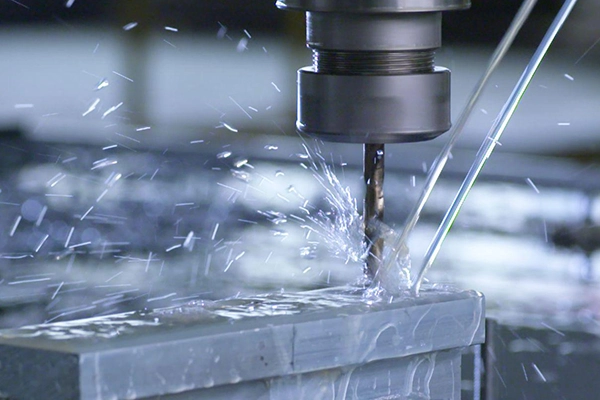
In swiss turning, bar stock passes through a guide bushing while the headstock moves the material along the Z-axis. Cutting occurs close to the support point. In conventional turning, the workpiece is held by a chuck or collet in a fixed headstock while the cutting tool travels along it.
Comparison factor
Swiss-type CNC
Conventional CNC turning
Headstock
Sliding
Fixed
Primary work support
Guide bushing close to the cut
Chuck, collet, tailstock, or steady rest
Z-axis relationship
Stock moves through the guide bushing
Tool moves along the workpiece
Common starting form
Consistent round bar
Bar, tube, cut blank, forging, or casting
Typical strength
Slender, small-diameter, multi-feature parts
Short, rigid, larger-diameter, or low-volume parts
Common limitation
Bar quality and setup sensitivity
Deflection or extra setups on long complex parts
A swiss type lathe is not automatically more accurate in every situation. Its architecture is valuable when the guide bushing solves a real support problem or when live tools and a sub-spindle remove costly secondary operations.
Machine Capability Is Only One Part of Process Capability
The equipment name alone does not prove process capability. Results also depend on:
Bar straightness and diameter consistency.
Collet and guide-bushing condition.
Tool selection and overhang.
Program synchronization.
Thermal stabilization.
Chip evacuation.
Inspection method and measurement frequency.
Control of offsets and tool life.
Base the decision on the proposed manufacturing route, not an advertised machine tolerance.
Swiss Machining vs CNC Turning Starts with Unsupported Length
Nominal diameter is an easy filter, but unsupported length is usually more informative. A 6 mm component that is only 8 mm long behaves very differently from a 6 mm shaft that is 90 mm long. The second part is more likely to bend under radial cutting force, even if both drawings specify the same dimensional tolerance.
Slender Geometry Creates Deflection Before It Creates Rejection
Tool pressure acting on unsupported stock can produce taper, chatter, inconsistent roundness, or a poor surface before a measured diameter crosses its tolerance limit. The guide bushing in Swiss-type machining reduces the effective distance between the cutting point and work support.
Geometry or feature
Risk on a fixed-headstock lathe
Potential Swiss-type advantage
Long, small-diameter shaft
Radial deflection and chatter
Cutting remains close to support
Several stepped diameters
Changing rigidity along the part
Stock advances through the bushing
Thin tubular section
Distortion during heavy cuts
Shorter effective overhang
Deep external groove
Local loss of stiffness
Operation can be sequenced near support
Short rigid sleeve
Usually manageable
Limited support advantage
Large flange
Strong chucking is available
Often outside the useful Swiss range
Operation order also matters. Machining a thin section too early may cause deflection on either machine, so high-load cuts should be completed while the part remains stiff.
Short and Rigid Parts Often Favor Conventional Turning
Fixed-headstock turning is usually a strong starting point for:
Short bushings and spacers.
Large-diameter flanges.
Components made from cut blanks.
Forged or cast rotational parts.
Low-volume prototypes.
Parts that need heavy roughing.
Work requiring tailstock or chuck support rather than a guide bushing.
For these parts, Swiss setup requirements may add cost without improving the result. A flexible chucking strategy and shorter setup can make conventional CNC turning services the better route.
Feature Count Determines Whether One-Cycle Production Has Real Value
Diameter and length indicate workpiece rigidity, but feature count determines how many machines, fixtures, and datum transfers the order may require. The economic advantage of Swiss-type production becomes clearer when turned, drilled, milled, and rear-facing features must stay related.
Swiss-Type Production Gains Value When Features Share One Axis
Typical swiss machined parts may include several of the following features:
Multiple controlled outside diameters.
Axial drilling or reaming.
Internal and external threads.
Radial cross-holes.
Milled flats or slots.
Front and rear chamfers.
Grooves for seals or retaining rings.
Back-face bores or threads.
Feature combination
Possible Swiss-type route
Possible conventional route
Turned diameters plus axial bore
Main-spindle turning and drilling
One turning setup may be enough
Turned diameters plus cross-holes
Main spindle plus live tooling
Turning followed by milling fixture
Front and rear precision features
Main spindle plus sub-spindle
Part flip or second turning setup
Flats, slots, and threads
One synchronized cycle
Turning plus one or more secondary operations
Simple short sleeve
Complex capacity is underused
Efficient single turning setup
The strongest Swiss application is not merely a small part. It is a part whose relationships benefit from remaining under CNC control from bar feed through cutoff and backworking.
A More Complex Machine Does Not Improve a Simple Drawing
If a component only needs facing, one outside diameter, a bore, and cutoff, the programming and setup advantages of Swiss equipment may remain unused. Guide-bushing preparation, bar requirements, tool allocation, and sub-spindle prove-out can outweigh any cycle benefit.
Available Swiss capacity does not make Swiss the correct process. Buyers should ask how the proposed machine reduces risk or total cost.
Compare Tolerance Risk by Feature Relationship, Not a Single Number
A drawing may contain a tight diameter that either machine can produce. The more decisive requirement may be the relationship between that diameter and a feature created later: a rear bore, a cross-hole, a thread, or a sealing face.
Size Tolerance and Geometric Control Are Different Problems
Drawing requirement
Swiss-type process risk
Conventional process risk
Small outside diameter
Bushing clearance and bar variation
Tool and workpiece deflection
Several coaxial diameters
Tool wear across sequential cuts
Rechucking if multiple setups are needed
Front-to-back runout
Sub-spindle pickoff alignment
Part-flip and soft-jaw location
Cross-hole position
C-axis indexing and live-tool condition
Secondary fixture location
Final overall length
Cutoff and sub-spindle offsets
Second-operation facing datum
Surface finish
Bar marks, chip control, built-up edge
Tool condition, vibration, clamping rigidity
The correct process minimizes the most important variation source. It does not simply claim the smallest achievable linear tolerance.
Tight Tolerance Does Not Automatically Mean Swiss
Short, rigid high precision cnc turned parts can be produced effectively on conventional equipment with stable workholding, suitable tools, thermal control, and a capable inspection plan. Conversely, a slender part may favor Swiss support even when its diameter tolerance is not unusually tight.
For precision turning, buyers should request evidence related to the drawing:
First-article results for all critical dimensions.
Measurement of runout or feature position from the functional datum.
A defined in-process sampling plan
Tool-change and offset-control rules.
Measurement-system suitability.
Historical process capability where applicable.
The question is not “Which machine can advertise ±0.01 mm?” It is “Which proposed route can maintain the required relationships throughout the batch?”
Material Form and Bar Quality Can Reverse the Initial Decision
A geometry may look ideal for Swiss production but become uneconomical if the required alloy is unavailable in consistent guide-bushing-quality bar. Material form belongs in the process decision before the quotation is finalized.
Swiss-Type Production Depends on Consistent Bar Stock
The bar must pass through the guide bushing smoothly while receiving sufficient radial support. Important variables include:
Actual diameter and roundness.
Straightness over the supplied length.
Surface condition.
Alloy and temper consistency.
Thermal expansion during production.
Availability of ground or drawn stock.
Bar feeder length and remnant requirements.
Poor bar quality can cause drag, scratches, vibration, or periodic size movement. Increasing bushing clearance may restore feeding but reduce support, weakening the original reason for selecting Swiss.
Conventional Turning Accepts More Starting Forms
Fixed-headstock equipment can often accept round bar, tube, saw-cut blanks, forgings, castings, and near-net-shape material. That flexibility matters when a large amount of stock must be removed or when the component cannot be supplied efficiently as long round bar.
Aluminum grade and temper also affect chip formation, thermal behavior, tool life, and obtainable finish. These factors should be reviewed through an aluminum alloy selection for CNC machining assessment before committing to either route.
Batch Size Changes What “Lower Cost” Actually Means
Quotations are often compared by unit price without checking whether they include the same operations, inspection, tooling, and quality risk. A meaningful Swiss Machining vs CNC Turning comparison separates one-time setup costs from recurring costs.
Calculate the Entire Manufacturing Route
Use the following cost structure:
Total production cost = setup + tooling + material + cycle time + secondary operations + inspection + handling + expected nonconformance cost
Cost driver
Swiss-type influence
Conventional turning influence
Programming and prove-out
Higher for synchronized multi-channel work
Often lower for simple parts
Guide bushing and bar preparation
May add upfront cost
Usually not required
Cycle automation
Strong for repeat production
Strong when the part is simple and well automated
Secondary operations
Often reduced by live tools and sub-spindle
May require milling or part flipping
Operator handling
Low after a stable bar-fed cycle
Depends on loading and secondary work
Inspection
Can consolidate datum relationships
May require checks after each setup
Material flexibility
More dependent on consistent bar
Wider range of blanks and forms
Compare Cost per Accepted Part, Not Machine Hour Rate
A lower hourly rate can produce a higher total cost if the part requires several setups, fixture transfers, queues, and inspections. A higher-rate Swiss machine can be less expensive when one cycle replaces multiple operations. The opposite is true for a simple component where Swiss capacity adds no useful work.
High volume turned parts often benefit from automated bar feeding, but volume alone is not sufficient. Part complexity, cycle balance, changeover frequency, and annual release pattern all affect the break-even point.
No universal order quantity makes Swiss cheaper. The supplier should compare at least:
Initial setup and tooling cost.
Cycle time for a complete accepted component.
Labor outside the machine.
Secondary operation cost.
Inspection and traceability effort.
Scrap exposure at each process stage.
Repeated setup cost across annual releases.
Match the Part Family Before Sending the RFQ
A fast initial screen helps procurement avoid sending every turned drawing to the same equipment category. It is not a substitute for DFM, but it identifies which process deserves the first detailed review.
Part family
Recommended starting evaluation
Main reason
Long pins and slender shafts
Swiss-type CNC
Support near the cutting point
Small multi-feature connector bodies
Swiss-type CNC
Turning, drilling, milling, and backworking
Short bushings and spacers
Conventional CNC turning
Rigid geometry and simple operations
Large flanges
Conventional CNC turning
Diameter and chucking requirements
Low-volume prototypes
Conventional CNC turning
Flexible setup and blank selection
High-volume complex small shafts
Swiss-type CNC
Automated one-cycle production
Forged rotational parts
Conventional CNC turning
Starting form is unsuitable for guide-bushing feed
Parts with balanced turning and milling content
Machine-specific review
Live-tool capacity and cycle balance matter
Parts That Often Favor Swiss-Type Production
Swiss turn parts commonly earn their process advantage from a combination of slender geometry and multiple features. Examples relevant to industrial supply include:
Automotive sensor shafts and connector bodies.
Medical-device pins, fittings, and instrument components.
Consumer-electronics fasteners and alignment parts.
Semiconductor-equipment pins and interfaces.
Small locking, adjustment, and transmission components.
These are not automatic Swiss jobs. Diameter, stock availability, burr requirements, feature access, and volume still require review.
Parts That Often Favor Conventional CNC Turning
Common cnc turning parts include short sleeves, threaded inserts, flanges, rollers, housings, and rotational components produced from individual blanks. Fixed-headstock turning is particularly practical when the component has:
A low length-to-diameter ratio.
A diameter beyond the useful Swiss bar range.
Significant roughing stock.
Simple front-side geometry.
Low annual volume.
A forging or casting as its starting form.
Borderline Parts Need a Route Comparison, Not a Guess
Some drawings do not fit either category cleanly: a slender shaft with a large head, a thin-wall component with heavy rear features, or turned and milled parts with similar amounts of turning and milling time.
For these parts, request two route concepts where practical. The comparison should show operation sequence, workholding, secondary processing, inspection datums, cycle assumptions, and tooling. Examples of Swiss-turned parts can help buyers understand what a one-cycle route may consolidate.
A Worked Selection Shows Why Diameter Alone Is Misleading
Consider an engineering example—not a claimed customer case—with the following requirements:
Material: 6061-T6 aluminum.
Maximum diameter: 6 mm.
Overall length: 72 mm.
Three controlled outside diameters.
One axial bore.
Two indexed cross-holes.
One rear internal thread.
Critical coaxial outside diameters.
Annual demand: 50,000 parts.
Route A Uses Conventional Turning and Secondary Milling
A possible route is:
Turn the front features from bar or cut blanks.
Cut off the component.
Rechuck and face the rear end.
Machine the rear thread.
Transfer the part to a milling fixture.
Drill the indexed cross-holes.
Deburr, clean, and perform final inspection.
This route may have a straightforward initial setup, but it introduces datum transfers, handling, queue time, and fixture-location risk.
Route B Uses Swiss-Type Turning with Live Tools and a Sub-Spindle
A possible Swiss route is:
Turn the controlled diameters close to the guide bushing.
Drill the axial bore from the main spindle.
Index and drill the cross-holes with live tooling.
Prepare the sub-spindle gripping diameter.
Synchronize, pick off, and cut off.
Produce the rear thread in the sub-spindle.
Eject the finished part for inspection.
Decision factor
Route A: conventional
Route B: Swiss-type
Slender-section support
Requires careful support strategy
Guide bushing offers a direct advantage
Number of setups
Several
Potentially one automated cycle
Cross-hole location
Secondary fixture
C-axis and live-tool control
Initial setup cost
Likely lower
Likely higher
Batch automation
Moderate
Strong after process approval
Bar requirements
More flexible
More demanding
Expected 50,000-part route
Higher handling exposure
Strong candidate for validation
Route B appears more attractive, but the conclusion still depends on bar availability, machine diameter capacity, live-tool access, burr control, cycle time, and verified inspection results. The example demonstrates a decision method, not a universal answer.
Evaluate the Supplier’s Route, Not an Advertised Tolerance
A useful quotation explains the proposed route. A price alone may hide secondary operations or assumptions affecting quality and delivery.
Ask for Evidence That Matches the Drawing
For cnc precision turning, a supplier review should cover:
Proposed machine type and reason for selection.
Main-spindle and sub-spindle operation split.
Required secondary operations.
Bar, blank, or forging specification.
Critical tooling and workholding.
First-article inspection scope.
In-process inspection frequency.
Tool-life and offset-control strategy.
Material and lot traceability.
Expected cycle time and batch plan.
Normalize the Commercial Scope Before Comparing Prices
Quotation item
Clarification required
Unit price
Does it include all secondary operations?
Tooling
Is it recurring, one-time, or customer-owned?
Material
Are alloy, temper, condition, and stock form identical?
Inspection
Is a full first-article report included?
Surface treatment
Are masking, cosmetic limits, and packaging included?
Lead time
Are prototype and production lead times separated?
MOQ
Is it driven by setup economics or a commercial policy?
Nonconformance
How will sorting, replacement, and traceability be handled?
This comparison is more useful than selecting a supplier because it owns a certain machine brand or publishes an isolated minimum-tolerance claim.
Google People Also Ask About Swiss Machining and CNC Turning
The following questions appeared in Google’s English People Also Ask results for the comparison query. The wording is retained rather than rewritten into invented FAQ questions.
What Is the Main Difference Between Swiss Turning and Conventional Turning?
The main difference is workpiece support and movement. Swiss-type turning moves bar stock through a guide bushing, keeping the cut close to the support point. Conventional turning normally holds the workpiece in a fixed spindle while the tool travels along it. Swiss architecture is therefore useful for slender parts and multi-feature bar work. Conventional turning is often more flexible for short, rigid, larger-diameter, low-volume, or individually loaded parts. The better choice depends on geometry and the complete process route, not on precision claims alone.
What Are the Downsides of CNC Turning?
Conventional CNC turning may experience deflection on long slender parts, and complex radial or rear features can require secondary setups. Each additional setup introduces handling, scheduling, fixture, and datum-transfer risk. However, these are application limits rather than universal defects. Fixed-headstock turning remains efficient for short rigid components, larger diameters, heavy stock removal, flexible blank forms, and prototypes. Its disadvantages only become decisive when the drawing exposes them.
What Are the Key Differences Between CNC and Swiss Machines?
Swiss machines are CNC machines, so the practical comparison is Swiss-type versus conventional CNC lathes. Swiss equipment uses a sliding headstock and guide bushing, typically processes continuous bar, and often combines turning, live-tool milling, and sub-spindle work. Conventional equipment usually uses a fixed headstock and accepts a wider range of workholding and starting forms. Swiss favors supported slender production; conventional turning favors flexibility across short, rigid, larger, or lower-volume parts.
Why Is It Called Swiss Machining?
The name comes from the process’s development for producing small, accurate components used by the Swiss watch industry. Modern equipment has evolved far beyond watch parts and now uses CNC controls, live tooling, sub-spindles, and automated bar feeding. The historical name does not define today’s application range; current selection should be based on geometry, feature relationships, production volume, and total manufacturing risk.
Use the Drawing and Annual Demand to Make the Final Decision
The best Swiss Machining vs CNC Turning decision follows a consistent order: evaluate unsupported length, confirm diameter and starting material, map front, rear, and radial features, count required setups, review functional datums, and compare annual cost per accepted part. Swiss-type production is compelling when guide-bushing support and one-cycle machining remove real risks. Conventional turning is stronger when the part is short, rigid, larger, simple, low-volume, or produced from flexible blank forms. Submit the drawing, material condition, critical tolerances, quantities, inspection requirements, and surface specifications to Yueyi Precision manufacturing support for a route-specific DFM review rather than choosing from
Ready to start
Your next project?
Contact our technical experts today for a customized solution and a tailored quotation.
Our expert team will contact you within 24 hours
to provide a free technical evaluation and solution design, helping you upgrade your production process.
ADDRESS
NO.22,You Yi Road ,Wulian Community, LongCheng Street ,Long gang District ,Shen Zhen