Swiss Turning Services: The Precision Edge for Complex Aluminum Components
When design requirements demand tight tolerances, complex geometries, and high-volume consistency, swiss turning services deliver results that conventional lathes cannot match. For aluminum alloys—from free-machining 2011 to high-strength 7075—the Swiss-type platform transforms challenging parts into production-ready realities.
This guide walks through the technical foundations of swiss turning services for aluminum. Engineers evaluating manufacturing routes will find actionable data on tolerances, cutting parameters, material behavior, and surface finish capabilities. No marketing fluff—just engineering-grade information to support informed decisions.
What Makes Swiss-Type Turning Different from Conventional CNC Turning?
The defining feature of a Swiss-type lathe is the guide bushing. Unlike conventional CNC turning where a chuck grips the workpiece near the spindle, Swiss machines feed bar stock through a sliding headstock and a guide bushing positioned close to the cutting tools.
This arrangement delivers three critical advantages for aluminum swiss machining:
Deflection control: The bushing supports the workpiece immediately behind the cutting zone. Long, slender parts remain stable without deflection or chatter.
Complexity in one setup: Multi-axis Swiss machines combine turning, milling, drilling, and threading in a single operation. No secondary setups, no accumulated fixturing errors.
Continuous production: Bar feeders enable lights-out machining of identical parts with minimal operator intervention.
For aluminum cnc turning part production, these advantages translate directly to tighter tolerances, better surface finishes, and lower per-part costs at scale. → For a full technical overview of our platform, refer to ourSwiss machining services overview.
Aluminum Alloy Selection for Swiss Turning Services
Not all aluminum alloys behave the same way on a Swiss lathe. The choice affects machinability, surface finish, dimensional stability, and final component performance.
Common Alloys and Their Characteristics
Alloy
Machinability Rating
Strength (Tensile MPa)
Typical Applications
Swiss Turning Suitability
2011
Excellent (90-100%)
310-340
High-volume screw machine parts, connectors
★★★★★ Ideal for complex, tight-tolerance work
2024
Good (70-80%)
470-500
Aircraft fittings, structural components
★★★★ Good, requires sharp tooling
6061-T6
Good (70-80%)
290-310
General-purpose, automotive, electronics
★★★★ Most versatile, widely specified
7075-T6
Fair (50-60%)
540-570
Aerospace, high-stress applications
★★★ Machinable but slower speeds required
2011 aluminum contains bismuth and lead, which act as built-in lubricants and chip breakers. This makes it the top choice for aluminum screw machining where cycle time and tool life are critical. Surface finishes from 2011 are bright and smooth, often eliminating secondary polishing operations.
6061-T6 offers the best balance of machinability, corrosion resistance, and medium strength. It is the default choice for most cnc turning aluminum parts where the application does not demand extreme strength.
7075-T6 delivers strength approaching mild steel at one-third the weight. However, its higher hardness reduces machining speeds and increases tool wear. For multi axis aluminum screw machining of 7075, expect longer cycle times and tighter coolant control. For detailed material data and machining recommendations, consult our aluminum CNC machining material guide.
Precision Capabilities – What Tolerances Can Swiss Turning Services Achieve?
Precision is the cornerstone of swiss turning services. The guide bushing design minimizes deflection, enabling consistent results that conventional turning cannot replicate.
Dimensional Tolerances
Feature Type
Typical Tolerance (mm)
Typical Tolerance (inches)
Notes
Critical diameters (≤ Ø10mm)
±0.005
±0.0002
Routine on Swiss platforms
General turned features
±0.010 – ±0.025
±0.0004 – ±0.001
Standard production capability
High-precision bearing surfaces
±0.001 – ±0.005
±0.00004 – ±0.0002
Achievable on small-diameter parts
Length dimensions
±0.025 – ±0.050
±0.001 – ±0.002
Dependent on part geometry
Swiss-type lathes routinely hold ±0.0005″ (0.0127mm) even on parts under 1mm in diameter. For aluminum swiss machining of micro components—connector pins, sensor housings, miniature actuators—this level of precision is not exceptional; it is the baseline.
Geometric Features
Swiss machines with 5-axis or 6-axis capability can produce:
Off-center cross-holes and milled flats
Threads (internal and external) in a single setup
Slots, keyways, and contoured surfaces
Back-face operations using sub-spindle synchronization
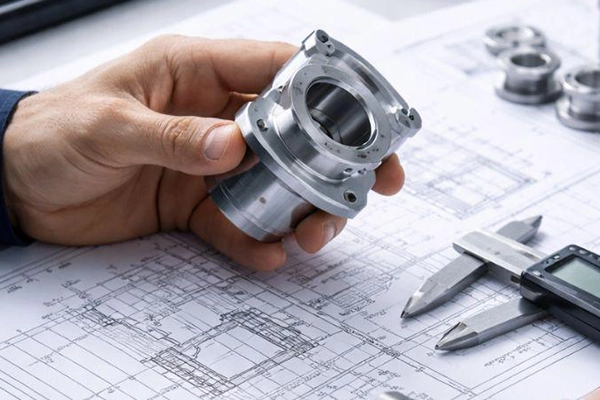
This multi-axis capability makes swiss turn parts ideal for components that would otherwise require multiple machines and handling steps. Examples of typical geometries are shown in our Swiss turned parts portfolio.
Cutting Parameters for Aluminum Swiss Turning
Aluminum machines faster than steel, but its “gummy” nature requires attention to cutting parameters and coolant strategy.
Aluminum produces long, stringy chips that can wrap around tools and affect surface finish. Effective chip control requires:
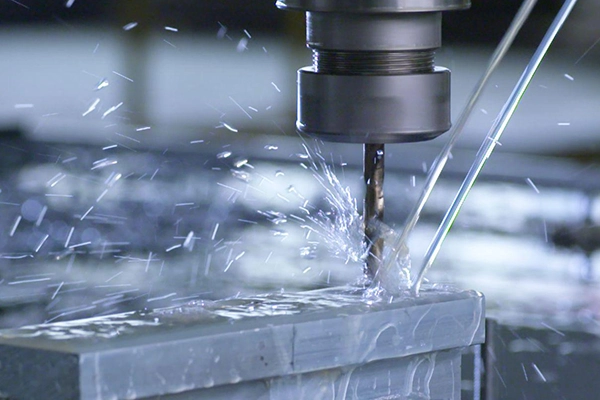
High-pressure coolant directed at the cutting edge to flush chips away
Sharp, polished carbide inserts with positive rake geometry to reduce built-up edge (BUE) formation
Through-tool coolant where available, to deliver coolant directly to the cutting zone
For aluminum swiss machining, coolant also manages thermal expansion. Aluminum expands roughly twice as much as steel per degree of temperature change. Maintaining stable shop temperature and coolant temperature is essential for holding tight tolerances on critical dimensions. These parameters are part of our standard practice across allCNC turning services for aluminum.
Surface Finish Capabilities
Surface finish requirements vary by application. Swiss turning services consistently deliver finishes that meet or exceed industry standards.
Finish Requirement
Typical Ra (µm)
Typical Ra (µin)
Achievable on Swiss?
Standard turned finish
0.8 – 1.6
32 – 63
✓ Routine
Fine turned finish
0.4 – 0.8
16 – 32
✓ With finishing passes
High-precision finish
0.2 – 0.4
8 – 16
✓ On small diameters with sharp tooling
Mirror finish
< 0.2
< 8
✓ Possible with 2011 and optimized parameters
For aluminum cnc turning part applications requiring anodizing, the as-machined surface finish directly affects the final anodized appearance. A turned surface of Ra 0.8µm or better provides a good foundation for clear or color anodizing.
Applications – Where Swiss-Turned Aluminum Parts Excel
Swiss turn parts made from aluminum are found across demanding industries:
Consumer electronics: Connector pins, sensor housings, camera components, heat sinks for portable devices
Automotive: Fuel system components, sensor housings, transmission control parts
Defense: Firing pins, precision shafts, optical mount components
The common thread: small-to-medium diameter parts with complex features, tight tolerances, and production volumes that justify the Swiss platform’s efficiency. For specific component examples in the electronics sector, see our CNC machining parts for consumer electronics industry page.
Design Considerations for Swiss-Turned Aluminum Parts
Engineers designing for swiss turning services should consider these factors:
Maximum diameter: Most Swiss machines handle bar stock up to Ø32mm (1.25″), with some capable of Ø38mm (1.5″)
Length-to-diameter ratio: The guide bushing supports slender parts, making L:D ratios of 10:1 or higher practical
Undercuts and threads: Specify standard thread forms where possible; Swiss machines can produce internal and external threads in one setup
Tolerances: Specify the minimum tolerance required for function—tighter tolerances increase cost and inspection time
Frequently Asked Questions
What is the difference between Swiss turning and conventional CNC turning?
Conventional CNC turning grips the workpiece in a chuck near the spindle. Swiss turning feeds bar stock through a guide bushing positioned close to the cutting tools. This bushing supports the workpiece immediately behind the cut, eliminating deflection and enabling tighter tolerances on long, slender parts.
What aluminum alloys are best for Swiss turning?
2011 aluminum offers the best machinability for high-volume aluminum screw machining. 6061-T6 provides the best all-around balance of machinability, strength, and corrosion resistance. 7075-T6 delivers the highest strength but requires slower cutting speeds.
What tolerances can Swiss turning services hold on aluminum parts?
Swiss-type lathes routinely hold ±0.0005″ (0.0127mm) on critical diameters. For small-diameter parts under Ø1.5mm, tolerances as tight as ±0.001mm are achievable.
Can Swiss turning produce complex features in one setup?
Yes. Multi-axis Swiss machines combine turning, milling, drilling, threading, and back-face operations in a single setup. This eliminates secondary operations and reduces handling errors.
What surface finish can I expect from Swiss-turned aluminum?
Standard turned finishes range from Ra 0.8 – 1.6µm. With finishing passes and optimized parameters, Ra 0.4µm or better is achievable.
Is Swiss turning cost-effective for low-volume production?
Swiss turning is most cost-effective for medium to high volumes where setup time is amortized across many parts. For prototypes and low-volume runs, conventional CNC turning may be more economical. However, for complex parts that require multiple operations, Swiss turning can still be competitive at lower volumes due to reduced handling and fixturing.
Why Choose Yueyi Precision for Your Swiss Turning Needs
Yueyi Precision is an aluminum machining factory specializing in precision CNC components. Our Swiss machining capabilities span multiple axes, handling aluminum alloys from 2011 to 7075 with tolerances down to ≤0.005mm.
We understand that engineers need a manufacturing partner who speaks the language of prints, tolerances, and surface finishes—not sales pitches. Our team works directly with your design files to optimize manufacturability while maintaining your specified requirements.
Have a swiss turning services project in mind? Send your print and specification—we will respond with process feedback and a competitive quotation within 24 hours.
Ready to start
Your next project?
Contact our technical experts today for a customized solution and a tailored quotation.
Our expert team will contact you within 24 hours
to provide a free technical evaluation and solution design, helping you upgrade your production process.
ADDRESS
NO.22,You Yi Road ,Wulian Community, LongCheng Street ,Long gang District ,Shen Zhen