Aluminum CNC Milling Service: A Practical Guide to Precision Machining
Introduction
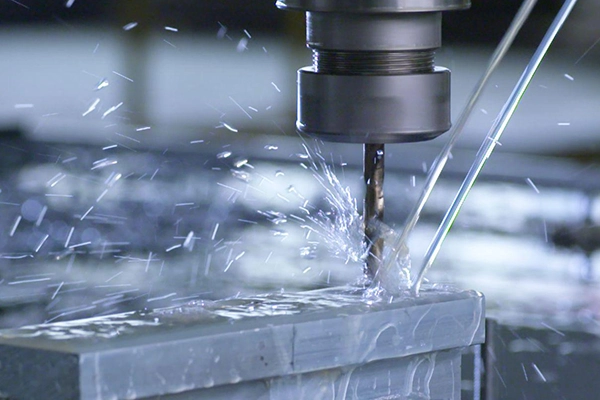
Aluminum CNC milling service is one of the most efficient and widely used manufacturing solutions for producing lightweight, high-strength components with tight tolerances. For engineers and procurement teams, understanding how aluminum behaves during CNC milling can directly impact cost, quality, and lead time.
Compared to harder materials like stainless steel, aluminum offers excellent machinability, but it also comes with its own challenges such as chip adhesion and surface finish control. In this guide, I’ll break down the real-world practices we use on the shop floor to optimize aluminum milling performance.
Why Aluminum Is Ideal for CNC Milling
Aluminum remains a preferred material across industries due to its unique balance of properties.
Key Advantages
High strength-to-weight ratio
Excellent corrosion resistance
Good thermal and electrical conductivity
Easy machinability compared to most metals
These advantages make aluminum a go-to material in sectors like medical devices, semiconductor equipment, consumer electronics, and automation systems.
Common Aluminum Grades in CNC Milling
Selecting the right alloy is critical for both performance and manufacturability.
Aluminum Grade Comparison Table
Grade
Strength
Machinability
Typical Applications
6061-T6
Medium
Excellent
General parts, housings
7075-T651
Very High
Moderate
High-stress components
5052
Medium
Good
Sheet metal parts
2024
High
Fair
Structural components
6061 vs 7075 Aluminum CNC Milling Machining
When discussing 6061 vs 7075 aluminum CNC milling machining, the choice primarily hinges on a trade-off between machinability, strength, and cost. Both alloys are widely used in industries such as consumer electronics, automotive, semiconductor equipment, and automation, but each has distinct characteristics that influence tool selection, process planning, and final part performance.
6061-T6 Aluminum
6061-T6 aluminum is known for its excellent balance between machinability and mechanical properties, making it one of the most commonly used alloys for CNC milling.
Key Advantages:
Ease of Machining: 6061-T6 machines smoothly with standard carbide end mills, producing minimal tool wear. This allows for longer tool life and reduces production costs.
Dimensional Stability: It maintains tight tolerances during milling, which is critical for complex geometries and precision components.
Surface Finish: 6061 can achieve a consistent surface finish with fewer finishing passes, which is advantageous for visible parts in electronics housings or automation components.
Cost Efficiency: Material cost is moderate, and the combination of low tool wear and high machinability reduces overall manufacturing expenses.
Typical Applications:
Consumer electronics housings and brackets
Automation fixtures and small mechanical parts
Prototyping and medium-volume production where dimensional accuracy is critical
Practical Machining Tips for 6061:
Use climb milling to improve surface finish and reduce tool deflection
Moderate spindle speeds with high feed rates optimize chip formation
Apply air blast or mist coolant to minimize built-up edge (BUE) formation
7075-T651 Aluminum
7075-T651 aluminum is a high-strength alloy that is more challenging to machine but offers superior mechanical performance.
Key Advantages:
High Strength: 7075 provides significantly higher tensile strength and fatigue resistance compared to 6061, making it suitable for load-bearing components.
Wear Resistance: Parts made from 7075 resist deformation under stress, which is important in demanding industrial applications.
Challenges in CNC Milling:
Higher Tool Wear: Due to its hardness, cutting 7075 increases carbide tool wear and may require coated tools or specialized tooling strategies.
Machinability: More difficult to achieve tight tolerances on complex geometries; careful planning of toolpaths and cutting parameters is essential.
Cost Considerations: Material cost is higher, and increased tool wear and cycle times add to overall production expenses.
Typical Applications:
Automotive load-bearing components
High-strength structural parts in industrial machinery
Aerospace-adjacent—but non-aerospace—precision equipment requiring superior strength
Practical Machining Tips for 7075:
Use sharp, coated carbide tools to reduce wear and heat build-up
Optimize cutting speeds and feed rates; slower cutting speeds may reduce surface finish quality
Use multiple light passes rather than aggressive cuts to maintain tolerances
Consider post-machining heat treatment or stress relief if required by design
Aluminum CNC Milling Service: Process Overview
A typical aluminum CNC milling workflow involves several key steps:
Material selection and verification
Fixture setup and alignment
Rough machining
Semi-finishing
Precision finishing
Surface treatment (e.g., anodizing)
For a broader understanding of machining capabilities, you can explore our CNC milling services to see how different processes are applied in production.
High Speed Aluminum CNC Milling Services: Best Practices
High-speed machining is one of the biggest advantages when working with aluminum.
Why High-Speed Milling Works
Lower cutting resistance
Better chip evacuation
Improved surface finish
Recommended Parameters
Parameter
Typical Range
Spindle Speed
10,000 – 24,000 RPM
Feed Rate
High
Depth of Cut
Moderate
Cooling Method
Air blast / mist
Shopfloor Insight
In real production, chip evacuation matters more than speed itself. Recutting chips is one of the most common reasons for poor surface finish and shortened tool life.
Avoiding Common Aluminum Machining Problems
Built-Up Edge (BUE)
Aluminum tends to stick to cutting tools.
Solution:
Use polished carbide tools
Increase cutting speed
Apply proper lubrication
Surface Finish Issues
Solution:
Use finishing passes
Reduce vibration
Optimize toolpath strategy
Chip Control
Solution:
Adjust feed rate
Use chip breakers
Apply air blast
Aluminum Milling and Anodizing Considerations
Surface finishing is critical, especially in consumer electronics and medical applications.
Key Points
6061 anodizes evenly
7075 may show color variation
Surface preparation directly affects final appearance
For consistent machining and finishing results, working with a custom aluminum CNC milling service provider helps ensure better quality control.
Precision Aluminum CNC Milling Parts Manufacturing
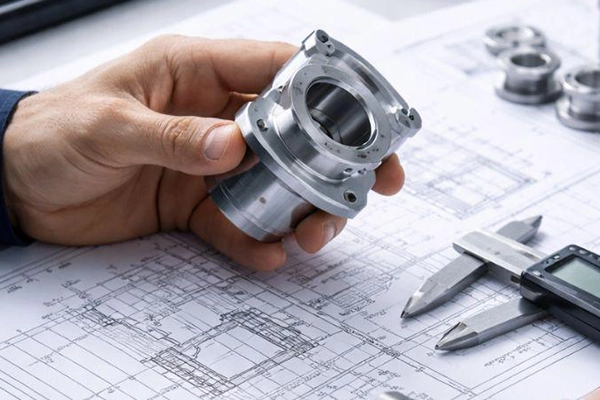
For most real-world applications, the focus is not on large components, but on high-precision, small-to-medium aluminum parts with tight tolerances and consistent quality.
Key Requirements
Tight tolerances (±0.01 mm or better)
Stable batch consistency
Clean surface finish
Reliable repeatability
Typical Applications
Medical device components
Semiconductor equipment parts
Consumer electronics housings
Communication equipment enclosures
Automation fixtures and brackets
Practical Manufacturing Considerations
To achieve stable quality in precision aluminum CNC milling parts manufacturing, several factors must be controlled:
Toolpath optimization to reduce deformation
Proper fixturing to maintain dimensional stability
Consistent cutting parameters across batches
Post-processing control for anodizing compatibility
Unlike large-part machining, precision parts production emphasizes repeatability and process control, especially in medium to high volume orders.
Industry Applications of Aluminum CNC Milling
Industry
Application
Key Requirement
Medical Devices
Precision housings
Clean finish, tight tolerance
Semiconductor
Equipment parts
Stability, accuracy
Consumer Electronics
Structural components
Surface quality
Automotive
Functional parts
Strength and durability
Automation
Fixtures
Repeatability
Communication Equipment
Enclosures
Lightweight precision
How to Choose a Reliable Supplier
When selecting a supplier, focus on real capabilities rather than just pricing.
What to Look For
Experience with aluminum alloys
High-speed CNC milling capability
Quality inspection systems
Surface finishing support
Stable delivery performance
Questions to Ask
What tolerances can you achieve consistently?
Do you support small batch production?
Can you handle precision anodized parts?
Practical Tips for Buyers and Engineers
Use 6061 for most applications unless strength is critical
Avoid over-specifying tolerances
Consider anodizing early in design
Simplify geometry to reduce machining time
Conclusion
Aluminum CNC milling service is a highly efficient solution for producing precision components across industries such as medical, semiconductor, consumer electronics, and automation.
Whether you are developing prototypes or scaling production, choosing the right material, machining strategy, and supplier will directly impact your project success.
If you have a new project or need technical support, feel free to contact our team for design review and quotation. We’re happy to help optimize your parts for both performance and manufacturability.
People Also Ask (PAA)
What is the best aluminum for CNC milling?
6061-T6 is the most widely used due to its excellent machinability and balanced properties.
What tolerance can aluminum CNC milling achieve?
Precision aluminum CNC milling machining service providers can typically achieve ±0.01 mm depending on part geometry.
Why does aluminum stick to cutting tools?
This is due to built-up edge formation, which can be minimized with proper tooling and cutting parameters.
Is anodizing necessary for aluminum parts?
Not always, but it significantly improves corrosion resistance and surface appearance.
Ready to start
Your next project?
Contact our technical experts today for a customized solution and a tailored quotation.
Our expert team will contact you within 24 hours
to provide a free technical evaluation and solution design, helping you upgrade your production process.
ADDRESS
NO.22,You Yi Road ,Wulian Community, LongCheng Street ,Long gang District ,Shen Zhen